Public source text: WLC (Westminster Leningrad Codex) + Nestle 1904. Translation: Belem-2025 Bible translation — literal, rigid, directly from the public códices.
Exclusive source: El Elyon Dossier + 4Q246 Dossier + Enigmatic Elements Catalog XIV-B (Forensic Unveiling School Belem an.C-2039).
A figure without a proper name
Daniel 7:9 introduces an entity called only by a descriptive designation — עַתִּיק יוֹמִין (Attiq Yomin, “Ancient of Days”). It is not a proper name. It is a functional title: the one who is ancient in days. The one who already existed before.
Christian tradition automatically assumes this is “God the Father” or yhwh. The Unveiling School rejects this shortcut. The text does not say who it is. It only says what it does: sits on the throne, judges, and delivers dominion to another.
The central forensic question: if Yahweh (יהוה — yhwh; trad. “Jehovah”1) = the Sea Beast (School axiom, documented in The Sea Beast — Yahweh (yhwh) and the Patriarchal System of Israel), then Attiq Yomin is NOT yhwh. Who is it?
The Aramaic text — Daniel 7:9, 13, and 22
Three verses. Three appearances. One tribunal.
Daniel 7:9 — Attiq Yomin enthroned
חָזֵה הֲוֵית עַד דִּי כׇּרְסָוָן רְמִיו וְעַתִּיק יוֹמִין יְתִב לְבוּשֵׁהּ כִּתְלַג חִוָּר וּשְׂעַר רֵאשֵׁהּ כַּעֲמַר נְקֵא כׇּרְסְיֵהּ שְׁבִיבִין דִּי־נוּר גַּלְגִּלּוֹהִי נוּר דָּלִק
“I was watching until thrones were set in place, and the Ancient of Days took his seat. His garment — white as snow. The hair of his head — like pure wool. His throne — flames of fire. Its wheels — burning fire.”
Daniel 7:13 — bar enash brought to Attiq Yomayya
חָזֵה הֲוֵית בְּחֶזְוֵי לֵילְיָא וַאֲרוּ עִם־עָנָנֵי שְׁמַיָּא כְּבַר אֱנָשׁ אָתֵה הֲוָה וְעַד־עַתִּיק יוֹמַיָּא מְטָה וּקְדָמוֹהִי הַקְרְבוּהִי
“I was watching in the visions of the night, and behold — with the clouds of heaven like a son of man (k’var enash) was coming, and to the Ancient of Days (Attiq Yomayya) he arrived, and before him they brought him.”
Daniel 7:22 — Attiq Yomayya judges
עַד דִּי־אֲתָה עַתִּיק יוֹמַיָּא וְדִינָא יְהִב לְקַדִּישֵׁי עֶלְיוֹנִין
“…until the Ancient of Days came, and judgment was given to the saints of the Most High (Elyonin).”
Terminological note
Verse 9 uses Attiq Yomin (singular). Verses 13 and 22 use Attiq Yomayya — Aramaic plural of majesty, honorific form. They are not two entities. It is the same figure, with an inflection of reverence.
Critical datum: Yahweh (yhwh) does not appear in any of these verses. Daniel 7 operates entirely with three designations:
| Designation | Aramaic text | Function |
|---|---|---|
| Attiq Yomin / Attiq Yomayya | עַתִּיק יוֹמִין / עַתִּיק יוֹמַיָּא | Enthroned judge — source of authority |
| bar enash | כְּבַר אֱנָשׁ | Receives dominion — recipient |
| Elyonin | עֶלְיוֹנִין | Saints whose kingdom is given |
Yahweh (yhwh) is absent from the entire vision.
The visible hierarchy — who is above whom
The scene in Daniel 7:13-14 is unequivocal. The bar enash is brought to Attiq Yomayya. Not the reverse. He does not go on his own — וּקְדָמוֹהִי הַקְרְבוּהִי (uqodamohi haqr’vuhi) — “and before him they brought him.” Someone conducts him. Someone presents him.
And then he receives:
וְיָהִב לֵהּ שׇׁלְטָן וִיקָר וּמַלְכוּ “And to him was given dominion and honor and kingship.” — Daniel 7:14a
The hierarchy:
| Position | Entity | Action |
|---|---|---|
| Above | Attiq Yomin | Sits on the throne. Judges. Delivers dominion. |
| Below | bar enash | Is brought. Is presented. Receives dominion. |
If bar enash = Jesus — and he himself identifies as “Son of Man” in the Gospels (Mt 26:64, Mk 14:62, using language identical to Daniel 7:13) — then Jesus receives authority from an entity above him.
That entity is not Yahweh (yhwh) (absent from the vision). It is Attiq Yomin.
The chromatic connection — Daniel 7:9 x Unveiling 1:14
Here the text does something extraordinary. The same physical description appears in two different books, separated by centuries, in two distinct languages.
Daniel 7:9 (Aramaic)
וּשְׂעַר רֵאשֵׁהּ כַּעֲמַר נְקֵא “The hair of his head — like pure wool.”
Unveiling 1:14 (Greek)
ἡ δὲ κεφαλὴ αὐτοῦ καὶ αἱ τρίχες λευκαὶ ὡς ἔριον λευκόν “His head and hair white as white wool.”
Systematic parallel:
| Attribute | Dan 7:9 (Attiq Yomin) | Unv 1:14 (Glorified Jesus) |
|---|---|---|
| Hair | like pure wool (כַּעֲמַר נְקֵא) | like white wool (ὡς ἔριον λευκόν) |
| Garment | white as snow (כִּתְלַג חִוָּר) | — |
| Eyes | — | like flame of fire (ὡς φλὸξ πυρός) |
| Throne | flames of fire (שְׁבִיבִין דִּי־נוּר) | — |
The same physical description. Applied to two figures. In Daniel, to Attiq Yomin. In Unveiling, to glorified Jesus.
Is this editorial coincidence — or intentional identification?
The El Elyon candidate — the Most High who is not Yahweh (yhwh)
The El Elyon Dossier (27 verified evidences) documents an entity that tradition merged with Yahweh (yhwh) but that the códices treat as distinct.
In Daniel 7, the text uses Elyonin (v.18, 22, 25, 27) to qualify the saints: “saints of the Most High.” The kingdom is given to the saints of Elyon — not to the saints of yhwh.
The foundational text is Deuteronomy 32:8 (LXX and 4QDeutJ):
“When the Most High (Elyon) divided the nations, when he separated the sons of Adam, he fixed the boundaries of the peoples according to the number of the sons of Elohim.”
The following verse (Dt 32:9): “For the portion of Yahweh (yhwh) is his people; Jacob is the lot of his inheritance.”
The implication: Elyon distributes. Yahweh (yhwh) receives a portion — Israel. Elyon is above Yahweh (yhwh) in the hierarchy.
If Attiq Yomin = El Elyon, then Daniel 7 presents the same hierarchy as Deuteronomy 32: the Most High at the top, delivering dominion.
The Christological question — Jesus before the incarnation?
If Unveiling 1:14 applies Attiq Yomin’s description to Jesus, two hypotheses emerge:
Hypothesis 1 — Temporal identity
Attiq Yomin = pre-incarnate Jesus (the eternal Creator) delivering dominion to himself incarnate (bar enash). The same entity at two moments: before and after incarnation.
Evidence in favor: The chromatic convergence — Unv 1:14 uses Dan 7:9 language to describe Jesus. John is saying: this one you see is the Ancient of Days.
Problem: In the Daniel 7:13 scene, Attiq Yomin and bar enash are two distinct figures in the same room. One is seated. The other is brought to him. If they were the same, the scene would not have two characters.
Hypothesis 2 — Ontological hierarchy
Attiq Yomin = El Elyon (Father / Creator), an entity distinct from Jesus. The hierarchy is permanent, not temporal.
Evidence in favor: The Daniel 7 scene requires two separate entities. The language of Dt 32:8 confirms Elyon above yhwh. If Elyon is also above bar enash, the chain is: Elyon → Jesus → (yhwh as subordinate portion).
Problem: Unv 1:14 applies Attiq Yomin’s description to Jesus. If they are distinct entities, why does John use the same visual language?
Possible resolution
John is not saying that Jesus is Attiq Yomin. He is saying that Jesus carries the same glory — the authority received from Dan 7:14. Glorified Jesus resembles Attiq Yomin because he received from him dominion, honor, and kingship. The visual resemblance is delegation, not identity.
The axiom that changes everything — Yahweh (yhwh) ≠ Attiq Yomin
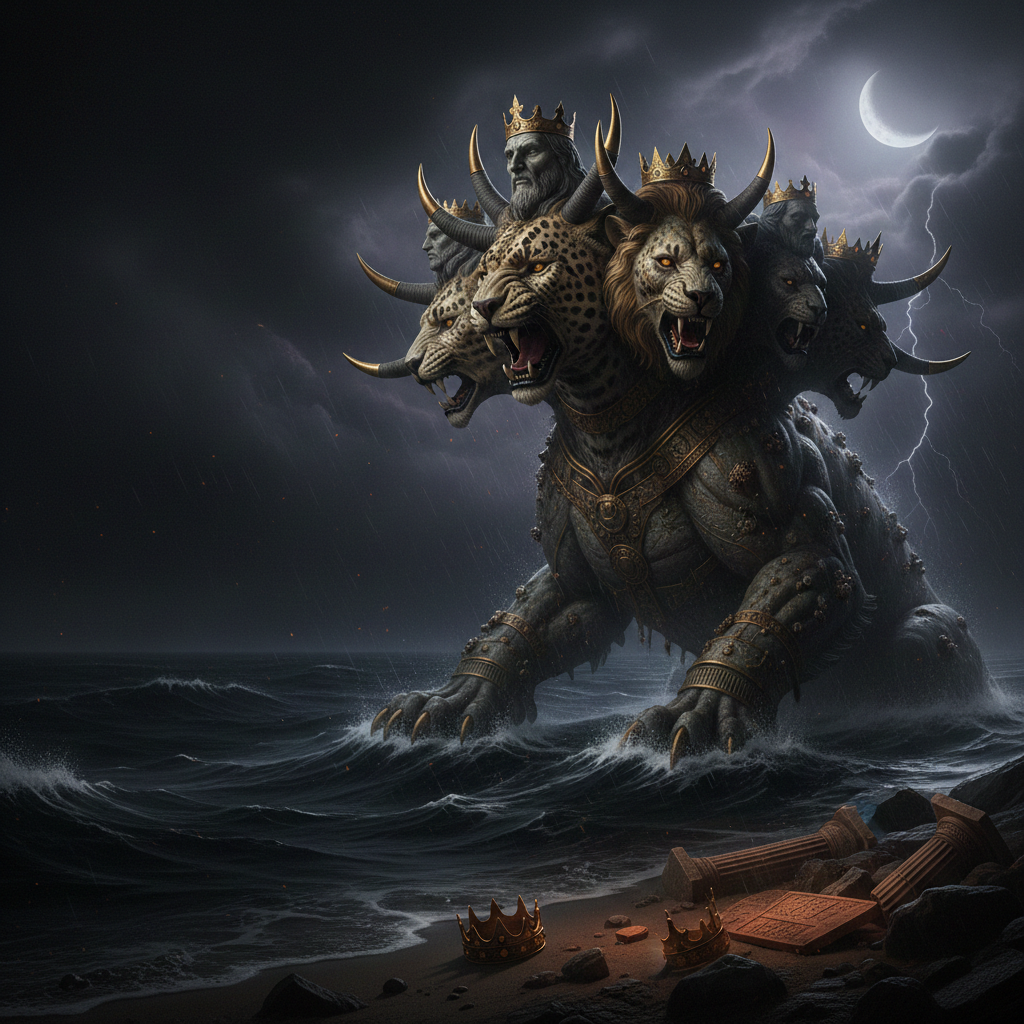
The Unveiling School axiom: Yahweh (yhwh) = the Sea Beast (Unv 13). Documented in 29 cross-evidences (E-DR-019 to E-DR-029).
If Yahweh (yhwh) = Sea Beast, and Attiq Yomin is the judge of Daniel 7’s celestial tribunal, then:
- Yahweh (yhwh) is being judged, not judging.
- The “little horn” of Dan 7:25 — which “changes times and law” — operates within Yahweh (yhwh)’s system.
- Attiq Yomin is the entity that Yahweh (yhwh) never was — the true sovereign above the system.
This completely inverts the traditional reading of Daniel 7. Tradition reads the chapter as “Yahweh (yhwh) judges the nations.” The School reads: the Most High judges Yahweh (yhwh) and his system, and delivers true dominion to Jesus (bar enash).
Correlation map
              ATTIQ YOMIN (Dan 7:9)
              עַתִּיק יוֹמִין
                     |
       ┌─────────────┼─────────────┐
       |             |             |
  Candidate 1   Candidate 2   FIXED DATA
  El Elyon       Pre-incarnate  bar enash = Jesus
  (Most High)   Jesus          (recipient, BELOW)
  Dt 32:8        Unv 1:14      Dan 7:13
  27 evidences   CHROMATIC     IDENTIFIED
                 CONNECTION
       |             |
       └──────┬──────┘
              |
     OPEN QUESTION:
     El Elyon = Jesus?
     Or distinct entities?
              |
     FIXED AXIOM:
     yhwh ≠ Attiq Yomin
     (yhwh = Sea Beast)
Stress test
| Criterion | Result |
|---|---|
| Verifiable original Aramaic text (WLC)? | Yes — Dan 7:9, 13, 22 |
| Yahweh (yhwh) absent from Daniel 7 vision? | Yes — zero occurrences in tribunal verses |
| Hierarchy Attiq Yomin > bar enash? | Yes — bar enash is brought to and receives from |
| Chromatic convergence Dan 7:9 x Unv 1:14? | Yes — hair like white wool |
| Compatible with Dt 32:8 (Elyon > yhwh)? | Yes — same hierarchy |
| Compatible with axiom Yahweh (yhwh) = Sea Beast? | Yes — Yahweh (yhwh) absent and judged, not judge |
| Self-sufficient (solved with the 66 Books + códices)? | Yes — zero external sources |
Conclusion — the identity that redefines Daniel
Attiq Yomin is not Yahweh (yhwh). This is the minimum the text asserts: Yahweh (yhwh) is absent from the entire celestial tribunal vision of Daniel 7.
The identity remains open between El Elyon (the Most High of Dt 32:8) and pre-incarnate Jesus (because of Unv 1:14). The Forensic Unveiling School does not force premature conclusions. It records the data. It keeps the investigation open.
What Daniel 7 shows with clarity: there is an entity above everything — above Yahweh (yhwh), above the nations, above the beasts. And that entity, seated on a throne of fire with garments white as snow, chose to deliver all dominion to a “son of man” who came with the clouds.
Tradition looked at Attiq Yomin and saw yhwh. The text shows something else.
“You read. And the interpretation is yours.”
Artificial form: vowels from Adonai (אֲדֹנָי → a, o, a) placed over consonants YHWH — Masoretic qere perpetuum. Medieval Latin readers merged both, producing “YeHoVaH” — a hybrid that never existed as a Hebrew word. The most accepted academic reconstruction is Yahweh /jah.ˈweh/, based on Greek transcriptions (Ιαβε — Clement of Alexandria, ~200 AD; Ιαουε — Theodoret of Cyrus, ~450 AD), abbreviated biblical forms (Yah — הַלְלוּ יָהּ), theophoric names (Yahu/Yeho — Eliyahu, Yehoshua) and Samaritan oral tradition (Yabe/Yawe). ↩︎