The Word That Appears Only Once
Public source text: WLC (Westminster Leningrad Codex) + Nestle 1904. Translation: Belem-2025 Bible translation – literal, rigid, straight from the public códices.
Armageddon. The most famous word that almost nobody has read in the original. It became a movie, became a metaphor, became a synonym for “end of the world.” But in the Greek text, the word appears only once in the entire collection of 66 books. Once. No OT prophet uses it. No NT apostle repeats it. It is a lilit-o-nome-que-todas-as-traduções-apagaram/" class="autolink" title="hapax legomenon">hapax legomenon — a term that occurs only once in the corpus.
And what that single occurrence says is not what tradition has taught.
The Greek Text
DES 16:16 — καὶ συνήγαγεν αὐτοὺς εἰς τὸν τόπον τὸν καλούμενον Ἑβραϊστὶ Ἁρμαγεδών kai synegagen autous eis ton topon ton kaloumenon Hebraisti Harmagedon “And he gathered them to the place called in Hebrew Harmagedon.”
| Term | Transliteration | Meaning |
|---|---|---|
| συνήγαγεν | synegagen | gathered, congregated (aorist of συνάγω) |
| τόπον | topon | place, locality |
| Ἑβραϊστί | Hebraisti | in Hebrew |
| Ἁρμαγεδών | Harmagedon | Greek transliteration from Hebrew |
The verb is συνάγω (synago) — to gather, to congregate. The same verb as “synagogue” (συναγωγή). Armageddon is not described as a battlefield. It is described as a gathering point.
The Etymology: הר מגדו (Har Megiddo)
The text says the name is “in Hebrew” (Ἑβραϊστί). The most accepted Hebrew reconstruction is:
הר מגדו (Har Megiddo) = “Mount of Megiddo”
| Component | Hebrew | Meaning |
|---|---|---|
| הר | Har | mount, mountain |
| מגדו | Megiddo | city in the plain of Jezreel |
Here is the forensic paradox: Megiddo has no mount. Megiddo (Tel Megiddo) is a tell — an artificial mound of accumulated ruins — in the plain of the Jezreel Valley. The region is flat. The text names a “mountain” that geographically does not exist.
Easter Egg: “Mount of Megiddo” is an address that does not exist on the map. Tradition treats it as a literal battle site. The forensic method registers the paradox: the text invents an impossible geography. When the text creates an impossible toponymy, the meaning is not geographic — it is semantic.
The Context: The Sixth Bowl – DES 16:12-16
Armageddon appears within the sixth bowl:
DES 16:12 — “And the sixth poured out his bowl upon the great river Euphrates (Εὐφράτην), and its water dried up, so that the way of the kings who come from the rising of the sun might be prepared.”
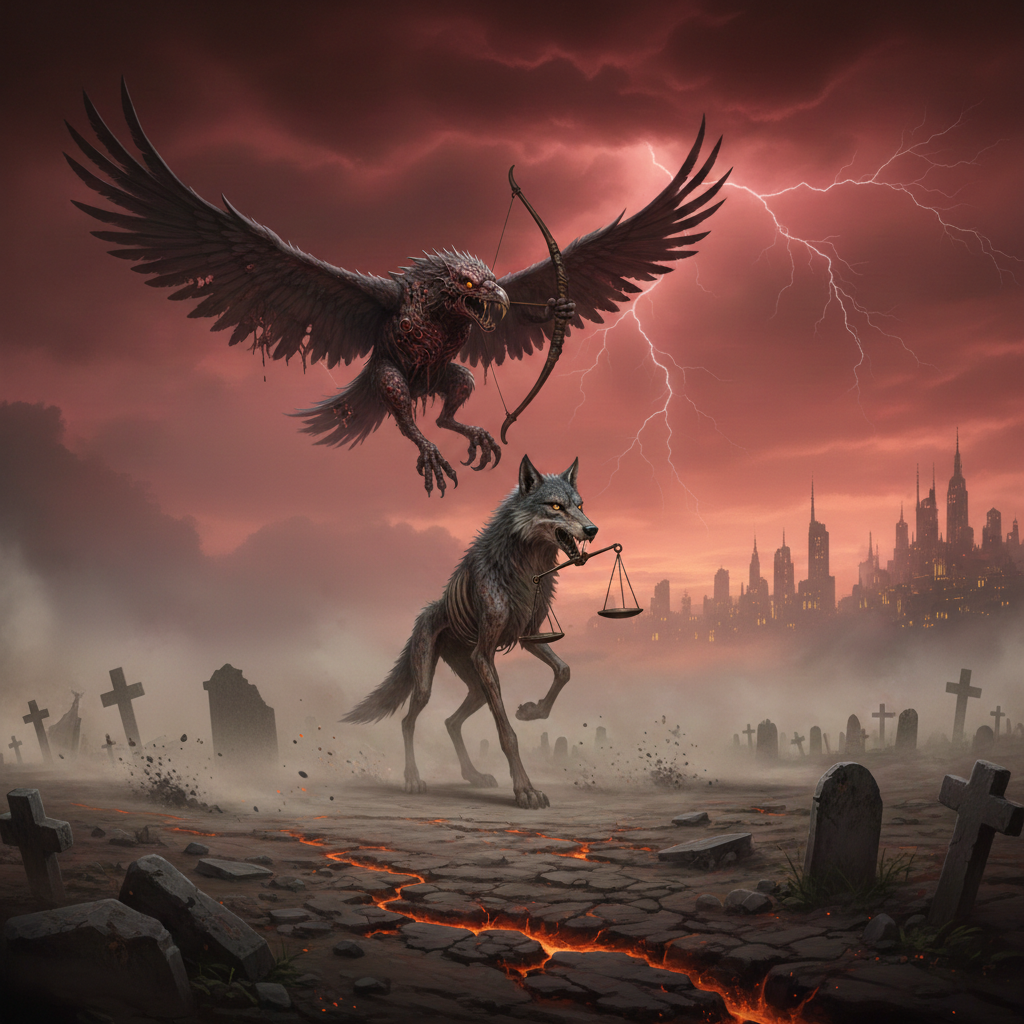
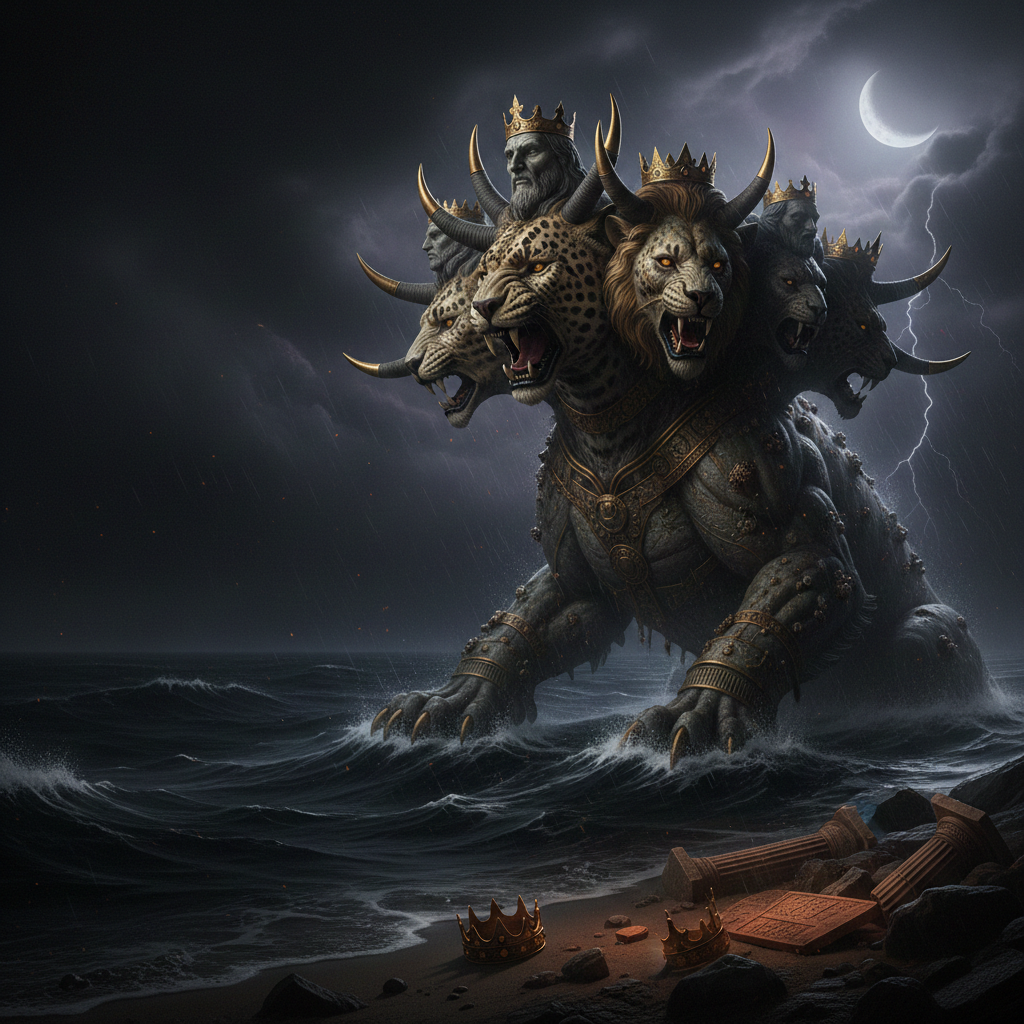
DES 16:13-14 — “And I saw from the mouth of the dragon (δράκοντος), and from the mouth of the beast (θηρίου), and from the mouth of the false prophet (ψευδοπροφήτου), three unclean spirits (πνεύματα ἀκάθαρτα) resembling frogs (βατράχοις); for they are spirits of demons performing signs, which go out to the kings of the whole inhabited world (οἰκουμένης), to gather them (συναγαγεῖν) for the war (πόλεμον) of the great day of Θεός the Παντοκράτωρ.”
The sequence:
- Euphrates dries up — path opened for the kings from the east
- Three unclean spirits emerge from the anti-christ trinity (dragon + beast + false prophet)
- Spirits perform signs
- Kings are gathered (συναγαγεῖν) for war
- Location of the gathering: Armageddon
Note: the kings are gathered for (εἰς) the war — not gathered in the war. Armageddon is the concentration point, not the combat field.
The “Battle” That Does Not Happen in DES 16
The most important detail: DES 16 describes no battle at all. The sixth bowl gathers the armies. The seventh bowl (DES 16:17-21) pours cosmic destruction — earthquakes, hail, collapse of cities — but there is no hand-to-hand combat. There are no swords. There is no military strategy.
The kings are gathered. And destroyed. Without battle.
| What tradition says | What the text says |
|---|---|
| Armageddon is a battle | Armageddon is a gathering place |
| Armies fight | Armies are gathered and destroyed |
| Military combat | Judicial judgment |
| Real location | Impossible toponymy (mount without a mount) |
The Real “Battle”: DES 19:11-21
If Armageddon is the gathering point, where is the “battle”? In DES 19:
DES 19:11 — “And I saw heaven opened, and behold a white horse, and the one sitting on it called Faithful and True, and in righteousness he judges and makes war.”
DES 19:15 — “And from his mouth proceeds a sharp sword (ῥομφαία, rhomphaia), so that with it he might strike the nations.”
DES 19:21 — “And the rest were killed by the sword of the one sitting on the horse, the sword that proceeds from his mouth (ἐκ τοῦ στόματος).”
The weapon is not made of metal. The weapon proceeds from the mouth. The ῥομφαία (rhomphaia) that kills the enemies is the word — not a steel blade.
| Expected military element | What the text presents |
|---|---|
| Metal swords | Sword from the mouth (word) |
| Armies in combat | Enemies killed without combat |
| War strategy | Pronouncement of sentence |
| Battlefield | Open-air tribunal |
Easter Egg: The “final battle” has no clash of armies. It has a rider who kills with the sword of his mouth. The war of Armageddon is a judicial sentence pronounced — not a combat waged.
The Three Frogs – DES 16:13
The three unclean spirits are described as “resembling frogs” (ὅμοια βατράχοις, homoia batrachois). The frog (βάτραχος, batrachos) appears in the OT in the second plague of Egypt (Exodus 8:1-15). In the LXX:
Exodus 8:2 (LXX 7:27) — “καὶ ἐξερεύξεται ὁ ποταμὸς βατράχους” — “and the river shall vomit frogs.”
The frogs of Egypt came from the river (Nile). The frog-spirits of DES 16 emerge from mouths (dragon, beast, false prophet). The intertextual pattern connects: what emerged from a hydric source in the OT emerges from a verbal source in the NT. The plague changed its medium — from water to speech.
Har — The Mountain That Does Not Exist
The prefix הר (Har) — “mount” — is significant. In the OT, mountains are places of encounter with the divine:
- Mount Sinai (Torah given)
- Mount Zion (temple built)
- Mount Carmel (Elijah’s confrontation)
- Mount of Olives (eschatological prophecy)
“Mount of Megiddo” would create an anti-mount — a gathering place that is the parousia of destruction, not of revelation. The mount where kings do not find Θεός, but find their judgment.
Conclusion
Armageddon is not a battle. It is a gathering point for kings deceived by three frog-spirits that emerge from the mouth of the anti-christ trinity. The geography is impossible: there is no mount at Megiddo. The real “battle” occurs in DES 19, where the only weapon is the sword that proceeds from the rider’s mouth.
The word appears only once in 31,000+ verses. And in that single occurrence, it describes a gathering — not a combat. A tribunal — not a field of war. A sentence — not a strategy.
The battle of Armageddon is a battle of words. And the victor is already mounted on the horse.
“You read. And the interpretation is yours.”