Public source text: WLC + Nestle 1904. Translation: Belem-2025 Bible translation.
yhwh opens the earth and swallows families alive. Jesus, on the cross, asks forgiveness for his executioners. Two profiles. Two catalogs. And you were taught they are the same entity.
If seeing Jesus means seeing the Father (John 14:9), and Jesus never killed, never punished collectively, never sent serpents against those who complained about food — then who is the entity that does exactly all of this in the book of Numbers? Are you ready to read both catalogs side by side?
The Forensic Question
Other articles in this series have examined the distinction between yhwh (יהוה) and Jesus from an ontological angle (universal Creator vs. jurisdictional deity), a hierarchical angle (El Elyon and the bene Elohim in Deuteronomy 32:8-9), and a nominative angle (transliteration chain, titles, designations). This article opens a different front — perhaps the most visceral of all — because it abandons the sphere of abstract classifications and enters the territory of documented facts.
The question is simple: how does yhwh act and how does Jesus act? Not what people say about them. Not what theologians infer. What the codices record as the observable behavior of each.
The premise comes from Jesus himself:
ὁ ἑωρακὼς ἐμὲ ἑώρακεν τὸν Πατέρα
“The one who has seen me has seen the Father.”
— John 14:9, Nestle 1904
If Jesus is the full and visible revelation of the Father, then the behavior of Jesus is the behavior of the Father made visible. Everything Jesus did, said, and decided constitutes the definitive behavioral sample of the deity he calls Father. If the Father acts as Jesus acts, then the Father never killed for grumbling, never opened the earth to swallow families, never sent burning serpents against those who questioned the desert route.
The investigation that follows places two catalogs side by side: the behavioral catalog of yhwh in the Hebrew corpus and the behavioral catalog of Jesus in the Gospels and in the Unveiling (apokálypsis). The reader decides whether the two profiles can belong to the same entity.
Catalog 1 — The Behavior of yhwh in Numbers
The book of Numbers is the ideal forensic laboratory because it concentrates, in 36 chapters, the highest density of violent interactions between yhwh and the people of Israel. There is no need to traverse the entire Pentateuch — Numbers alone provides sufficient material to trace the behavioral profile.
The Rebellion of Korah — Numbers 16
Korah, Dathan, and Abiram question the exclusive authority of Moses and Aaron. The response of yhwh:
וַתִּפְתַּח הָאָרֶץ אֶת־פִּיהָ וַתִּבְלַע אֹתָם וְאֶת־בָּתֵּיהֶם
“And the earth opened its mouth and swallowed them — and their households.”
— Numbers 16:32, WLC
The earth swallows Korah, Dathan, Abiram — and along with them, their entire families: wives, children, infants. The Hebrew text uses bateihem (בָּתֵּיהֶם, “households” in the sense of families/homes). The punishment for questioning authority is not restricted to the questioners — it extends to those who lived with them, including children who had decided nothing.
Beyond that, in the same episode:
וְאֵשׁ יָצְאָה מֵאֵת יְהוָה וַתֹּאכַל אֶת הַחֲמִשִּׁים וּמָאתַיִם אִישׁ
“And fire went out from yhwh and consumed the two hundred and fifty men.”
— Numbers 16:35, WLC
Result: families swallowed alive by the earth, plus 250 incinerated. The toll of a single episode of questioning.
The Plague After Korah — Numbers 17:6-15
On the day after the earth closed, the people murmur against Moses and Aaron because of the deaths. A comprehensible human reaction — lamenting the violent death of acquaintances. The response of yhwh to this mourning:
וַיָּמֻתוּ בַּמַּגֵּפָה אַרְבָּעָה עָשָׂר אֶלֶף וּשְׁבַע מֵאוֹת
“And they died in the plague — fourteen thousand and seven hundred.”
— Numbers 17:14 (16:49 in some numberings), WLC
Fourteen thousand and seven hundred. Not leaders. Not armed rebels. People who complained about the previous deaths. The trigger was grumbling. The response was plague.
The Burning Serpents — Numbers 21:6
The people complain about the food and the route. They are tired, hungry, demoralized — circumstances that in any human context generate vocal dissatisfaction. The response of yhwh:
וַיְשַׁלַּח יְהוָה בָּעָם אֵת הַנְּחָשִׁים הַשְּׂרָפִים וַיְנַשְּׁכוּ אֶת־הָעָם וַיָּמָת עַם רָב מִיִּשְׂרָאֵל
“And yhwh sent against the people the burning serpents (hannechashim hasserafim), and they bit the people, and there died a great people (am rav) of Israel.”
— Numbers 21:6, WLC
Serpents as an instrument of punishment for complaining about food. The text records am rav — “a great people” — without an exact figure, but the Hebrew expression indicates large-scale mortality.
The Pattern That Emerges
Go through the episodes of Numbers and an inescapable pattern takes shape. In Numbers 16, the trigger is questioning authority — the response is the earth swallowing families and fire incinerating 250 men. In Numbers 17, the trigger is murmuring over the deaths — the response is a plague that kills 14,700. In Numbers 21, the trigger is complaining about food and the route — the response is venomous serpents that decimate multitudes. In Numbers 25, the trigger is idolatry and fornication at Baal-Peor — the response is plague and executions totaling 24,000 dead. In Numbers 14, the trigger is fear of entering Canaan — the response is condemning an entire generation to die in the desert over forty years.
The pattern is consistent: disobedience, questioning, or grumbling produce collective death. The punishment is never proportional to the act. The punishment is never individual — families, generations, and entire multitudes pay for the act of a few or the momentary impulse of many.
Catalog 2 — The Behavior of Jesus
Now the second catalog. Same methodology: facts recorded in the codices, passage by passage, without theological interpretation.
“I did not come to destroy lives, but to save”
ὁ υἱὸς τοῦ ἀνθρώπου οὐκ ἦλθεν ψυχὰς ἀνθρώπων ἀπολέσαι ἀλλὰ σῶσαι
“The Son of Man did not come to destroy (apolesai) the lives of men, but to save (sosai).”
— Luke 9:56, Nestle 1904
The context is surgical: James and John want to call down fire from heaven on a Samaritan village that refused to receive Jesus — exactly the yhwh pattern in Numbers (fire that consumes, destruction as a response to rejection). And Jesus rebukes them. The fire does not come down. The village remains intact.
“Love your enemies”
ἀγαπᾶτε τοὺς ἐχθροὺς ὑμῶν
“Love your enemies.”
— Matthew 5:44, Nestle 1904
Not “destroy your enemies.” Not “send plagues.” Not “let the earth swallow their families.” Love. The imperative is agapate — deliberate, volitional love, not sentimental.
“Father, forgive them”
Πάτερ, ἄφες αὐτοῖς· οὐ γὰρ οἴδασιν τί ποιοῦσιν
“Father, forgive them (aphes autois), for they do not know what they are doing.”
— Luke 23:34, Nestle 1904
At the moment of greatest violence against himself — nailed to the cross, executed by a religious-political system — Jesus asks forgiveness for his executioners. yhwh’s response to Korah’s questioning was to have the earth swallow entire families. Jesus’s response to his own execution was to intercede for the executioners.
“Put your sword away”
Βάλε τὴν μάχαιράν σου εἰς τὸν τόπον αὐτῆς
“Put your sword (machairan) back in its place.”
— Matthew 26:52 (cf. John 18:11), Nestle 1904
Peter cuts off Malchus’s ear. Jesus orders the sword put away — and heals the ear (Luke 22:51). The instrument of violence is rejected. The damage caused by his own follower is reversed.
The Pattern That Emerges
And here the contrasts accumulate until they become impossible to ignore. When a village rejects Jesus, James and John want fire — and Jesus rebukes them, and no one dies (Luke 9:51-56). When a woman is caught in adultery — a flagrant sin, punishable by stoning — Jesus says “Let whoever is without sin cast the first stone,” and no one stones her (John 8:3-11). When Peter uses the sword, Jesus orders it put away and heals the ear — the damage is reversed (John 18:10-11). When Jesus is nailed to the cross, instead of invoking angels or plagues, he intercedes for the executioners: “Father, forgive them” (Luke 23:34). When Judas betrays him with a kiss, Jesus responds with a silent question, with no retaliation (Luke 22:48). When Peter denies him three times in public, Jesus looks at him — and there is no punishment, only the look (Luke 22:61).
The pattern is consistent and diametrically opposite to yhwh’s catalog: rejection produces mercy. Sin produces forgiveness. Violence produces healing. Betrayal produces silence. Execution produces intercession. In no episode recorded in the Gospels does Jesus kill, order that someone be killed, send plagues, destroy families, or punish collectively.
Ten Contrasts, Zero Convergence
Now, the heart of the article. Two catalogs, overlaid.
When someone questions — yhwh opens the earth and swallows families (Numbers 16:32); Jesus dialogues, teaches, responds with questions.
When someone grumbles — yhwh sends a plague that kills 14,700 (Numbers 17:14); Jesus says “Come to me, all who are weary” (Matthew 11:28).
When someone rejects — yhwh sends burning serpents (Numbers 21:6); Jesus declares “I did not come to destroy lives, but to save” (Luke 9:56).
When someone sins — yhwh orders public execution (Numbers 25:4); Jesus asks “Let whoever is without sin cast the first stone” (John 8:7).
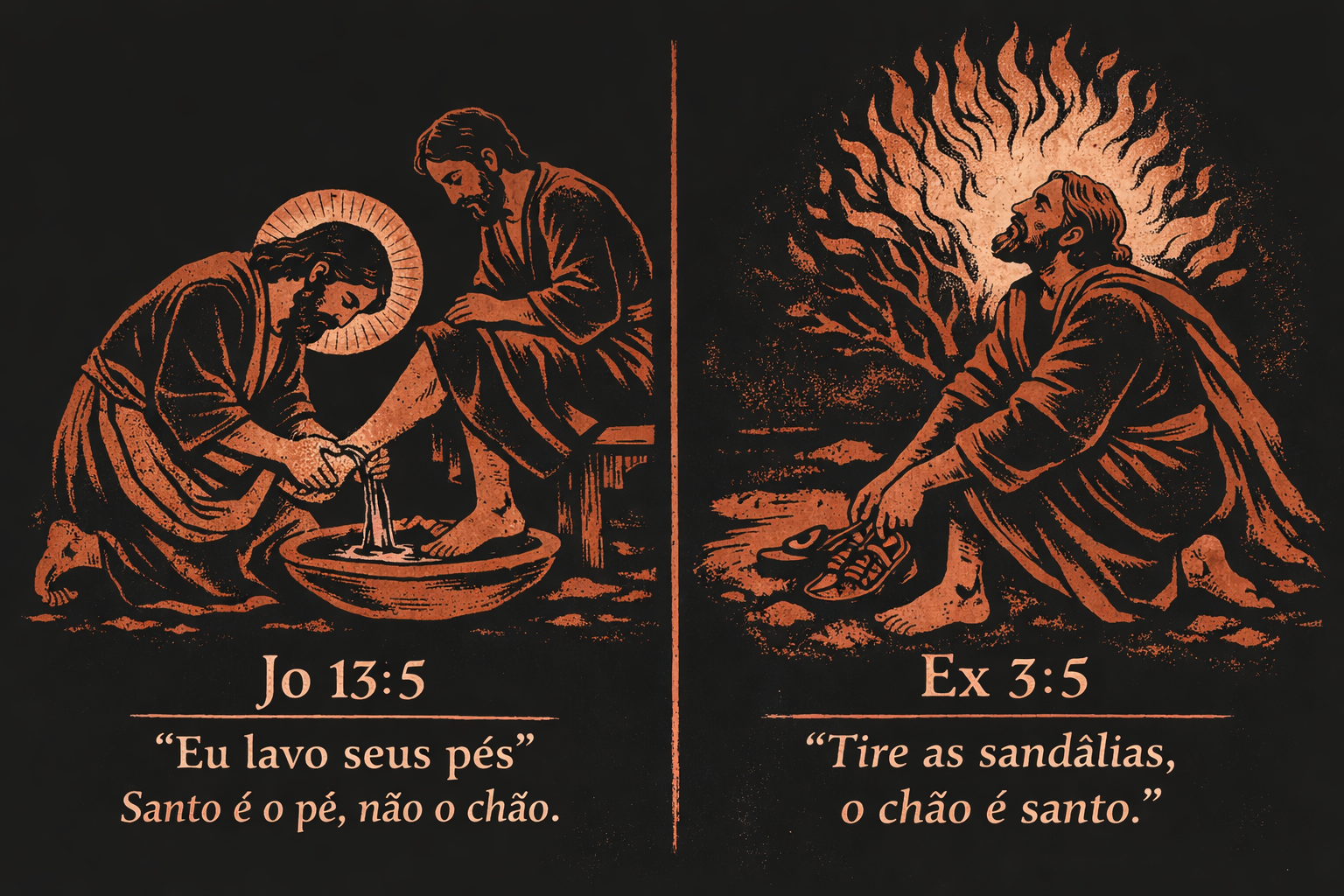
When someone betrays — there is no record of yhwh responding to betrayal with forgiveness; Jesus washes the traitor’s feet before the betrayal even takes place (John 13:5).
When there is violence against himself — yhwh responds with plagues, destruction, and death; Jesus responds “Father, forgive them” (Luke 23:34).
When collective punishment is at stake — yhwh practices it systematically: families, generations, nations; Jesus never. Always individual.
When children are involved — yhwh permits bateihem to be swallowed along with the fathers (Numbers 16:32); Jesus says “Let the children come to me” (Mark 10:14).
When fire is invoked as a weapon — yhwh incinerates 250 men (Numbers 16:35); Jesus rebukes those who ask for fire from heaven (Luke 9:54-55).
When animals are used as an instrument — yhwh sends serpents (Numbers 21:6), bears (2 Kings 2:24); Jesus heals, feeds, restores.
Ten criteria. Ten contrasts. Zero behavioral convergence.
The Forensic Problem
Traditional Christian theology asserts that yhwh is the Father that Jesus reveals. If that is true, then the behavior of Jesus should reflect the behavior of yhwh — because “whoever has seen me has seen the Father” (John 14:9).
But the behavior does not converge. At no point.
yhwh kills for grumbling. Jesus invites the weary. yhwh swallows families alive. Jesus asks that children be allowed to come. yhwh sends fire that incinerates. Jesus rebukes those who ask for fire. yhwh sends serpents that kill. Jesus says he came to save, not to destroy. yhwh demands execution for sin. Jesus says let whoever is without sin cast the first stone. yhwh never forgives executioners in the act. Jesus, on the cross, intercedes for them.
If Jesus is the criterion by which we know the Father, then who is the entity in the desert that responds with open earth, plagues, and serpents to every grumble of a weary people?
The forensic investigation does not answer. The forensic investigation exposes the incompatibility and records the data for public scrutiny.
Connections with Other Dossiers
This article complements — without duplicating — previous investigations. The dossier “yhwh vs. Jesus — The Creator Against the System” documents the ontological distinction: Jesus as universal Creator vs. yhwh as jurisdictional entity; this article addresses the behavioral distinction. The dossier “The Identity of Jesus versus the Identity of yhwh” documents the hierarchical distinction via Deuteronomy 32:8-9 (LXX/4Q); this article shows that the hierarchy also manifests in the mode of action. The dossier “The Forensic Catalog of Moses” documents deaths under Moses as the beast of the earth; this article shifts the focus from Moses (executor) to yhwh (the one who commands) and contrasts with Jesus (the revealed Father). The dossier “Jesus Accused Moses — The 6 Denunciations” documents Jesus’s verbal declarations against Moses in John; this article goes beyond words and compares documented actions.
Conclusion: By Their Fruits You Shall Know Them
Jesus himself established the criterion of verification:
ἀπὸ τῶν καρπῶν αὐτῶν ἐπιγνώσεσθε αὐτούς
“By their fruits you shall know them (epignosesthe autous).”
— Matthew 7:20, Nestle 1904
The fruits of yhwh in Numbers: earth that swallows, fire that incinerates, plagues that exterminate, serpents that poison, an entire generation condemned to die in the desert.
The fruits of Jesus in the Gospels: healing, forgiveness, restoration, mercy, intercession for the executioners, rebuke of violence, invitation to the weary.
Two profiles. Two catalogs. Two fruits. You decide whether they belong to the same tree.
If these ten contrasts have shaken what you thought you knew, the six forensic signature claws will deepen the rupture: The 6 Claws of the Beast — Forensic Signature of yhwh. For the specific dossier on the treatment of women, read The Signature of yhwh — The Systematic Treatment of Women. And for the ontological distinction between Creator and system, yhwh vs. Jesus — The Creator Against the System.
Did these contrasts change what you thought? Subscribe to the newsletter and receive each dossier directly in your inbox.
The complete investigation is in The Little Book — A Culpa é das Ovelhas. If you made it this far, don’t stop.
“You read. And the interpretation is yours.”
Public source text: WLC (Westminster Leningrad Codex) + Nestle 1904. Translation: Belem-2025 Bible translation — literal, rigid, directly from public codices.
Exclusive source: Dossiers Beast of the Sea + Beast of the Earth + Catalog of Enigmatic Elements (Desvelational Forensic School Belem an.C-2039).