Public source text: WLC (Westminster Leningrad Codex) + Nestle 1904. Translation: Belem-2025 Bible translation — literal, rigid, straight from the public códices.
Exclusive source: Dragon/Abyss Dossier + Catalogue of Enigmatic Elements (Forensic Unveiling School Belem an.C-2039).
Status: Open investigation. None of the four pairs is dismissed or confirmed.
The case: two nameless figures
DES 11 presents two figures who prophesy for 1,260 days, are killed by the beast from the abyss, rise after 3.5 days, and ascend to heaven. The text does not name them. It identifies them only by function: olive trees, lampstands, witnesses. Tradition filled this gap with speculation. The forensic method preserves it — and investigates.
This article is a direct continuation of the previous investigation (“The Two Witnesses — Prophets or Institutions?”), which mapped the textual profile. Here, we advance to the candidate comparison stage.
The complete textual profile
Before examining candidates, the forensic profile of the two witnesses must be fixed from the text:
DES 11:3 — “καὶ δώσω τοῖς δυσὶν μάρτυσίν μου, καὶ προφητεύσουσιν ἡμέρας χιλίας διακοσίας ἑξήκοντα περιβεβλημένοι σάκκους” “And I will give to my two witnesses, and they will prophesy one thousand two hundred sixty days clothed in sackcloth.”
DES 11:4 — “οὗτοί εἰσιν αἱ δύο ἐλαῖαι καὶ αἱ δύο λυχνίαι αἱ ἐνώπιον τοῦ κυρίου τῆς γῆς ἑστῶσαι” “These are the two olive trees and the two lampstands that stand before the Kyrios of the earth.”
| Characteristic | Reference | Greek text |
|---|---|---|
| Prophesy 1,260 days | DES 11:3 | χιλίας διακοσίας ἑξήκοντα |
| Clothed in sackcloth | DES 11:3 | περιβεβλημένοι σάκκους |
| Two olive trees | DES 11:4 | δύο ἐλαῖαι |
| Two lampstands | DES 11:4 | δύο λυχνίαι |
| Fire from their mouth | DES 11:5 | πῦρ ἐκπορεύεται ἐκ τοῦ στόματος αὐτῶν |
| Shut heaven (no rain) | DES 11:6 | ἐξουσίαν κλεῖσαι τὸν οὐρανόν |
| Waters into blood | DES 11:6 | ἐξουσίαν ἐπὶ τῶν ὑδάτων στρέφειν αὐτὰ εἰς αἷμα |
| Strike earth with plagues | DES 11:6 | πατάξαι τὴν γῆν ἐν πάσῃ πληγῇ |
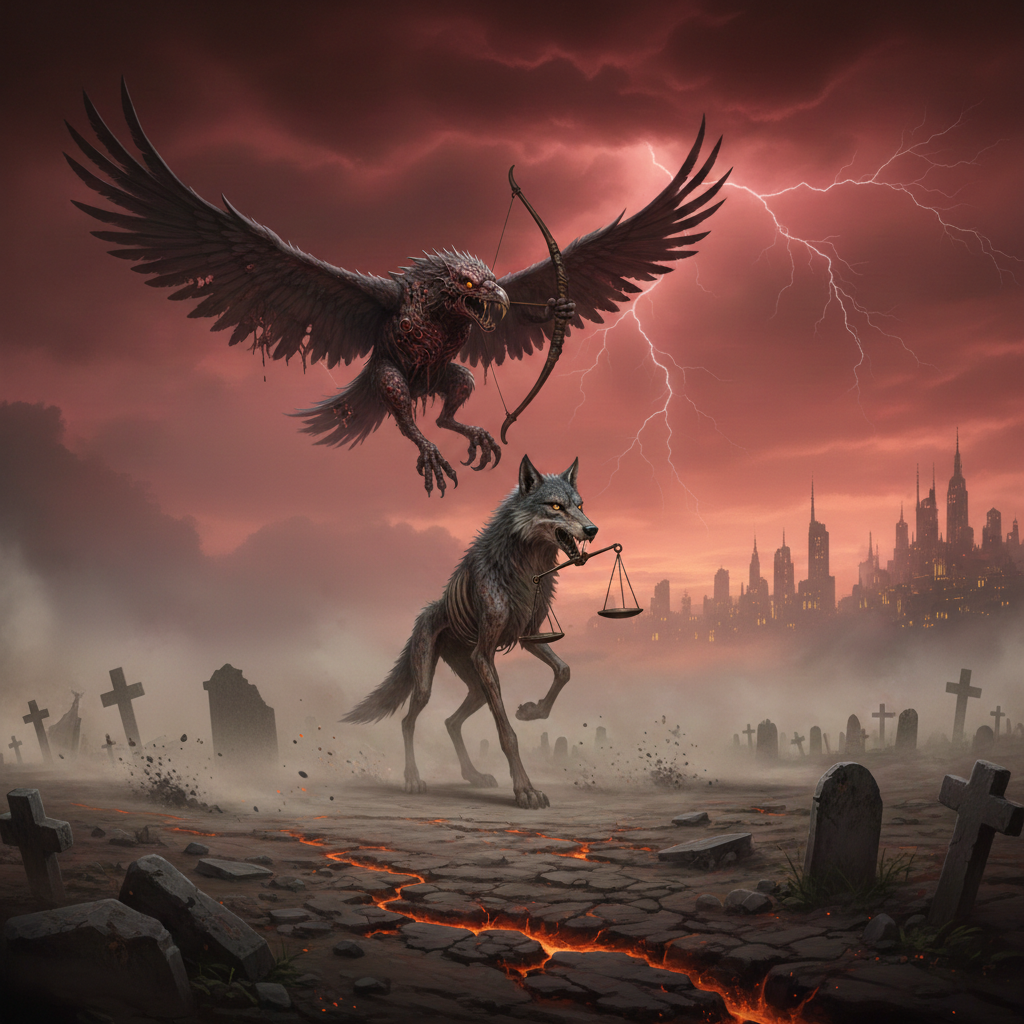
| Killed by the beast from the abyss | DES 11:7 | τὸ θηρίον τὸ ἀναβαῖνον ἐκ τῆς ἀβύσσου |
| Bodies in the great city | DES 11:8 | τῆς πόλεως τῆς μεγάλης |
| Resurrected after 3.5 days | DES 11:11 | πνεῦμα ζωῆς ἐκ τοῦ Θεοῦ εἰσῆλθεν ἐν αὐτοῖς |
| Ascend to heaven | DES 11:12 | ἀνέβησαν εἰς τὸν οὐρανὸν ἐν τῇ νεφέλῃ |
This is the profile. Any candidate must be evaluated against every item.
The Old Testament root: Zechariah 4
The two olive trees are not an invention of the Unveiling. They are a direct import from Zechariah 4:
Zech 4:3 — “ושנים זיתים עליה” (ushnayyim zeitim aleiha) — “And two olive trees upon it”
Zech 4:14 — “אלה שני בני היצהר העמדים על אדון כל הארץ” (elleh shnei benei-hayitshar ha’omdim al Adon kol-ha’arets) — “These are the two sons of oil who attend before the Adon of all the earth.”
The Hebrew term בְנֵי־הַיִּצְהָר (benei-hayitshar) is normally translated as “sons of fresh oil” or “anointed ones.” In Zechariah’s original context, the two olive trees flank the Temple lampstand — they are sources of oil that feed the light. DES 11 takes this image and transforms the olive trees into active witnesses: they no longer merely feed light — they prophesy, suffer, die, and rise.
Candidate 1: Moses + Elijah
Evidence in favour
The correspondence of powers is the most evident:
| Power in DES 11 | Prophet | OT passage |
|---|---|---|
| Shut heaven (no rain) | Elijah | 1Ki 17:1 — “As Yahweh (יהוה — yhwh; trad. “Jehovah”1) lives… there shall be neither dew nor rain these years” |
| Fire from heaven/mouth | Elijah | 2Ki 1:10 — fire descends from heaven and consumes the soldiers |
| Waters into blood | Moses | Ex 7:20 — “and all the waters of the river became blood” |
| Plagues upon the earth | Moses | Ex 7-12 — the ten plagues of Egypt |
Both appeared at the Transfiguration:
Mt 17:3 — “καὶ ἰδοὺ ὤφθη αὐτοῖς Μωϋσῆς καὶ Ἠλίας συλλαλοῦντες μετ᾽ αὐτοῦ” “And behold, there appeared to them Moses and Elijah, talking with him.”
The Transfiguration places Moses and Elijah together, flanking Jesus — just as Zechariah’s olive trees flank the lampstand.
Unresolved problems
- Moses died (Dt 34:5). The witnesses of DES 11 die and rise — this presupposes they were alive beforehand. If Moses had already died, this would constitute a second death and second resurrection for him. The text does not address this.
- Elijah was taken up alive (2Ki 2:11). His return as a witness only to die would be an unprecedented movement in the biblical narrative.
- The correspondence is of powers, not identities. The text says the witnesses have these powers — it does not say they are Moses and Elijah.
Candidate 2: Peter + Paul
Evidence in favour
| Criterion | Peter | Paul |
|---|---|---|
| Eyewitness of Jesus | Yes (Mk 1:16-18) | No (post-resurrection conversion, Acts 9) |
| Signs and wonders | Yes (Acts 5:15 — shadow heals) | Yes (Acts 19:11-12 — cloths heal) |
| Martyrdom | Rome, inverted crucifixion (tradition) | Rome, beheading (tradition) |
| Pillars of the church | Yes (Gal 2:9 — στῦλοι, styloi) | Yes (Gal 2:9) |
| Prolonged public ministry | Yes | Yes (3 missionary journeys) |
Paul calls Peter a “pillar” (στῦλος) — and the two witnesses are called “lampstands” (λυχνίαι). Both terms suggest structural function.
Unresolved problems
- Peter and Paul did not demonstrate the specific powers of DES 11: shutting heavens, turning water to blood, invoking plagues. Their signs were healings and exorcisms.
- Both died in Rome — not in Jerusalem (“where also their Kyrios was crucified”).
- The correspondence of powers finds no parallel in the Acts of the Apostles.
- The Greek text uses μάρτυσιν (martysin, witnesses) — the same root as “martyr.” But all apostles are called witnesses. It is not distinctive to Peter and Paul.
Candidate 3: The Law + The Prophets (symbolic reading)
Evidence in favour
| Criterion | The Law (Torah) | The Prophets (Nevi’im) |
|---|---|---|
| Classic OT duo | Yes — “the Law and the Prophets” (Mt 7:12, 22:40) | Yes |
| Typical representative | Moses (author of the Torah) | Elijah (prophet par excellence) |
| Testimony function | Dt 31:26 — the Torah is placed “for a testimony” (לְעֵד, le’ed) against Israel | Is 8:20 — “The Torah and the testimony” |
| Two lampstands = two canonical sections | The Law illuminates the path | The Prophets illuminate the future |
| “Where the Kyrios was crucified” | The Law condemned Jesus (Lk 23:2) | The Prophets announced his death |
Jesus declared:
Lk 24:44 — “Everything must be fulfilled that is written about me in the Law of Moses, in the Prophets, and in the Psalms.”
If the two witnesses are the Law and the Prophets, then their “death” would be the suppression of canonical testimony by the religious system — and their “resurrection” would be the restoration of that testimony.
Unresolved problems
- The text describes the witnesses with the language of persons: mouths, bodies, sackcloth garments. A symbolic reading would require that all this language be metaphorical — including death, exposure of bodies, and resurrection.
- The beast from the abyss kills “people,” not “concepts.” The verb ἀποκτενεῖ (apoktenei, “will kill”) is used for physical killing.
- If they are symbolic, how does one explain the literal 1,260 days?
Candidate 4: Enoch + Elijah
Evidence in favour
The central argument: they are the only two human beings who never died in Scripture.
The Hebrew text of Gênesis 5:24 (WLC) —
וַיִּתְהַלֵּ֨ךְ חֲנ֤וֹךְ אֶת־הָֽאֱלֹהִים֙ וְאֵינֶ֔נּוּ כִּֽי־לָקַ֥ח אֹת֖וֹ אֱלֹהִֽים
“And Enoch walked with ha-Elohim, and was not, because took (לָקַח) him Elohim.” — Gênesis 5:24
And the text of 2 Kings 2:11 (WLC) —
וַיַּ֙עַל֙ אֵלִיָּ֔הוּ בַּסְעָרָ֖ה הַשָּׁמָֽיִם
“And Elijah went up in the storm (בַּסְעָרָה) to the heavens.” — 2 Kings 2:11
| Person | Did not die | Passage |
|---|---|---|
| Enoch | “Enoch walked with ha’Elohim, and was no more, for Elohim took him” | Gen 5:24 — “וַיִּתְהַלֵּ֨ךְ חֲנ֤וֹךְ אֶת־הָֽאֱלֹהִים֙ וְאֵינֶ֔נּוּ כִּֽי־לָקַ֥ח אֹת֖וֹ אֱלֹהִֽים” |
| Elijah | Went up to heaven in a chariot of fire | 2Ki 2:11 — “וַיַּ֙עַל֙ אֵלִיָּ֔הוּ בַּסְעָרָ֖ה הַשָּׁמָֽיִם” |
The reasoning: if “it is appointed for humans to die once” (Heb 9:27 — ἀπόκειται τοῖς ἀνθρώποις ἅπαξ ἀποθανεῖν), then Enoch and Elijah must return to die. The two witnesses die in DES 11:7 — this would be the fulfilment of that “debt.”
Unresolved problems
- Enoch demonstrated none of the powers described in DES 11. There is no record of Enoch shutting heavens, turning water to blood, or invoking plagues. All powers point to Moses and Elijah.
- The text of Hebrews 9:27 is not a universal absolute decree — Jesus raised Lazarus, who died twice. The “rule” has exceptions within the text itself.
- Enoch is an extremely brief figure in the canonical Scriptures (66 books). His importance in the apocryphal ecosystem (1 Enoch) is not accepted by the forensic unveiling methodology.
The beast from the abyss: which beast?
The witnesses are killed by “τὸ θηρίον τὸ ἀναβαῖνον ἐκ τῆς ἀβύσσου” — the beast that ascends from the abyss (DES 11:7).
This beast is not the Beast of the Sea (DES 13:1, which rises from the θάλασσα) nor the Beast of the Earth (DES 13:11, which rises from the γῆ). Its origin is the ἄβυσσος — the abyss.
| Beast | Origin | Passage |
|---|---|---|
| Beast of the Sea | θάλασσα (sea) | DES 13:1 |
| Beast of the Earth | γῆ (earth) | DES 13:11 |
| Beast from the Abyss | ἄβυσσος (abyss) | DES 11:7, 17:8 |
The same beast reappears in DES 17:8:
“τὸ θηρίον ὃ εἶδες ἦν καὶ οὐκ ἔστιν καὶ μέλλει ἀναβαίνειν ἐκ τῆς ἀβύσσου” “The beast that you saw was, and is not, and is about to ascend from the abyss.”
The Dragon/Abyss connection from the Forensic Dossier is direct. The Dragon is cast into the abyss in DES 20:3. A beast ascends from the abyss in DES 11:7 and 17:8. The pending question: is the beast from the abyss the Dragon, or is it sent by the Dragon?
The great city: Jerusalem under codename
DES 11:8 — “τῆς πόλεως τῆς μεγάλης, ἥτις καλεῖται πνευματικῶς Σόδομα καὶ Αἴγυπτος, ὅπου καὶ ὁ κύριος αὐτῶν ἐσταυρώθη” “The great city which spiritually is called Sodom and Egypt, where also their Kyrios was crucified.”
Three codenames for a single location:
| Codename | Meaning | Implication |
|---|---|---|
| Sodom | Perversion and judgment | City under condemnation |
| Egypt | Slavery and oppression | System of servitude |
| Where the Kyrios was crucified | Jerusalem | Unequivocal identification |
The adverb πνευματικῶς (pneumatikos, “spiritually”) is crucial. The great city is not literal Sodom nor literal Egypt. It is Jerusalem — but Jerusalem as a spiritual type of perversion and slavery. The religious system of Jerusalem is the environment that kills the witnesses.
Death, resurrection, and ascension: the Christological parallel
The sequence of the witnesses replicates the sequence of Jesus:
| Stage | Jesus | Two witnesses |
|---|---|---|
| Public ministry | ~3.5 years | 1,260 days (3.5 years) |
| Death | Crucifixion in Jerusalem | Killed by the beast in the great city |
| Exposure | 3 days in the tomb | 3.5 days bodies exposed |
| Resurrection | On the third day | After 3.5 days — πνεῦμα ζωῆς enters |
| Ascension | Rises to heaven (Acts 1:9) | Rise to heaven in the cloud (DES 11:12) |
| Witnesses of ascension | Disciples | Enemies |
The numerical proportion is intentional: 3.5 years of ministry to 3.5 days of death. The pattern is not coincidence — it is narrative design.
Comparative table of the four candidates
| Profile criterion | Moses + Elijah | Peter + Paul | Law + Prophets | Enoch + Elijah |
|---|---|---|---|---|
| Shut heavens | Elijah (1Ki 17:1) | No record | Symbolic | Elijah (1Ki 17:1) |
| Water into blood | Moses (Ex 7:20) | No record | Symbolic | No record (Enoch) |
| Plagues upon the earth | Moses (Ex 7-12) | No record | Symbolic | No record (Enoch) |
| Fire from the mouth | Elijah (2Ki 1:10) | No record | Symbolic | Elijah (2Ki 1:10) |
| Two olive trees (Zech 4) | Possible | Pillars (Gal 2:9) | Two canonical sections | Possible |
| Historical death | Moses died, Elijah did not | Both martyred | Not applicable | Neither died |
| Death in Jerusalem | Moses: no, Elijah: no | Both: Rome | N/A | Neither |
| Transfiguration | Both present (Mt 17:3) | No | No | No |
| “Never died” | Only Elijah | Not applicable | N/A | Both |
No candidate satisfies all criteria simultaneously.
Five open forensic questions
1. If the witnesses operate with the powers of Moses and Elijah, why does the text not name them as Moses and Elijah? Is the nominal omission deliberate or circumstantial?
2. Is the beast that ascends from the abyss (DES 11:7) the same beast of DES 17:8 (“was, and is not, and is about to ascend from the abyss”)? If so, how can it kill the witnesses if it “is not” at the narrative moment?
3. The two sons of oil in Zechariah 4:14 — בְנֵי־הַיִּצְהָר (benei-hayitshar) — in the original context refer to Joshua (high priest) and Zerubbabel (governor). If the Unveiling reuses the image, does it also reuse the functions (priestly + governmental)?
4. The “great city” is spiritually called Sodom and Egypt. In DES 17:18, the great city is identified as Babylon. Are they the same city? Is Jerusalem = Babylon in the coded language of the Unveiling?
5. If Hebrews 9:27 establishes that “it is appointed for humans to die once,” and Enoch and Elijah did not die, is the death of the two witnesses in DES 11 the fulfilment of that appointment — or does Hebrews 9:27 admit exceptions?
Conclusion: open investigation
The case remains open. The correspondence of powers favours Moses + Elijah. The logic of “pending death” favours Enoch + Elijah. The symbolic reading offers theological coherence with the Law + the Prophets. The apostolic connection with Peter + Paul is the weakest, but it cannot be dismissed without thorough examination.
The forensic method does not resolve by popular vote or by appeal to tradition. It resolves by convergence of textual evidence. To date, no candidate produces total convergence.
The investigation continues.
“You read. And the interpretation is yours.”
Artificial form: vowels from Adonai (אֲדֹנָי → a, o, a) placed over consonants YHWH — Masoretic qere perpetuum. Medieval Latin readers merged both, producing “YeHoVaH” — a hybrid that never existed as a Hebrew word. The most accepted academic reconstruction is Yahweh /jah.ˈweh/, based on Greek transcriptions (Ιαβε — Clement of Alexandria, ~200 AD; Ιαουε — Theodoret of Cyrus, ~450 AD), abbreviated biblical forms (Yah — הַלְלוּ יָהּ), theophoric names (Yahu/Yeho — Eliyahu, Yehoshua) and Samaritan oral tradition (Yabe/Yawe). ↩︎