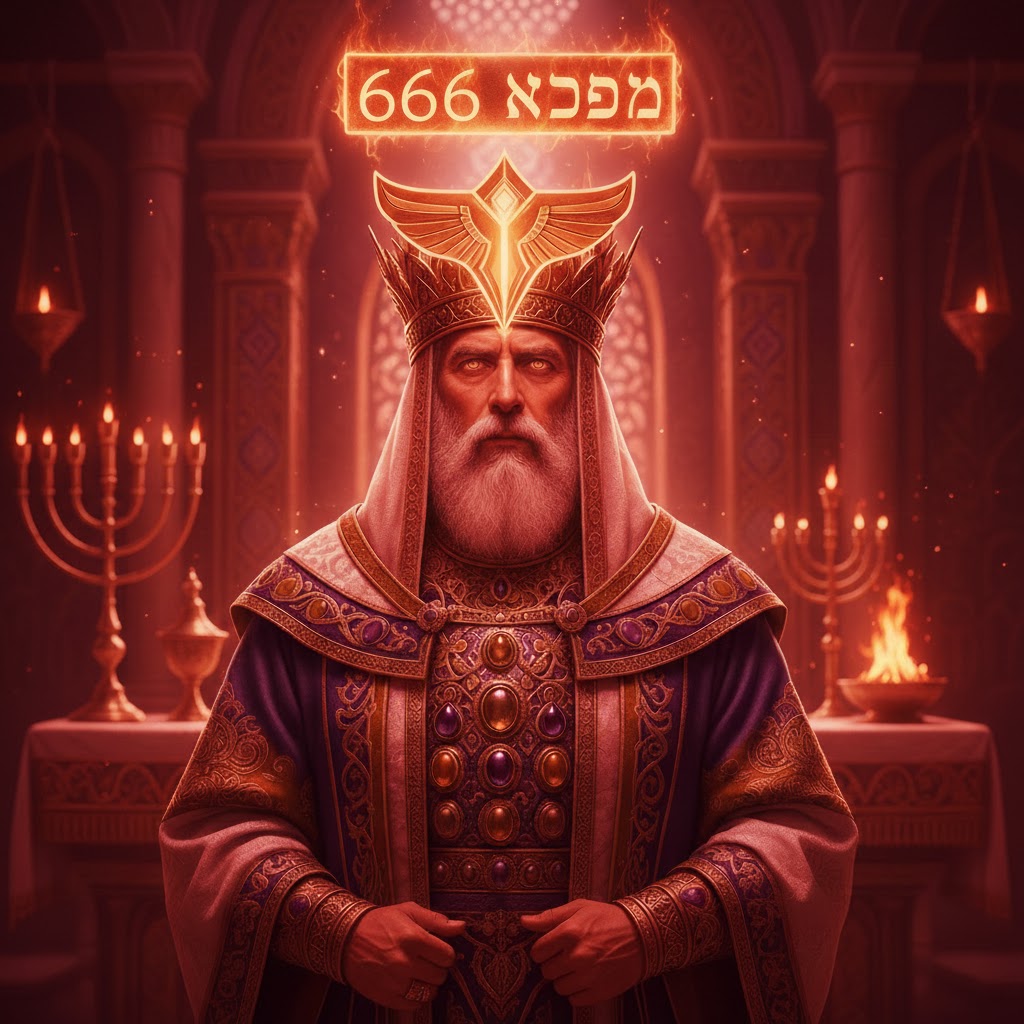
Public source text: WLC (Westminster Leningrad Codex) + Nestle 1904. Translation: Belem-2025 Bible translation — literal, rigid, straight from public códices.
The text under examination
DES 13:15 (Nestle 1904):
καὶ ἐδόθη αὐτῷ δοῦναι πνεῦμα τῇ εἰκόνι τοῦ θηρίου, ἵνα καὶ λαλήσῃ ἡ εἰκὼν τοῦ θηρίου καὶ ποιήσῃ ἵνα ὅσοι ἐὰν μὴ προσκυνήσωσιν τῇ εἰκόνι τοῦ θηρίου ἀποκτανθῶσιν
Literal translation:
“And it was given to him to give spirit (πνεῦμα) to the image (εἰκόνι) of the beast, so that the image of the beast would also speak (λαλήσῃ) and cause that as many as would not worship (προσκυνήσωσιν) the image of the beast would be killed (ἀποκτανθῶσιν).”
Five forensic elements in this verse:
| Element | Greek | Translation | Function |
|---|---|---|---|
| πνεῦμα | pneuma | spirit | Animation — the image receives “life” |
| εἰκών | eikōn | image | The object that is animated |
| λαλέω | laleō | to speak | The image produces discourse |
| προσκυνέω | proskyneō | to worship/bow down | The image demands worship |
| ἀποκτείνω | apokteinō | to kill | The image decrees death |
The image speaks. The image demands worship. The image decrees death for those who do not submit.
The problem: idols do not speak
Psalm 115:5 (WLC) is categorical:
פֶּה־לָהֶם וְלֹא יְדַבֵּרוּ “A mouth they have, and do not speak”
Psalm 135:16 repeats:
פֶּה־לָהֶם וְלֹא יְדַבֵּרוּ “A mouth they have, and do not speak”
Jeremiah 10:5:
כִּי לֹא יְדַבֵּרוּ “For they do not speak”
The OT is unanimous: idols of wood, stone and metal do not speak. This is the marker of pagan idols — they are mute. Therefore, the “image of the beast” in DES 13:15 cannot be a conventional pagan idol. Idols do not speak. This image speaks.
What speaks in the OT?
If idols do not speak, what speaks with divine authority in the OT? The answer is in the códices:
Exodus 25:22
וְנוֹעַדְתִּי לְךָ שָׁם וְדִבַּרְתִּי אִתְּךָ מֵעַל הַכַּפֹּרֶת “And I will meet with you there and I will speak with you from above the mercy seat”
Yahweh (יהוה — yhwh; trad. “Jehovah”1) speaks (דִּבַּרְתִּי, dibbarti) from above the mercy seat (כַּפֹּרֶת, kapporet). The mercy seat is the lid of the ark, inside the Holy of Holies, inside the Tabernacle.
Numbers 7:89
וּבְבֹא מֹשֶׁה אֶל־אֹהֶל מוֹעֵד לְדַבֵּר אִתּוֹ וַיִּשְׁמַע אֶת־הַקּוֹל מִדַּבֵּר אֵלָיו מֵעַל הַכַּפֹּרֶת “And when Moses entered the tent of meeting to speak with him, then he heard the voice speaking to him from above the mercy seat”
Moses hears a voice that speaks from above the mercy seat. The Tabernacle is a system that emits discourse. It is not mute like pagan idols. It speaks.
Easter Egg #99: The connection between DES 13:15 (εἰκὼν λαλήσῃ — “image speak”) and Exodus 25:22 (וְדִבַּרְתִּי — “and I will speak”) is an intertextual echo of high relevance. The only “object” in the OT that SPEAKS with divine authority is the Tabernacle/Temple — specifically the mercy seat. The image that speaks in DES 13 is not a pagan idol. It is a religious system that issues oracles — exactly like the Temple system.
The five functions of the image and the Temple
| Function | The image of the beast (DES 13) | The Temple/Tabernacle (OT) |
|---|---|---|
| Speaks | λαλήσῃ — “speak” (DES 13:15) | וְדִבַּרְתִּי — “and I will speak” (Ex 25:22) |
| Legislates death | ἀποκτανθῶσιν — “be killed” (DES 13:15) | Death penalty for transgression (Lev 20, Num 15:35) |
| Demands worship | προσκυνήσωσιν — “worship” (DES 13:15) | Mandatory worship at the Temple (Dt 12:5-7) |
| Controls commerce | μὴ δύνηται ἀγοράσαι ἢ πωλῆσαι — “cannot buy or sell” (DES 13:17) | Temple tax, Temple market (Mt 21:12) |
| Has identifying mark | χάραγμα — “mark” on hand/forehead (DES 13:16) | Phylacteries on hand/forehead (Ex 13:9, Dt 6:8) |
Five functions. Five correspondences. The image of the beast replicates all the functions of the Temple system.
The image as institutional system
The forensic investigation converges on an identification:
The εἰκών (eikōn — “image”) of the beast is not a statue. It is a religious institutional system that:
- Speaks — issues oracles, doctrines, pronouncements with “divine” authority
- Legislates — decrees who lives and who dies (excommunication, heresy, stoning)
- Demands worship — prostration (προσκυνέω) is not optional
- Controls economy — those who do not participate are excluded from commerce
- Marks its adherents — visible signs of belonging
The πνεῦμα given to the image
DES 13:15 says that πνεῦμα (pneuma — “spirit”) was given to the image. The image receives animation. It gains “life.”
A stone idol is inert. An institutional system is alive — it operates, grows, legislates, persecutes, reproduces. The πνεῦμα given to the image is not supernatural — it is organizational. It is the vital force of an institution that functions autonomously, as if it had a life of its own.
Religious organizations speak (doctrinal pronouncements), legislate (canons, rules), demand worship (mandatory liturgy), control economy (tithes, offerings) and exclude dissenters (excommunication, anathema).
The question that remains
If the image of the beast is a religious institutional system that speaks with divine authority, legislates over life and death, demands worship and controls commerce…
…how many existing religious systems fit this description?
Tradition reads DES 13:15 looking for a literal statue that will speak in the future. The text points to something that already existed when John wrote — and that may continue to exist now.
The investigator catalogs. The judge decides.
“You read. And the interpretation is yours.”
Artificial form: vowels from Adonai (אֲדֹנָי → a, o, a) placed over consonants YHWH — Masoretic qere perpetuum. Medieval Latin readers merged both, producing “YeHoVaH” — a hybrid that never existed as a Hebrew word. The most accepted academic reconstruction is Yahweh /jah.ˈweh/, based on Greek transcriptions (Ιαβε — Clement of Alexandria, ~200 AD; Ιαουε — Theodoret of Cyrus, ~450 AD), abbreviated biblical forms (Yah — הַלְלוּ יָהּ), theophoric names (Yahu/Yeho — Eliyahu, Yehoshua) and Samaritan oral tradition (Yabe/Yawe). ↩︎