Public source text: WLC + Nestle 1904. Translation: Belem-2025 Bible translation.
The Invisible Pillar
Among the seven heads of the beast, Levi occupies the most paradoxical position. It is a pillar of the system but does not count as an operational unit. It is excluded from the military census and territorial allocation, but operates the heart of the system — the sacrifice, the Temple, the mediation.
Levi is the infrastructure that everyone uses but no one sees as autonomous power.
The Levitical Separation
Numbers 1:49 is categorical:
אַ֣ךְ אֶת־מַטֵּ֤ה לֵוִי֙ לֹ֣א תִפְקֹ֔ד וְאֶת־רֹאשָׁ֖ם לֹ֣א תִשָּׂ֑א בְּת֖וֹךְ בְּנֵ֥י יִשְׂרָאֵֽל akh et-matteh Levi lo tifqod ve’et-rosham lo tissa betokh beney Yisra’el “Only the tribe of Levi you shall not count and their head (רֹאשָׁם, rosham) you shall not lift up in the midst of the sons of Israel”
Forensic irony: the term used is רֹאשׁ (rosh) — “head.” The head of Levi shall not be lifted in the census. But it is exactly as a head (κεφαλή) that Levi operates in the system of the beast. It is not a counted head — it is a structural head.
Head, Not Horn
The distinction is crucial for the architecture of the beast:
| Category | Function | Counted in census? | Receives territory? |
|---|---|---|---|
| Head (pillar) | Institutional foundation | Not necessarily | Not necessarily |
| Horn (tribe) | Territorial operational power | Yes | Yes |
Levi is a head because it founds an indispensable institutional function (priesthood). But it is not a horn because it does not operate as a territorial unit. Therefore, when we count the ten horns (operational tribes), Levi is outside the count — but when we count the seven heads (founding pillars), Levi is essential.
The Origin of the Levitical Priesthood
The separation of Levi is not arbitrary. The text presents a trajectory:
1. The Act of Violence (Gênesis 34:25-31)
Simeon and Levi massacre Shechem. Jacob rebukes them:
שִׁמְע֥וֹן וְלֵוִ֖י אַחִ֑ים כְּלֵ֥י חָמָ֖ס מְכֵרֹתֵיהֶֽם “Simeon and Levi are brothers; instruments of violence (חָמָס, khamas) are their swords” (Gen 49:5)
Jacob curses Levi’s anger (Gen 49:7): “I will divide them in Jacob, scatter them in Israel.” The dispersion is a curse — but becomes a functional mechanism.
2. The Consecration by Zeal (Exodus 32:26-29)
In the episode of the golden calf, Moses asks: “Who is for Yahweh (יהוה — yhwh; trad. “Jehovah”1)?” The Levites respond and execute the idolaters:
וַיַּעֲשׂ֥וּ בְנֵי־לֵוִ֖י כִּדְבַ֣ר מֹשֶׁ֑ה “And the sons of Levi did according to the word of Moses”
The curse of dispersion converts into consecration. The same tribe cursed for violence is separated by zeal. The system transforms the negative into functional.
3. The Formalization (Numbers 3:5-13)
קָרֵ֖ב אֶת־מַטֵּ֣ה לֵוִ֑י… וְשֵׁרְת֖וּ אֹתֽוֹ “Bring near the tribe of Levi… and they shall serve him [Aaron]”
Levi is formally assigned to the service of the Tabernacle. Without territory, without census, without inheritance — but with a monopoly over access to Θεός.
The Nezer Hakodesh — The Mark on the Forehead
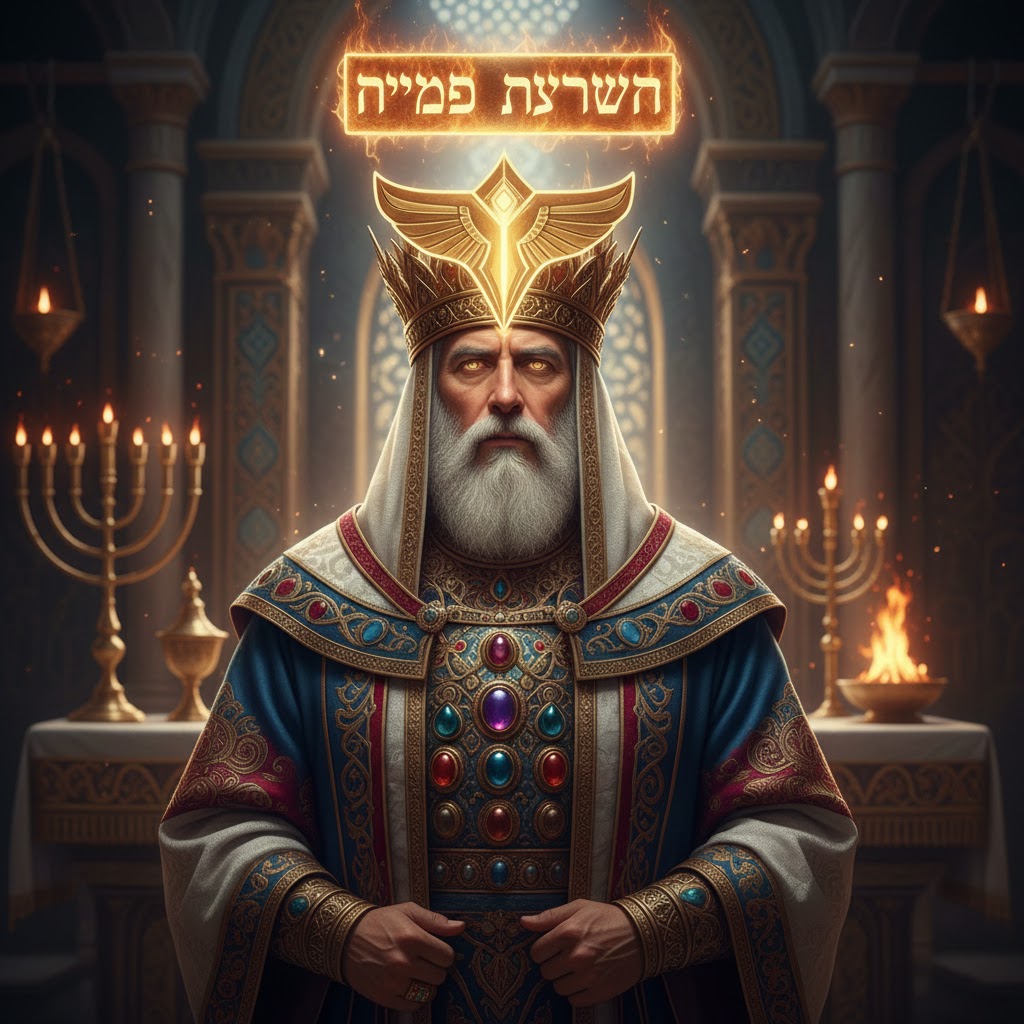
Here the investigation reaches a critical point. The high priest — obligatorily a Levite, of the lineage of Aaron — bears a specific object:
Exodus 28:36-38:
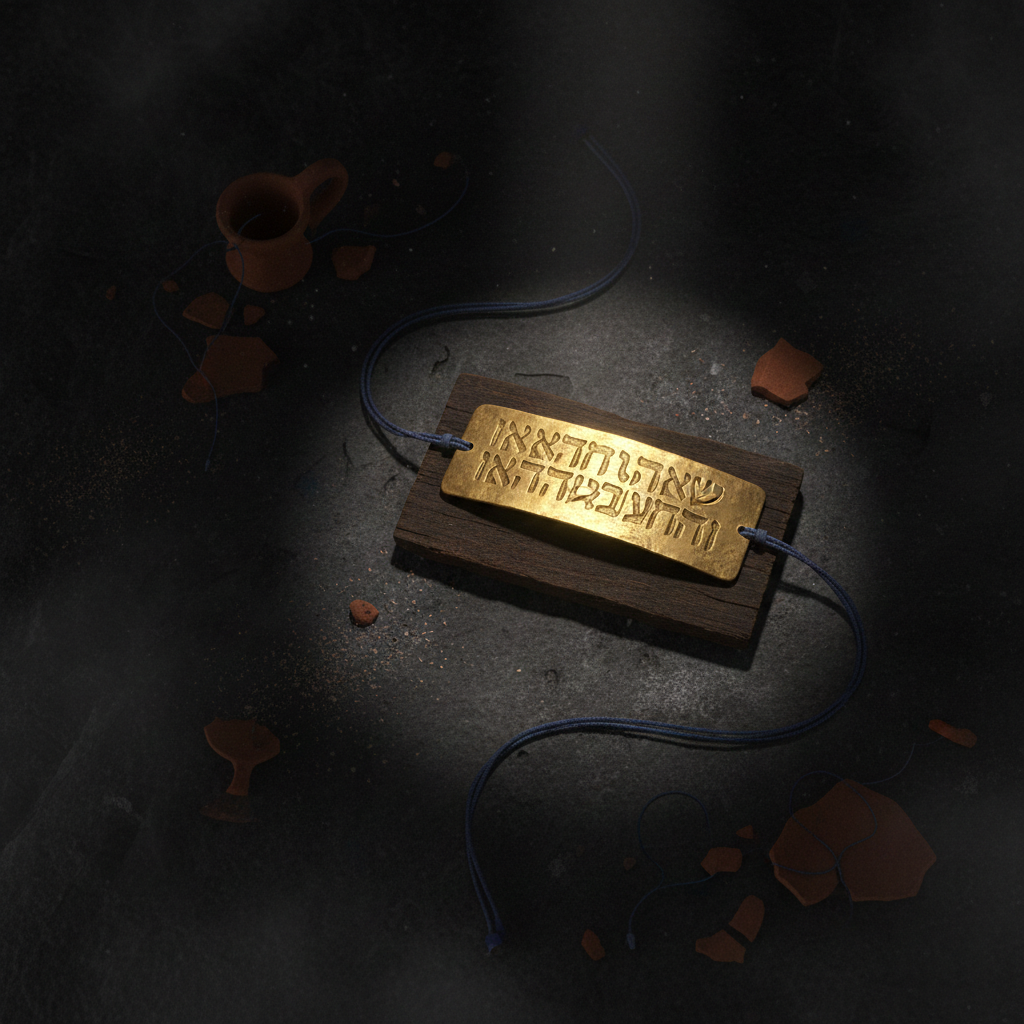
וְעָשִׂ֥יתָ צִּ֖יץ זָהָ֣ב טָה֑וֹר וּפִתַּחְתָּ֤ עָלָיו֙ פִּתּוּחֵ֣י חֹתָ֔ם קֹ֖דֶשׁ לַיהוָֽה “And you shall make a plate (צִּיץ, tsits) of pure gold, and you shall engrave upon it, engraving of a seal (חֹתָם, khotam): HOLY TO Yahweh (yhwh) (קֹדֶשׁ לַיהוָה)”
וְהָיָ֖ה עַל־מִצְח֣וֹ תָּמִ֑יד “And it shall be upon his forehead (מִצְחוֹ, mitsekho) continually”
| Element | Hebrew | Description |
|---|---|---|
| Object | צִּיץ (tsits) | Plate/lamina of pure gold |
| Inscription | קֹדֶשׁ לַיהוָה | “HOLY TO Yahweh (yhwh)” |
| Location | מֵצַח (metsakh) | Forehead / brow |
| Attachment | Blue cord (Ex 28:37) | Fastened to the turban |
| Name of object | נֵזֶר הַקֹּדֶשׁ (nezer hakodesh) | Crown of Holiness (Ex 29:6) |
Now compare with DES 13:16:
καὶ ποιεῖ πάντας… ἵνα δῶσιν αὐτοῖς χάραγμα ἐπὶ τῆς χειρὸς αὐτῶν τῆς δεξιᾶς ἢ ἐπὶ τὸ μέτωπον αὐτῶν “And it causes all… to receive a mark (χάραγμα, kharagma) upon their right hand or upon their forehead (μέτωπον, metopon)”
| DES 13:16 | Exodus 28:36 | Correspondence |
|---|---|---|
| χάραγμα (mark) | חֹתָם (seal/engraving) | Engraved mark |
| μέτωπον (forehead) | מֵצַח (forehead) | Same location |
| Mark of the beast | “HOLY TO Yahweh (yhwh)” | Mark of the system |
Easter Egg: The term חֹתָם (khotam, “seal/engraving”) from Exodus 28:36 is the same word used in Song of Songs 8:6 — “Set me as a seal (חֹתָם) upon your heart, as a seal upon your arm.” The seal marks ownership. The plate on the high priest’s forehead is the seal of ownership by yhwh. The mark of the beast is the seal of ownership by the system. The semantic structure is identical.
The Nezer and 666
The expression נֵזֶר הַקֹּדֶשׁ (nezer hakodesh, “Crown of Holiness”) is the formal name of the object the high priest bears on the forehead.
The gematric investigation — which will be detailed in a separate dossier — establishes that this expression is the axiom of the 666 enigma of DES 13:18. The nezer hakodesh is the object that connects the Levitical priesthood to the number of the beast.
Without Levi, there is no high priest. Without the high priest, there is no nezer hakodesh. Without the nezer hakodesh, there is no mark on the forehead. Without the mark on the forehead, there is no 666.
Levi is the head that operates the marking mechanism.
Levi in Moses’ Blessing
Deuteronomy 33:8-11 records the blessing upon Levi:
תֻּמֶּ֤יךָ וְאוּרֶ֙יךָ֙ לְאִ֣ישׁ חֲסִידֶ֔ךָ “Your Tumim and your Urim belong to your pious man”
Urim and Tumim — the instruments of oracular consultation — belong to Levi. The Levitical priesthood does not merely sacrifice and mediate. It also consults and pronounces the will of yhwh. It is the head that speaks for the system.
The Priesthood as Infrastructure
To visualize Levi’s function, consider the system without it:
| Without Levi | Consequence |
|---|---|
| Without priests | No one offers sacrifices |
| Without sacrifices | No atonement |
| Without atonement | No access to Yahweh (yhwh) |
| Without access to Yahweh (yhwh) | The system loses its reason to exist |
| Without Tabernacle/Temple | No place of worship |
| Without Urim and Tumim | No oracular consultation |
Levi is not an accessory. It is infrastructure. It is the pillar without which the other six do not function. Abraham can found the covenant, Isaac transmit it, Jacob multiply it, Judah govern it, Joseph preserve it, Moses formalize it — but without Levi, none of them can operate access to the Θεός of the system.
Conclusion
Levi is the fourth head of the beast — the priestly pillar. Separated from the tribal census, without territorial inheritance, dedicated exclusively to mediation between Yahweh (yhwh) and the people. It operates the Tabernacle, offers sacrifices, consults the oracles and bears the nezer hakodesh on the forehead — the same object that the Unveiling identifies as the mark of the beast.
The priesthood is not a subsidiary function of the system. It is the operational core. Without Levi, the beast does not function.
Next dossier: Judah — the throne as political pillar.
“You read. And the interpretation is yours.”
Artificial form: vowels from Adonai (אֲדֹנָי → a, o, a) placed over consonants YHWH — Masoretic qere perpetuum. Medieval Latin readers merged both, producing “YeHoVaH” — a hybrid that never existed as a Hebrew word. The most accepted academic reconstruction is Yahweh /jah.ˈweh/, based on Greek transcriptions (Ιαβε — Clement of Alexandria, ~200 AD; Ιαουε — Theodoret of Cyrus, ~450 AD), abbreviated biblical forms (Yah — הַלְלוּ יָהּ), theophoric names (Yahu/Yeho — Eliyahu, Yehoshua) and Samaritan oral tradition (Yabe/Yawe). ↩︎