The document no one can open
Public source text: WLC (Westminster Leningrad Codex) + Nestle 1904. Translation: Belem-2025 Bible translation — literal, rigid, straight from public códices.
The most important forensic scene of the Unveiling happens before any seal is broken, before any trumpet sounds, before any bowl is poured. It happens in DES 5 — when a document is presented and no one can open it.
In investigative terms: the dossier exists. The evidence is compiled. But the seal prevents access. The question is not “what does it contain?” — it is “who has the authority to open it?”
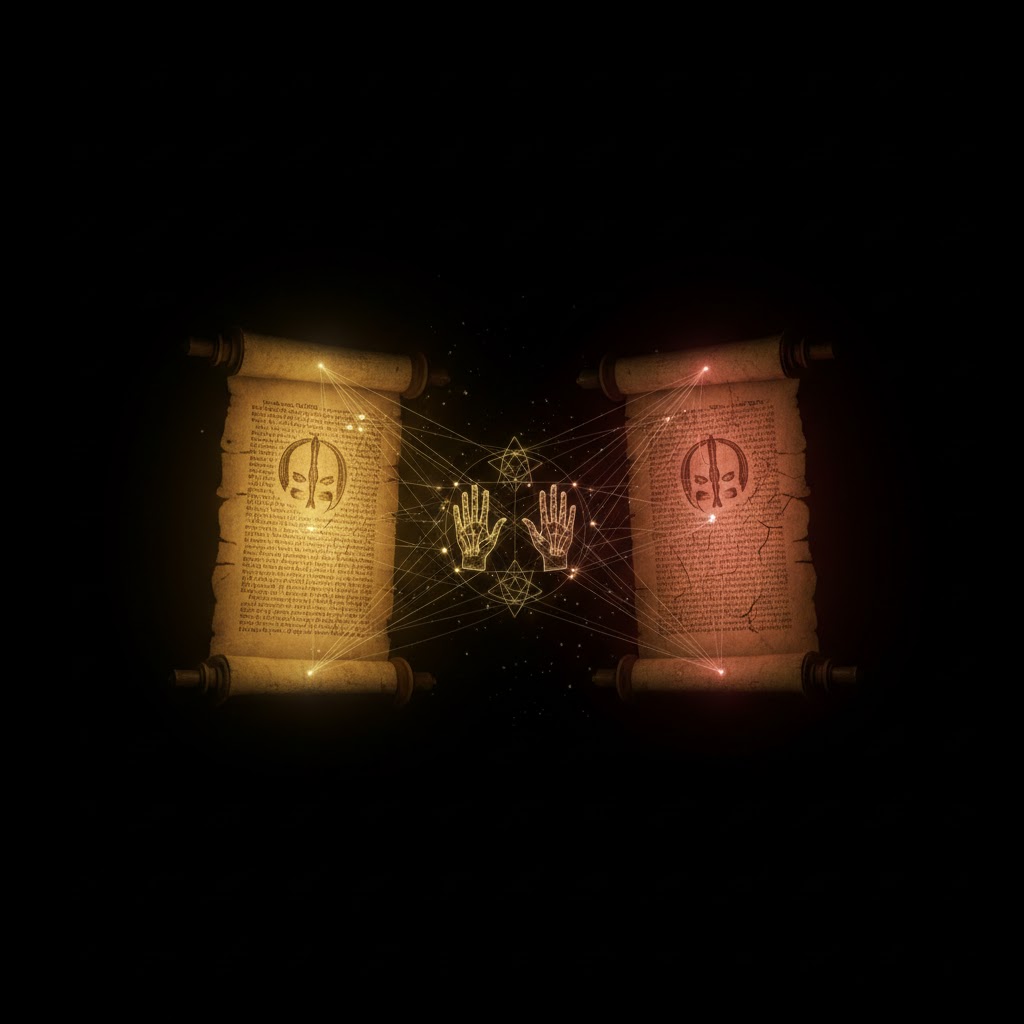
The book in the right hand — DES 5:1
καὶ εἶδον ἐπὶ τὴν δεξιὰν τοῦ καθημένου ἐπὶ τοῦ θρόνου βιβλίον γεγραμμένον ἔσωθεν καὶ ὄπισθεν κατεσφραγισμένον σφραγῖσιν ἑπτά kai eidon epi ten dexian tou kathemenou epi tou thronou biblion gegrammenon esothen kai opisthen katesphragismenon sphragisin hepta “And I saw upon the right hand of the one seated upon the throne a book written inside and on the back, sealed with seven seals.”
Three essential forensic data points:
| Element | Greek | Meaning |
|---|---|---|
| Book | βιβλίον (biblion) | Scroll/document — not a modern codex |
| Written on both sides | γεγραμμένον ἔσωθεν καὶ ὄπισθεν | Complete content — nothing more fits |
| Sealed | κατεσφραγισμένον σφραγῖσιν ἑπτά | Perfect passive participle — permanent state of sealing |
The perfect passive κατεσφραγισμένον (katesphragismenon) indicates that the book was already sealed before John saw it. The action of sealing occurred in the past and the result persists. The seven seals are not temporary protection — they are a juridical shield.
The search for the worthy one — DES 5:2-4
τίς ἄξιος ἀνοῖξαι τὸ βιβλίον καὶ λῦσαι τὰς σφραγῖδας αὐτοῦ; tis axios anoixai to biblion kai lysai tas sphragidas autou? “Who is worthy to open the book and loose its seals?”
A strong messenger (ἄγγελον ἰσχυρόν) proclaims the question in a great voice (ἐν φωνῇ μεγάλῃ). The amplitude of the voice indicates that the summons reaches all domains:
| Domain | Greek | Result |
|---|---|---|
| Heaven | ἐν τῷ οὐρανῷ | No one found |
| Earth | ἐπὶ τῆς γῆς | No one found |
| Under the earth | ὑποκάτω τῆς γῆς | No one found |
No being in three dimensions of existence possesses the necessary dignity (axios). The word ἄξιος does not denote moral merit — it denotes equivalence of weight. Who has sufficient weight to break the seal?
John weeps — κλαίω (klaio), the same verb used for Mary’s weeping before the empty tomb (Jn 20:11). It is not sentimental sadness. It is the lament of one who sees the evidence sealed and cannot access it.
The announcement of the Lion — DES 5:5
ἐνίκησεν ὁ λέων ὁ ἐκ τῆς φυλῆς Ἰούδα, ἡ ῥίζα Δαυίδ, ἀνοῖξαι τὸ βιβλίον enikesen ho leon ho ek tes phyles Iouda, he rhiza Dauid, anoixai to biblion “The lion who is of the tribe of Judah, the root of David, has conquered, to open the book.”
The verb ἐνίκησεν (enikesen) is aorist indicative — an action already completed. The victory is not in progress. It already happened. The Lion has already conquered and therefore can open.
Two titles: Lion of the tribe of Judah (reference to Gen 49:9) and Root of David (reference to Is 11:10). Both point to lineage, ancestral authority, juridical legitimacy.
What John sees — DES 5:6
καὶ εἶδον… ἀρνίον ἑστηκὸς ὡς ἐσφαγμένον, ἔχων κέρατα ἑπτὰ καὶ ὀφθαλμοὺς ἑπτά, οἵ εἰσιν τὰ ἑπτὰ πνεύματα τοῦ Θεοῦ kai eidon… arnion hestekos hos esphagmenon, echon kerata hepta kai ophthalmous hepta, hoi eisin ta hepta pneumata tou Theou “And I saw… a Lamb standing as slain, having seven horns and seven eyes, which are the seven Πνεύματα of Θεός.”
Here is the central forensic subversion. An elder says “Lion.” John sees “Lamb.” The announcement and the sighting do not coincide.
| Announced | Sighted | Implication |
|---|---|---|
| Lion (λέων) | Lamb (ἀρνίον) | The victory did not come by the predator’s strength |
| Conquered (ἐνίκησεν) | As slain (ὡς ἐσφαγμένον) | The victory came through death |
The perfect participle ἐσφαγμένον (esphagmenon) — “having been slain” — indicates that the marks of slaughter remain visible. The Lamb is standing (ἑστηκός, hestekos), but carries the wounds. He was not restored to a pre-death state. He carries the evidence.
The seven horns = fullness of power. The seven eyes = fullness of vision. And the text identifies the seven eyes as “the seven Πνεύματα of Θεός” — the same mentioned in DES 1:4 and DES 4:5.
Easter Egg: tradition reads the Lamb as a symbol of meekness. The Greek text presents a Lamb with seven horns (total power) and seven eyes (total surveillance) — attributes of military intelligence, not of passivity.
The Lamb takes the book — DES 5:7
καὶ ἦλθεν καὶ εἴληφεν ἐκ τῆς δεξιᾶς τοῦ καθημένου ἐπὶ τοῦ θρόνου kai elthen kai eilephen ek tes dexias tou kathemenou epi tou thronou “And he came and took from the right hand of the one seated upon the throne.”
The verb εἴληφεν (eilephen) is perfect indicative — “took and maintains possession.” The Lamb does not receive passively. He takes actively. The possession is permanent.
The forensic logic: only the victim can expose
The principle that sustains the entire scene is investigative:
- The book contains the integral content of the Unveiling — everything that will be exposed in the following chapters
- No one in three domains of existence can open it
- Only the slain Lamb has the dignity to break the seals
The forensic conclusion is direct: only the one who was inside the system and was destroyed by it has the authority to reveal it. The Lamb is not an external observer. He was processed by the system. The marks of slaughter are the credential that confers upon him the right to open the dossier.
In any criminal investigation, the victim is the first source of evidence. The body carries the marks of the crime. The Lamb “as slain” is the body that carries the proof — and simultaneously, the only one with authority to present it.
The sealed content
The book sealed with seven seals is not a mystical text about the future. It is a forensic dossier about the system that killed the Lamb. Each broken seal reveals a layer of exposure. The trumpets amplify. The bowls execute. But it all begins here: a sealed document and a single being with authority to open it.
The Unveiling is not prediction. It is exposure. And the exposure begins when the victim takes the dossier and breaks the seals.
Conclusion
The Book Sealed with Seven Seals is the central artifact of the Unveiling. Without it, nothing is revealed. Without the Lamb, no one opens it. The dignity does not come from cosmic power or hierarchical position — it comes from the experience of slaughter. The victim is the witness. The slain one is the revealer.
The investigation did not begin with a theological thesis. It began with a Greek question: τίς ἄξιος — “Who is worthy?” And the answer from the códices is unequivocal: only the Lamb who was killed.
“You read. And the interpretation is yours.”