The great sign that nobody investigates properly
Public source text: WLC (Westminster Leningrad Codex) + Nestle 1904. Translation: Belem-2025 Bible translation – literal, rigid, straight from the public códices.
The eschatological tradition splits into two camps when it encounters the woman of DES 12: either she is Mary, or she is the Church. Both camps commit the same methodological error — they start from a thesis and search for the text that confirms it. The forensic method does the inverse: it starts from the text and follows the evidence wherever it leads.
The Greek text
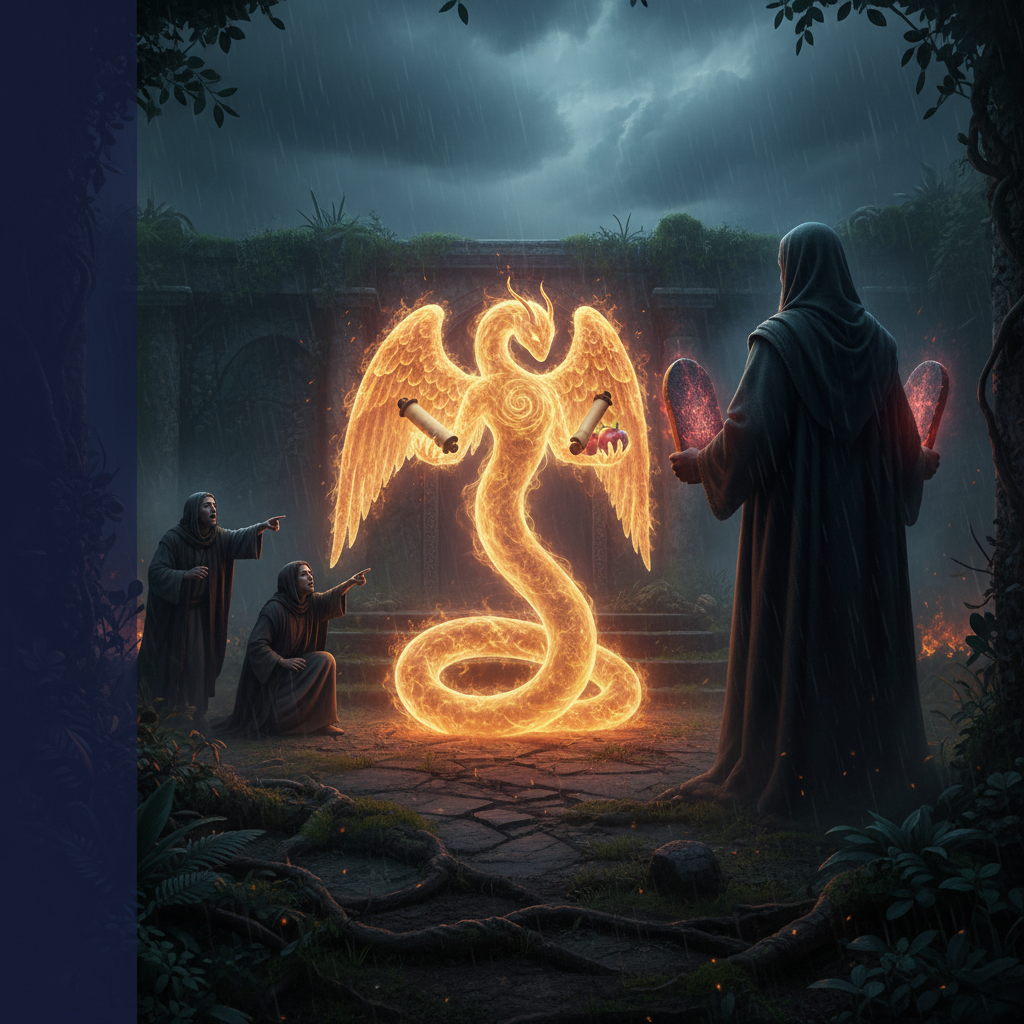
Καὶ σημεῖον μέγα ὤφθη ἐν τῷ οὐρανῷ, γυνὴ περιβεβλημένη τὸν ἥλιον, καὶ ἡ σελήνη ὑποκάτω τῶν ποδῶν αὐτῆς, καὶ ἐπὶ τῆς κεφαλῆς αὐτῆς στέφανος ἀστέρων δώδεκα Kai semeion mega ophthe en to ourano, gyne peribeblemene ton helion, kai he selene hypokato ton podon autes, kai epi tes kephales autes stephanos asteron dodeka “And a great sign was seen in heaven: a woman clothed with the sun, and the moon under her feet, and upon her head a crown of twelve stars.” — DES 12:1
Three visual elements compose the sign:
| Greek element | Transliteration | Meaning |
|---|---|---|
| ἥλιος | helios | sun — source of light |
| σελήνη | selene | moon — reflected light |
| δώδεκα ἀστέρων | dodeka asteron | twelve stars — crown |
The twelve stars and Joseph’s dream
The key to identifying the woman is not in the Unveiling — it is in Gênesis.
Gênesis 37:9 — “And [Joseph] dreamed yet another dream, and told it to his brothers, and said: Behold, I dreamed another dream; and behold, the sun (שֶׁמֶשׁ, shemesh), and the moon (יָרֵחַ, yareach), and eleven stars (כּוֹכָבִים, kokhavim) bowed down before me.”
Jacob’s reaction is immediate (Gen 37:10): “Shall we indeed come, I and your mother and your brothers, to bow down before you to the ground?” Jacob decodes the dream:
| Symbol | Identity in Gênesis 37 |
|---|---|
| Sun | Jacob (father) |
| Moon | Rachel (mother) |
| 11 stars | Eleven brothers |
Joseph is the twelfth. Together, twelve stars = twelve tribes of Israel.
The woman of DES 12, clothed with the sun, with the moon under her feet and twelve stars on her head, is Israel — not as a political nation, but as a primordial entity, the lineage from which the Messiah is born.
The pregnancy and the birth
DES 12:2 — “καὶ ἐν γαστρὶ ἔχουσα, καὶ κράζει ὠδίνουσα καὶ βασανιζομένη τεκεῖν” kai en gastri echousa, kai krazei odinousa kai basanizomene tekein “And having in the womb, she cries out being in labor pains and being tormented to give birth.”
The woman is pregnant (ἐν γαστρὶ ἔχουσα) and cries out (κράζει) in agony. The verb βασανίζω (basanizo) is not merely “to suffer” — it is “to be tortured, to be tormented.” The birth is described as torture.
Israel bears the Messiah amid torment. History confirms: slavery in Egypt, exile in Babylon, Persian, Greek and Roman domination. The birth of the Messiah does not happen in peace — it happens under systemic oppression.
The male child
DES 12:5 — “καὶ ἔτεκεν υἱὸν ἄρρεν, ὃς μέλλει ποιμαίνειν πάντα τὰ ἔθνη ἐν ῥάβδῳ σιδηρᾷ” kai eteken huion arren, hos mellei poimainein panta ta ethne en rhabdo sidera “And she gave birth to a son, a male, who is about to shepherd all the nations with a rod of iron.”
The reference is unequivocal: Psalm 2:9 — “You shall break them with a rod of iron (בְּשֵׁבֶט בַּרְזֶל, beshevet barzel).” Psalm 2 is messianic. The male child is the Christ born of Israel.
The flight to the wilderness
After the birth, the woman flees:
DES 12:6 — “And the woman fled into the wilderness (ἔρημον, eremon), where she has a place prepared by Θεός (Theos), that they might nourish her there one thousand two hundred and sixty days.”
DES 12:14 — “And the two wings of the great eagle were given to the woman, that she might fly into the wilderness, to her place, where she is nourished for a time, times and half a time, away from the face of the serpent.”
Two records of the same flight: 1260 days = time, times and half a time = 3.5 years. The woman is protected in the wilderness. Θεός prepares the place. The serpent cannot reach her.
The same woman in the same wilderness — DES 17
Here the investigation reaches its critical point.
DES 17:3 — “And he carried me away in spirit to a wilderness (ἔρημον); and I saw a woman (γυναῖκα) sitting upon a scarlet beast…”
The same noun: ἔρημος. The same noun: γυνή. The wilderness of DES 12 is the wilderness of DES 17. The woman of DES 12 is the woman of DES 17.
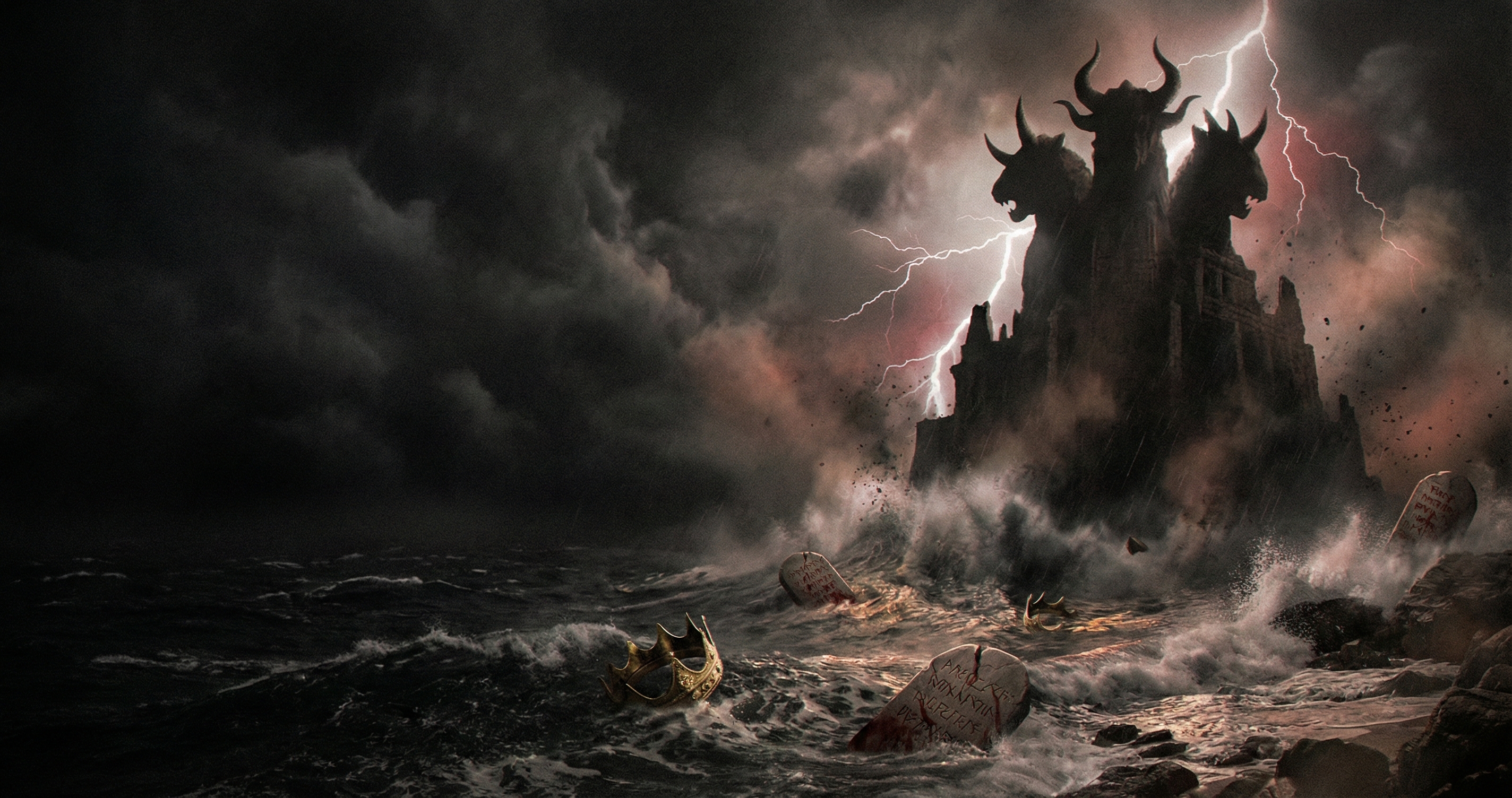
But in DES 17, the woman is not fleeing — she is mounted on the beast. Clothed in purple and scarlet, adorned with gold, precious stones and pearls. With a cup in her hand, full of abominations. On her forehead: “Babylon the Great, the Mother of Prostitutes.”
Easter Egg: Tradition completely separates the woman of DES 12 from the prostitute of DES 17. The text uses the same word (γυνή) and the same setting (ἔρημος). The separation is theological, not textual.
The forensic trajectory
When we place the complete trajectory of the woman, the pattern emerges:
| Passage | State of the woman | Location |
|---|---|---|
| DES 12:1 | Clothed with the sun, crowned, pregnant | Heaven |
| DES 12:2 | In labor pains | Heaven |
| DES 12:5 | Gives birth to the male child | Heaven/Earth |
| DES 12:6 | Flees to the wilderness | Wilderness |
| DES 12:14 | Protected in the wilderness | Wilderness |
| DES 17:3 | Mounted on the scarlet beast | Same wilderness |
| DES 17:16 | Hated and destroyed by the beast | System |
The woman who gave birth to the Christ becomes the prostitute of the system. Israel — the lineage of the Messiah — becomes the mother of abominations. Not by accident. By institutional choice.
The forensic question
How does the woman who bore the Messiah end up mounted on the Dragon?
The answer is in the text itself: the woman is protected in the wilderness, but not transformed. She survives — and surviving, she adheres to the system. Divine protection does not guarantee faithfulness. Free will remains operative even under supernatural protection.
The trajectory of Israel in the códices is exactly this: protected from Egypt, fed in the wilderness, graced with the Land — and repeatedly returning to the systems of power that enslaved it.
Conclusion
The woman clothed with the sun is not Mary. She is not the Church. She is Israel — identified by the twelve stars of Gênesis 37, bearing the Messiah in agony, fleeing to the wilderness, and eventually mounting the beast she should have rejected.
The investigation did not start with an ecclesiological thesis. It started with a dream in Gênesis and ended with a prostitute in the Unveiling. The text connected the dots. The investigator merely followed the trail.
“You read. And the interpretation is yours.”