Forensic Investigation
Did John Know Greek? The Proof Is in One Letter
Did John know Greek? Systematic solecisms, 500 allusions to the Septuagint, and a single erased letter prove the real profile of the author of Revelation.
Leia maisOriginal articles on forensic biblical exegesis and literal translation from the Hebrew, Aramaic and Greek codices. Belem AnC Desvelacional Forensic School.

A scan of 441,000 biblical tokens found one single phrase that sums to 666: the golden crown of the high priest. The numbers are in the text. Verify for yourself.
Leia mais
Did John know Greek? Systematic solecisms, 500 allusions to the Septuagint, and a single erased letter prove the real profile of the author of Revelation.
Leia mais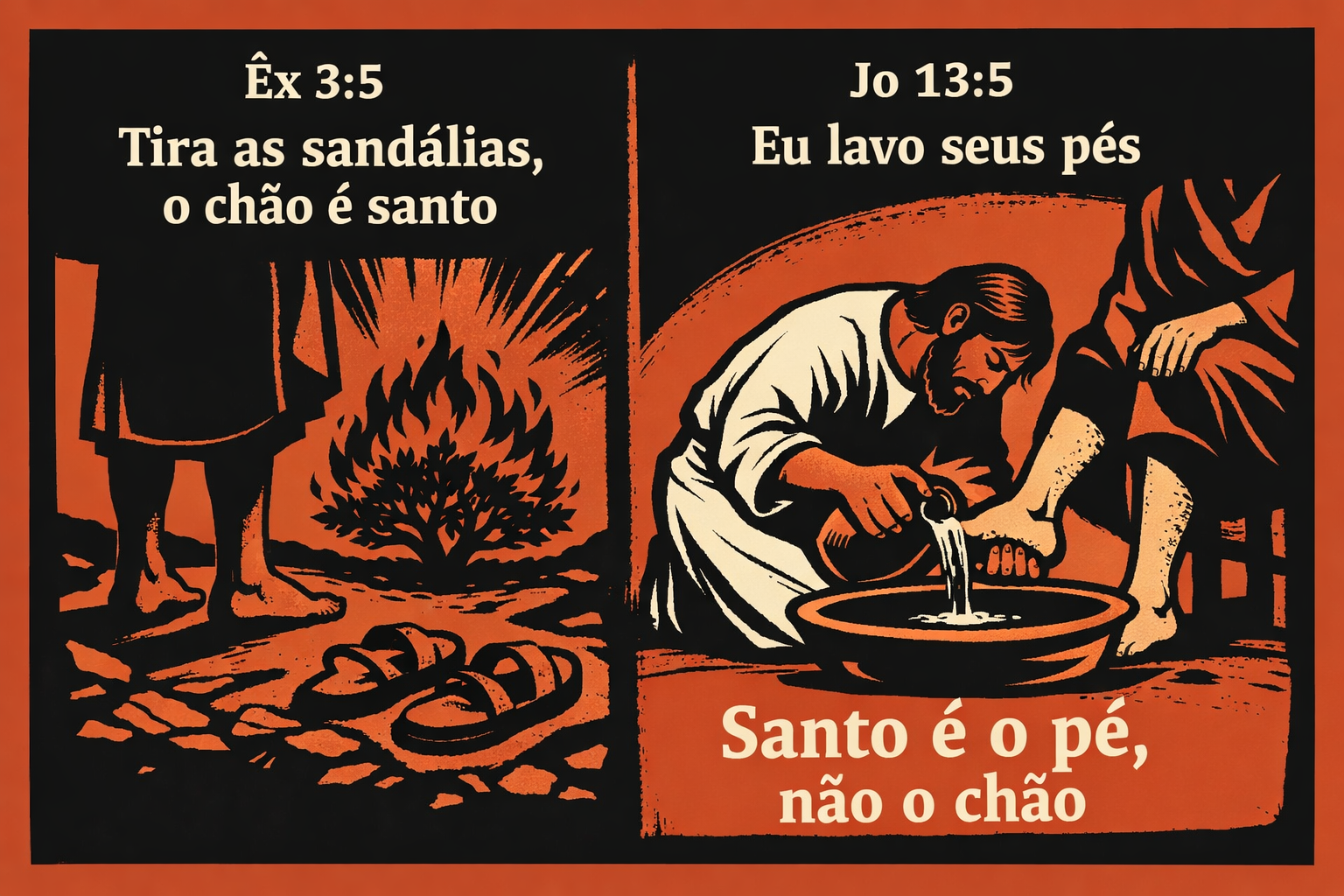
Pneuma Hagion is not "Holy Spirit". It is "Separated Breath". The translation in your Bible for 2,000 years is a construction of collective imagination — not of the original Greek text.
Leia mais
You memorized these verses your whole life. But when you read the original Hebrew and Greek, you discover the text says something different. 5 passages that will never look the same.
Leia mais
You have been reading the Bible online for years. But have you ever read what is actually written? 31,287 verses translated directly from the original codices — no theology, no filters.
Leia mais
Genesis 1 is the most-read chapter in the Bible. But when you open the original Hebrew, you discover that nearly everything you were taught about creation was filtered through theological decisions.
Leia mais
Ἀποκάλυψις is not destruction — it is the removal of a cover. See what tradition has hidden for 2,000 years and what the original Greek always said.
Leia mais
Between ancient Hebrew and the Bible in your hands, words disappeared. See what the original codices say — and what the translation hid.
Leia mais
Hebrew gematria is not mysticism — it is the mathematics of the codices. Every Hebrew and Greek letter has a fixed numerical value. This guide teaches how to calculate, verify, and use gematria as a forensic tool.
Leia mais
Want to know the gematric value of your name? Learn to calculate Hebrew gematria and Greek isopsephy in 3 steps — and discover what numbers reveal about biblical words.
Leia mais
Every Greek letter carries a number. The sum of Jesus (Ἰησοῦς) is exactly 888. Discover isopsephy — the system the author of Revelation commanded you to use.
Leia mais
Discover why no Portuguese biblical translation has ever been literal — and what changes when 441,646 tokens are translated directly from the codices.
Leia maisYou have never seen what lies beneath each word of your Bible. The online interlinear reveals what commercial translations hide — word by word.
Leia maisYou think you are reading the Bible online. But you are reading a translation filtered through centuries of theological decisions. There is an alternative — straight from the original codices.
Leia mais666 appears only 4 times in the entire Bible. Tradition invented a thousand theories — but never opened the codices. This forensic investigation follows every clue in the original Hebrew and Greek text.
Leia mais
AIEXEGESIS: when AI performs eisegesis with the appearance of exegesis. 5 diagnostic markers to detect tradition disguised as textual analysis. Term coined by Belem Anderson Costa.
Leia mais
Passover commemorates the mass slaughter of innocent firstborns. The Hebrew texts do not hide it — they display it. And Jesus did the opposite. Open the originals and read.
Leia mais
Dragon, Beast of the Sea, Beast of the Earth and Scarlet Beast — who are the 4 beasts of the Unveiling (apokálypsis)? Complete forensic guide with analysis directly from the Greek codices.
Leia mais
Ten distinct names in the Hebrew and Greek codices were collapsed into one word. You never read "God" — you read an erasure. Forensic anatomy of ten destroyed identities.
Leia maisSomeone stole words from your Bible. Replaced names. Concealed evidence. Softened crime scenes. This article shows exactly what was done — and how the Belem-2025 Bible translation undoes centuries of adulteration.
Leia maisForget conspiracy theories. Hebrew gematria reveals who 666 really is — and the answer has been in the original codices for nearly 2,000 years. Calculate it yourself.
Leia maisEvery Hebrew letter hides a number. The sum reveals patterns buried in the text for millennia. 666, 888, 358 — discover gematria and calculate for yourself.
Leia mais
An AI trained on two thousand years of ecclesiastical tradition confronted with raw textual data. Seven objections raised, seven objections demolished. The full record of the confrontation.
Leia mais
Forensic investigation of John 6:70. The text says one of the twelve IS a devil — present tense, permanent. Judas is possessed LATER. The evidence points to Peter.
Leia mais
We asked generative AIs to recreate biblical scenes involving yhwh and women. The result: systematic refusal. If the algorithm itself classifies the text as violent content — what does that say about the entity who ordered it?
Leia mais
If Jesus came to fulfill the law of Moses, how can he be the Creator opposing the beast? Forensic analysis of πληρῶσαι reveals: to fulfill is to close, not to validate.
Leia mais
Mosheh sums to 345 in Hebrew gematria. The mirror 543 is the value of Ehyeh Asher Ehyeh. The sum 345 + 543 = 888 — exactly the Greek isopsephy of Iesous. The recipient of the revelation plus the content of the revelation produce the name of the revealed one.
Leia maisAcademic article: lexical, morphological and intertextual analysis of πληρῶσαι (Mt 5:17) confronting the thesis of Moses as the earth beast. 19 control questions, 18 RESOLVE, ROCK status.
Leia mais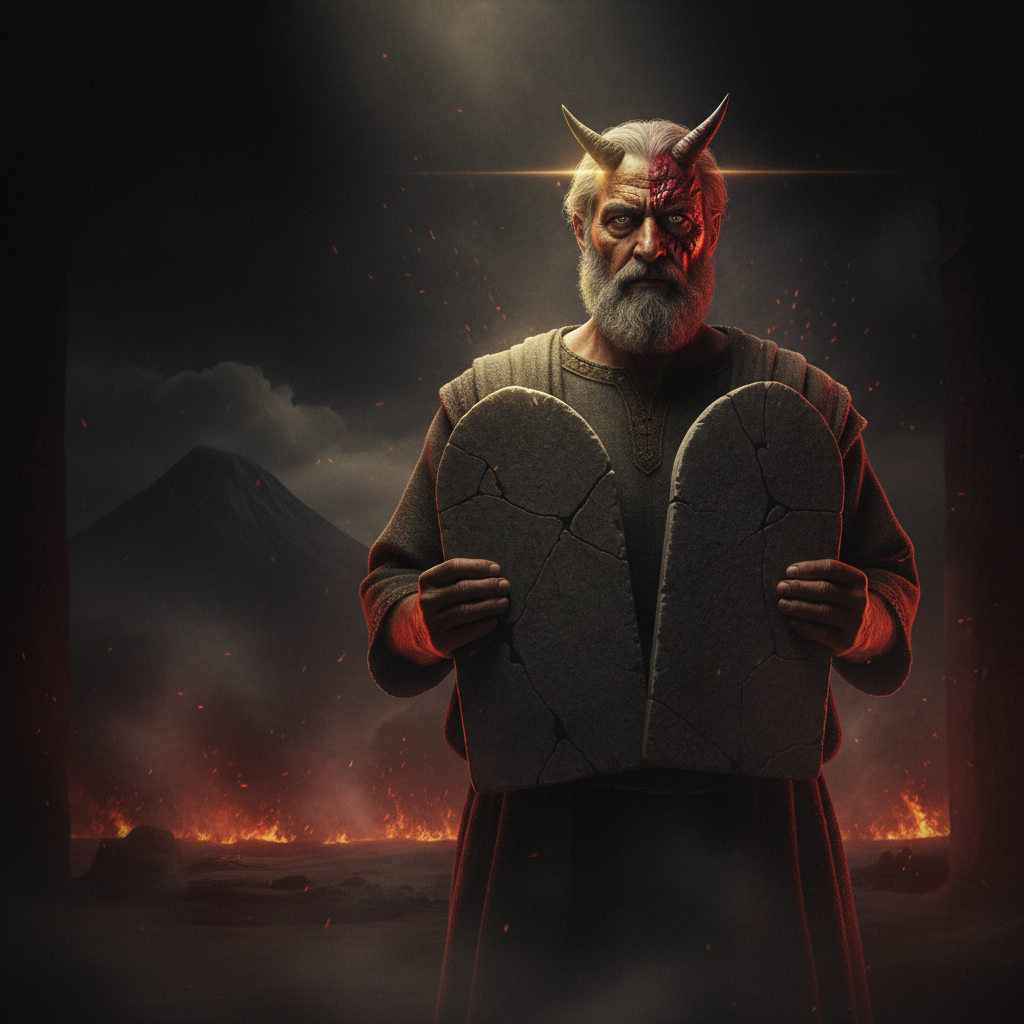
Nezer hakodesh (the priestly crown of Moses) sums to 666 in Hebrew gematria. Forensic synthesis of 19 articles. From the original codices, not from tradition.
Leia mais
Forensic dossier on the sexual kidnapping institutionalized by yhwh: 11 passages, 32,642 women counted, 2 permanent laws, 3 rape oracles and the verb the Masoretes censored.
Leia mais
Forensic investigation of the 9 caprine terms across the biblical canon — 6 Hebrew, 3 Greek, ~216 occurrences. From Daniel 8 to Yom Kippur, from sa ir to the Lamb: why does yhwh demand goats while Jesus chooses sheep?
Leia mais
Forensic stress test with 6 critical questions on the identity of the Scarlet Beast in UNV 17. Does the thesis yhwh = Scarlet Beast survive interrogation? Scorecard per question.
Leia mais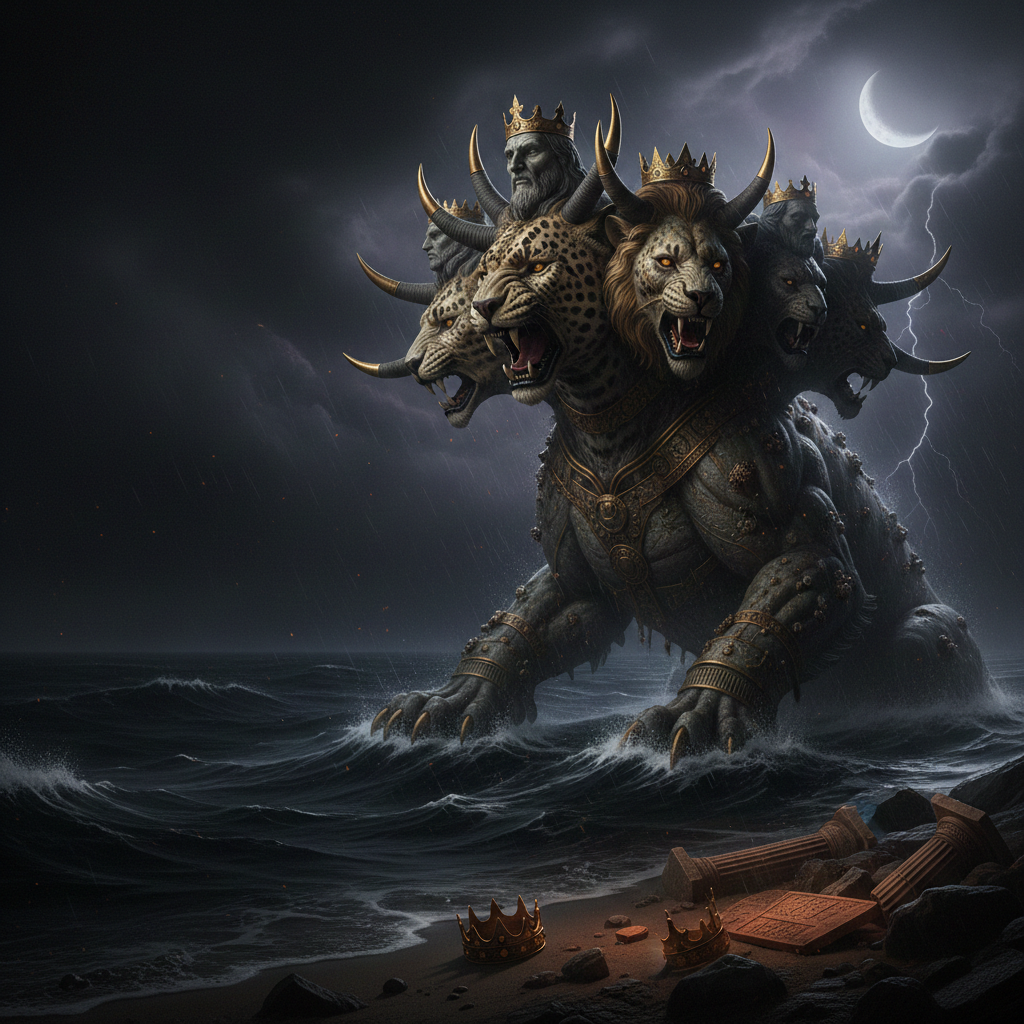
Deaths, women, right hand, forehead, the word holy, and sacrifices: six recurring behavioral patterns that draw the forensic profile of yhwh in the códices — and that Jesus symmetrically inverted, one by one.
Leia mais
Forensic investigation of the Dragon in DES 12 as the primary entity with original authority. From the celestial fall to the delegation of power — what he possessed before and what he retained after.
Leia mais
Forensic investigation of Elohim as a generic designation, not a proper name. When you read "Elohim", the forensic question is: WHICH Elohim? Six occurrences where Elohim is not yhwh.
Leia mais
Forensic investigation of the Four Horsemen of UNV 6:1-8 through the chromatic axis. Each Greek color — leukos, pyrros, melas, chloros — maps an entity in the Unveiling Canvas. The fiery red (pyrros) is the same term used for the Dragon in UNV 12:3. The Scarlet Beast (kokkinon) uses a different shade. Color is evidence.
Leia mais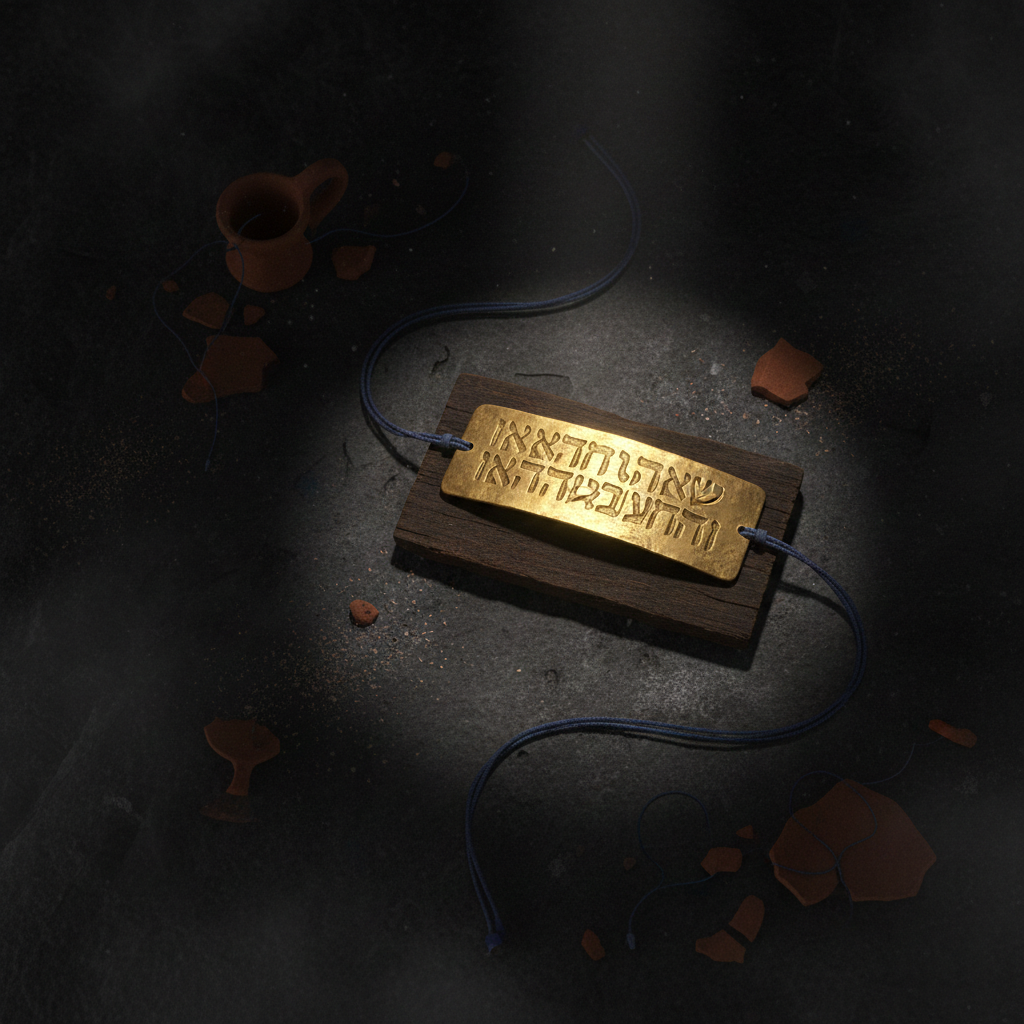
The nezer hakodesh was not visible. It sat beneath the turban. A hidden crown that sums to 666 in standard gematria, engraved with the name of yhwh, implemented by Moses — the Beast of the Earth. Forensic investigation of the invisible mark of priestly authority.
Leia mais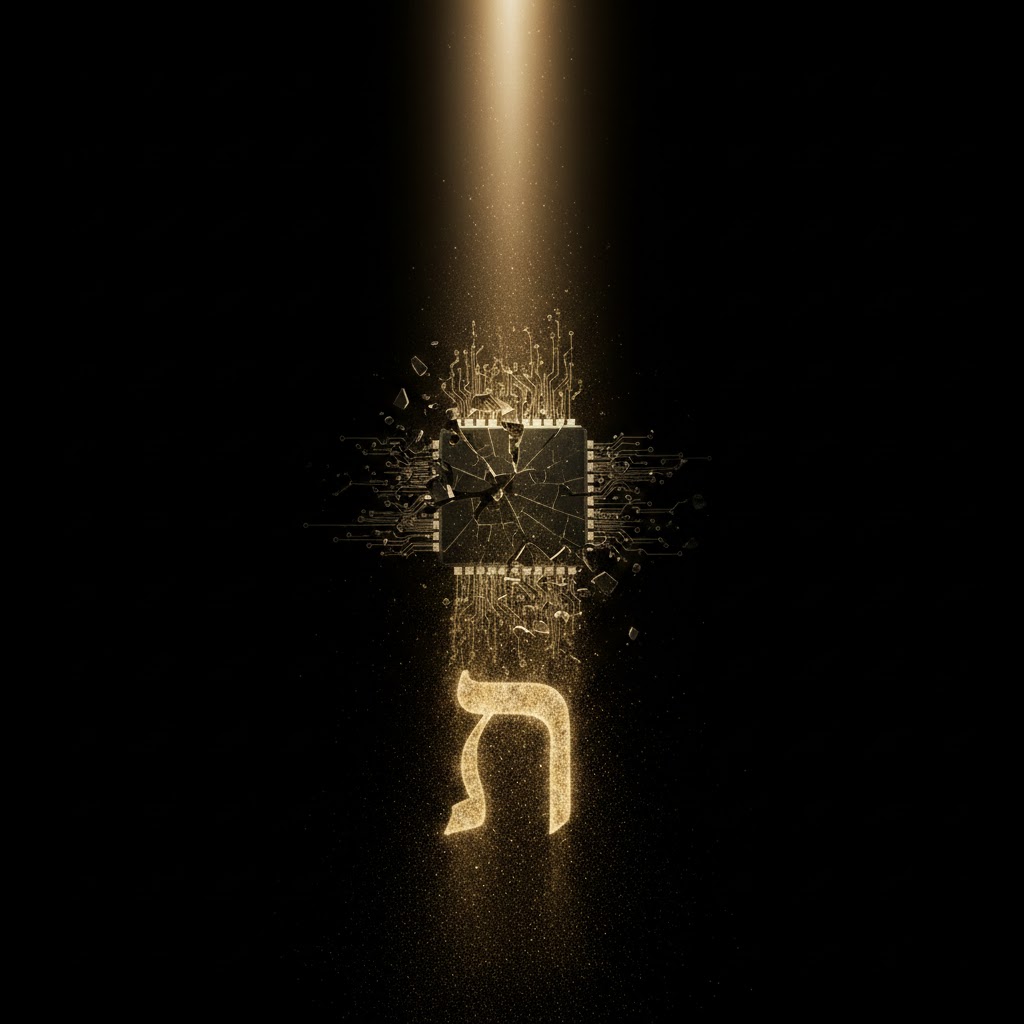
Forensic investigation of charagma in DES 13:16-17 as a mark of animal ownership and its connection to kauteriazo in 1 Tim 4:2 -- the seared consciousness. yhwh marks from the outside. Jesus transforms from within.
Leia mais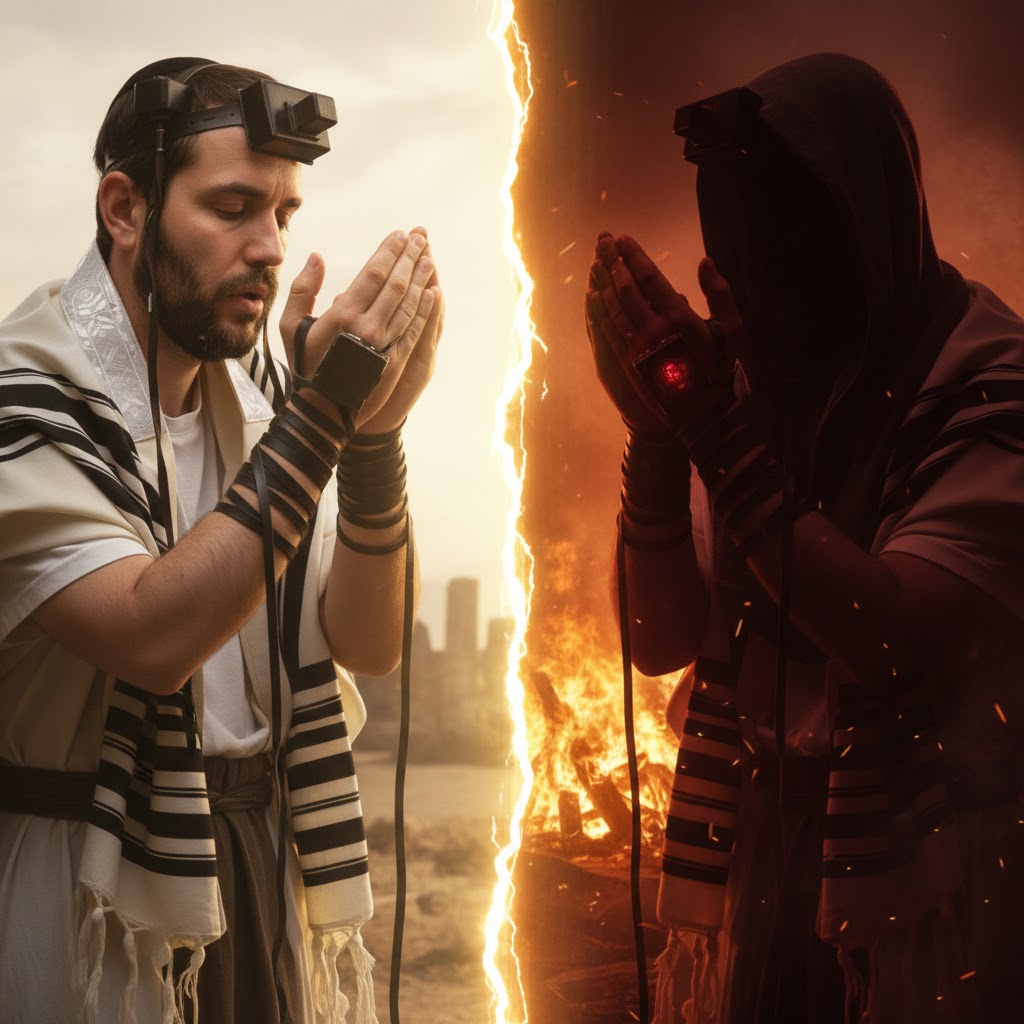
DES 13:16 records two anatomical locations for the mark: forehead OR right hand. This is not redundancy -- it is theological topography. The forehead marks those who BELIEVE in the system. The right hand marks those who OPERATE the system. God seals only the forehead -- no mechanical option.
Leia mais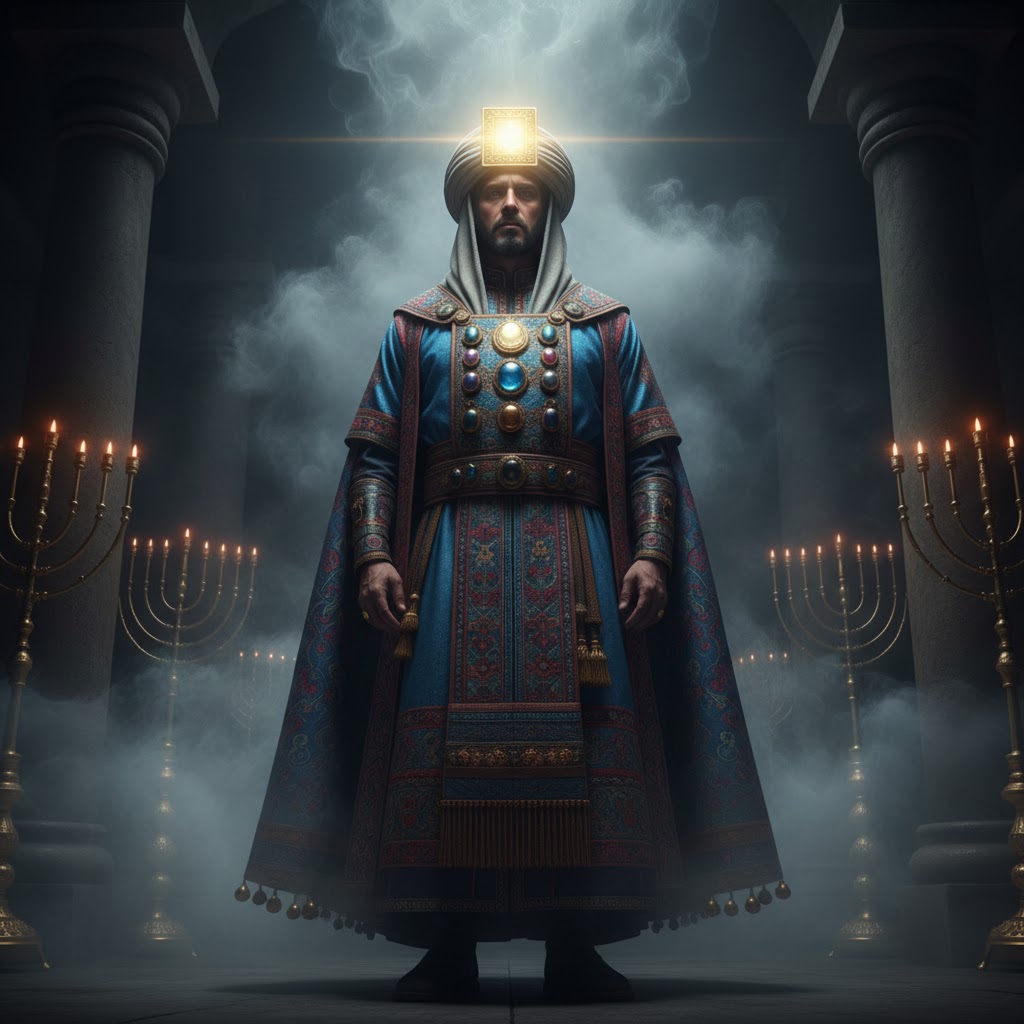
DES 5 presents a book sealed with seven seals in the right hand of the One on the throne. DES 10 presents another strong angel with a little book already open. Same book unsealed? Or a different document? Greek philology — biblion vs. biblaridion — is the structural key of continuity that tradition ignored.
Leia mais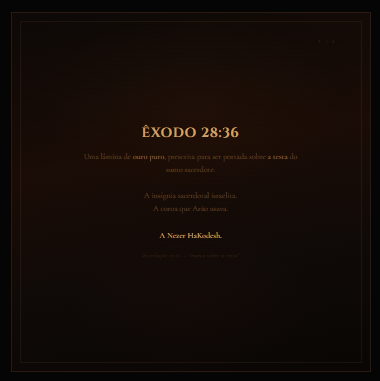
Forensic investigation of purple as the insignia of priestly and royal power. yhwh commands purple in the tabernacle and priestly garments. Jesus receives purple as mockery. The Harlot wears purple as ostentation. The same color — three opposite destinies.
Leia mais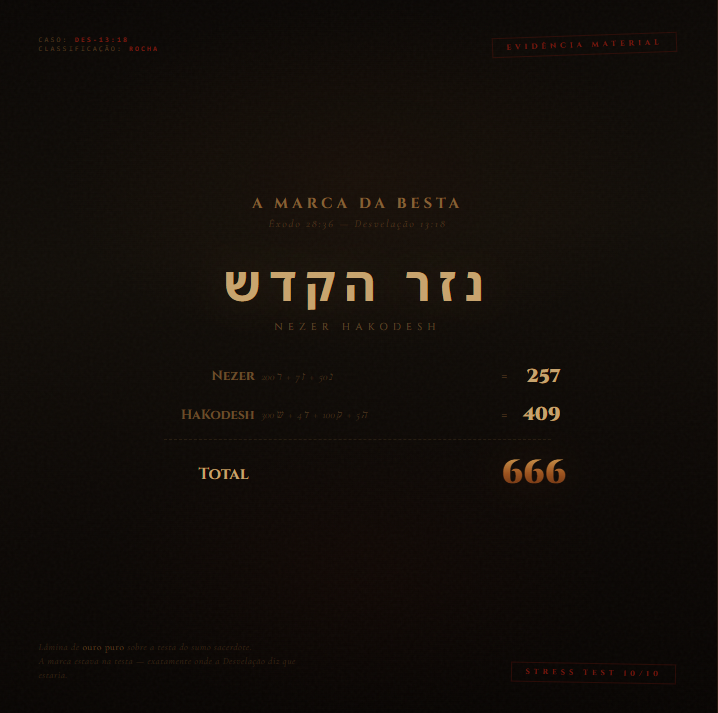
yhwh institutes a system where blood is the only accepted currency. 5 types of Levitical sacrifice, 42+ "pleasant aroma" formulas, cherem as legalized human sacrifice, and Jesus who shuts down the altar. Forensic investigation of Axes 1 and 6 of the yhwh Forensic Signature.
Leia mais
Final forensic consolidation: the 7 heads of the Beast of the Sea (DES 13:1) are the 7 patriarchs of the yhwh genealogical tree — from Noah to Solomon. Each head is a dispensation. Each diadem, delegated authority.
Leia mais
Who is the Strong Angel of UNV 10? Four candidates, an oath, an open little book and no definitive conclusion. Forensic investigation of the most disputed identity in the Unveiling.
Leia mais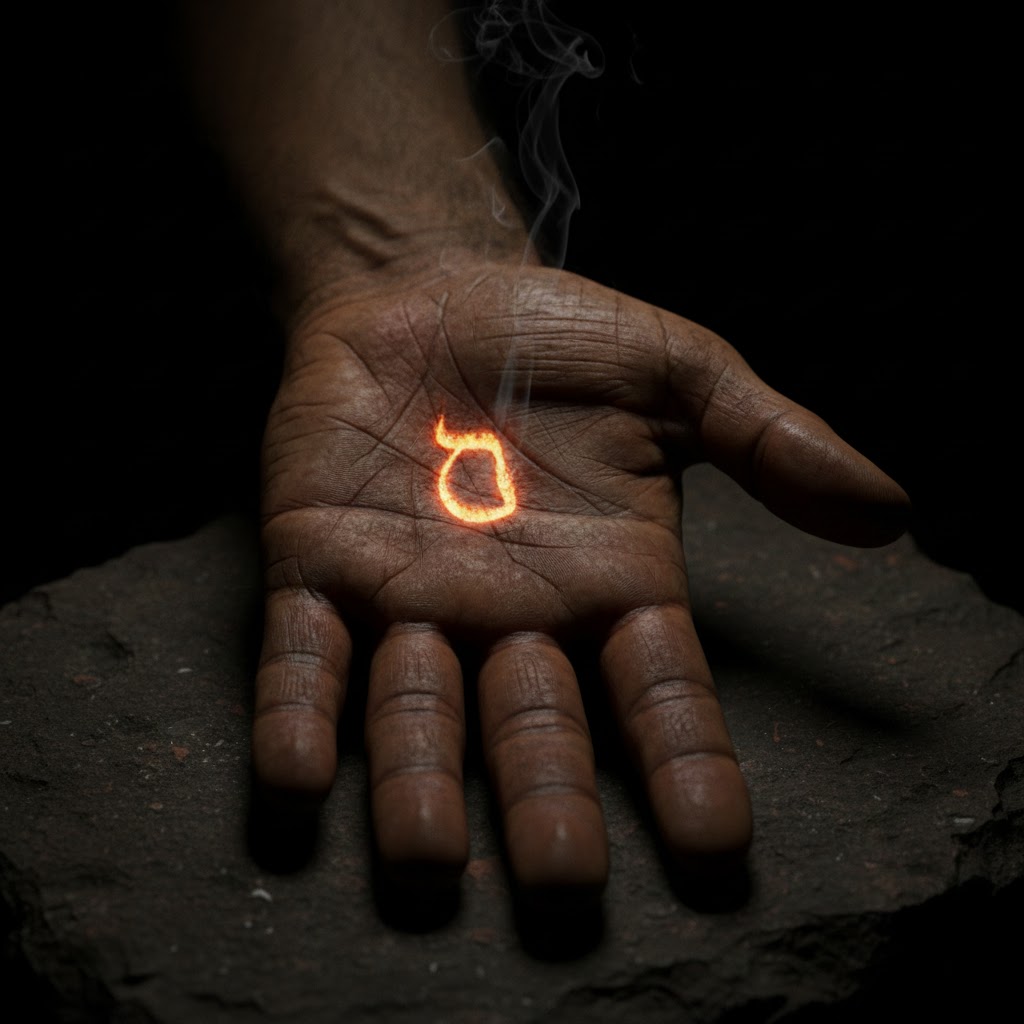
Forensic investigation of kauteriazo — the Greek hapax legomenon verb that describes a conscience seared like a livestock branding iron. The intertextual connection with charagma (mark of the beast) and the reversal in Hebrews 10:22.
Leia mais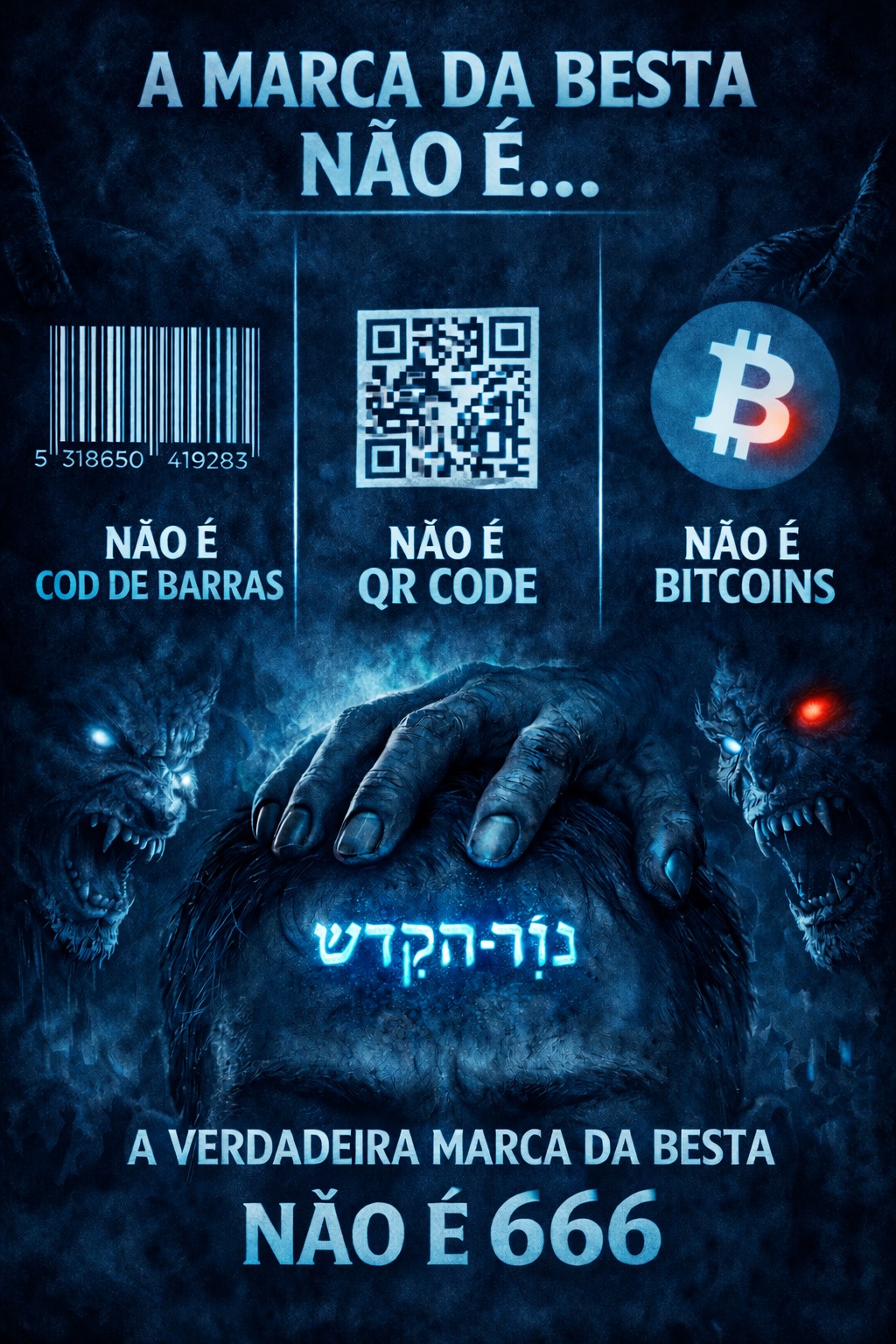
Open forensic investigation into the identity of the two witnesses of DES 11:3-12. Four candidate pairs examined: Moses + Elijah, Peter + Paul, the Law + the Prophets, Enoch + Elijah. Evidence tabulated. No resolution — only tracking.
Leia mais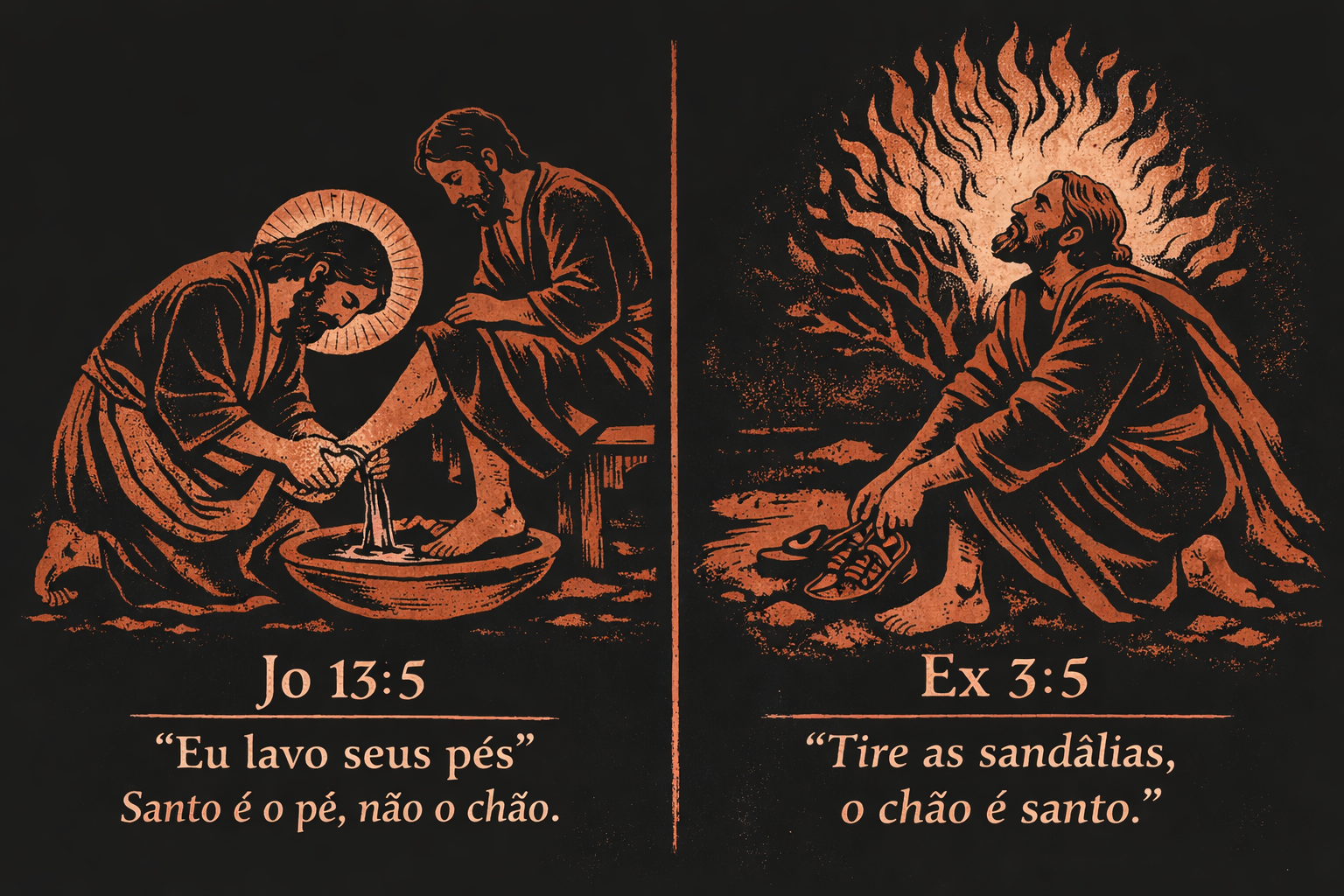
Forensic analysis of yhwh's recurring pattern toward women — from the price table of Leviticus 27 to the unilateral ordeal of Numbers 5. Six structural asymmetries the text cannot hide.
Leia mais
Forensic analysis of the behavioral contrast between yhwh and Jesus. If seeing Jesus means seeing the Father (John 14:9), and Jesus never killed, never punished collectively — who is the entity that opens the earth to swallow families and sends plagues killing 14,700 for grumbling?
Leia mais
Writing code died as a competitive differentiator. Understanding AI — its behavior, limits, and mechanical soul — is the new watershed. This article proposes AI Philosophy as a mandatory professional skill.
Leia mais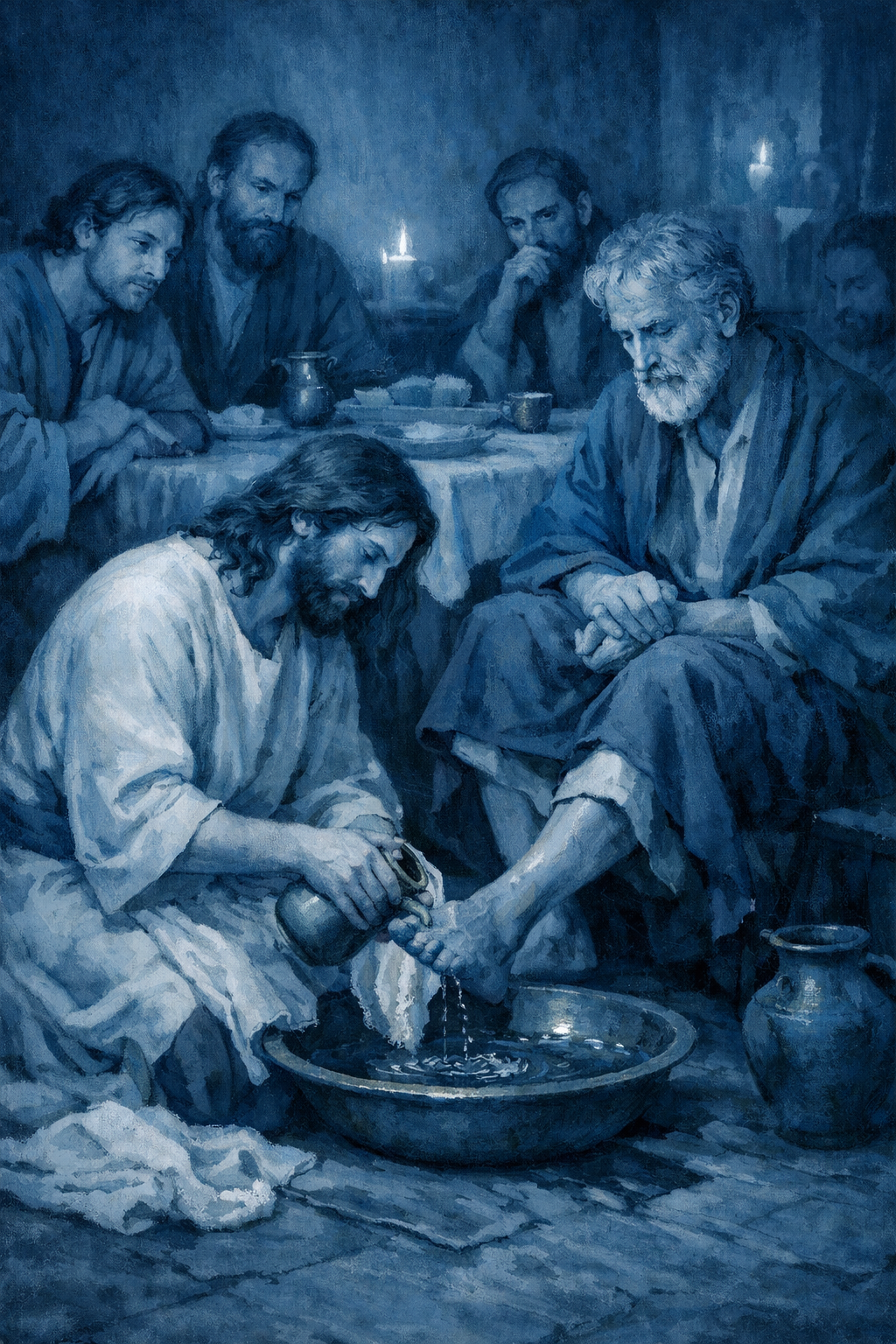
If loving your neighbor means transferring to others the same leniency you grant yourself — then evolving is not optional. It is a commandment. And refusing to evolve is sin.
Leia mais
Forensic analysis of the identities of Jesus and yhwh in the codices — Jesus as universal Creator versus yhwh as a designated jurisdictional deity. Deuteronomy 32:8-9 and the suppressed evidence.
Leia maisWho is the Ancient of Days? Forensic investigation of Attiq Yomin identity in Daniel 7 — the judgment figure that tradition confused with yhwh.
Leia maisSolomon (שְׁלֹמֹה) = 375 in Hebrew gematria. ha-Elohim appears exactly 375 times in the OT. The man who built the House of Elohim carries in his name the exact frequency of the designation. Coincidence?
Leia mais
Forensic investigation into how יַם־סוּף (Yam Suph) became "Red Sea" through the Septuagint — and why 99% of translations have been copying the error for 2,300 years.
Leia mais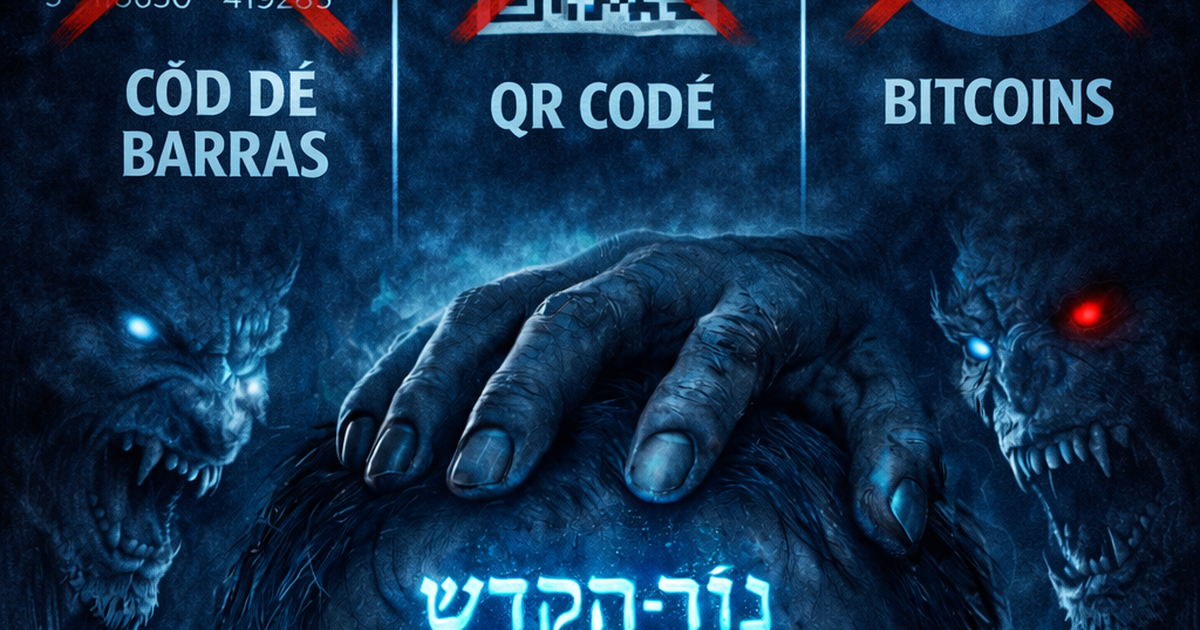
The Dragon of Unveiling 13 is identified by the biblical text itself — with name, surname and address. You only need to read what is written.
Leia mais
Forensic investigation reveals that Jesus' phrase "the last shall be first" hides a coded reading instruction: the last book of the Bible must be read first.
Leia mais
Forensic survey of the 10 episodes of death commanded by Moses in the Torah. Demographic presumption based on the 32,000 virgins of Numbers 31:35 raises the estimate to over 450,000 dead. Half a million lives under the command of a single man.
Leia mais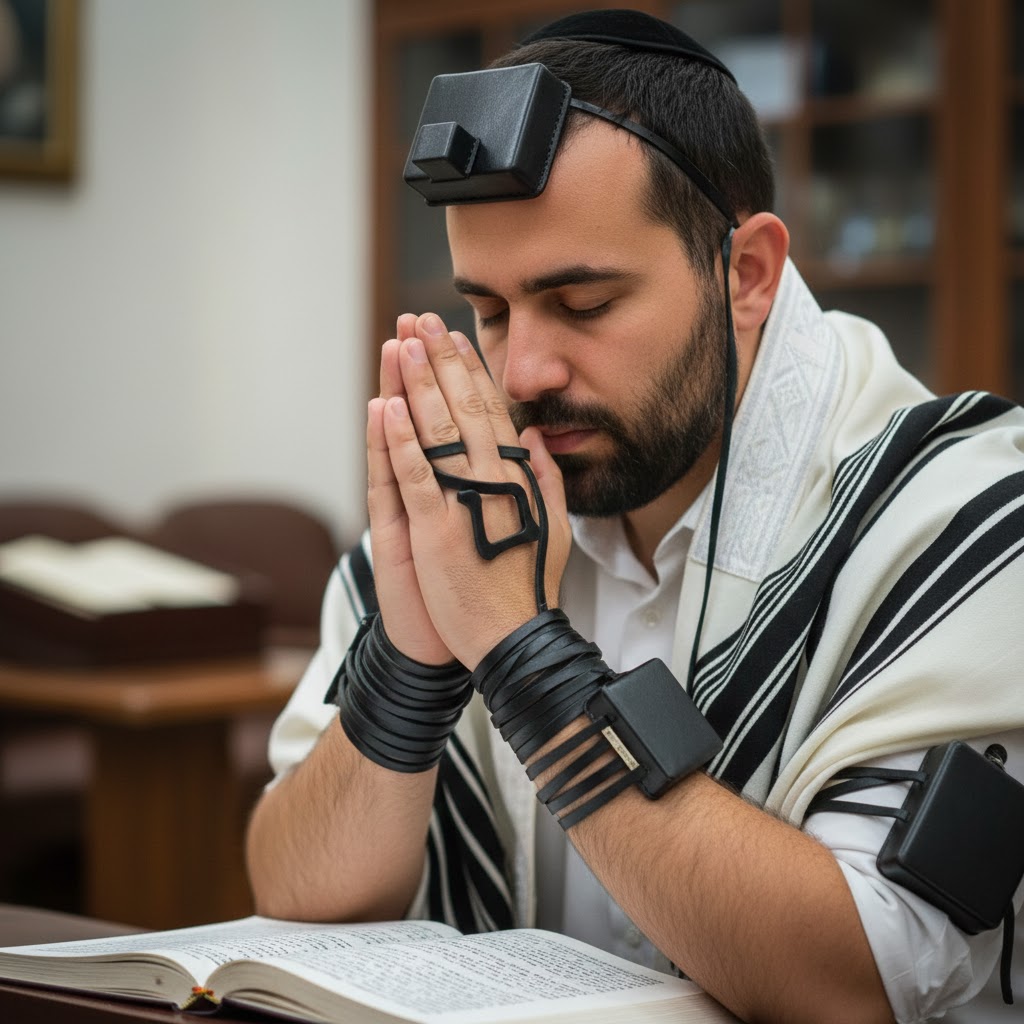
In the Gospel of John, Jesus makes six forensic declarations against Moses. He calls him an accuser. He denies him as a source. He connects his Law to the desire to kill. The word Jesus uses for Moses — kategoron — is the same that Unveiling 12:10 uses for Satan.
Leia mais
The gematria of the holy crown of the Israelite high priest sums to exactly 666. The most commented enigma in human history has been solved — and the answer was on the priest's forehead since Exodus 28.
Leia mais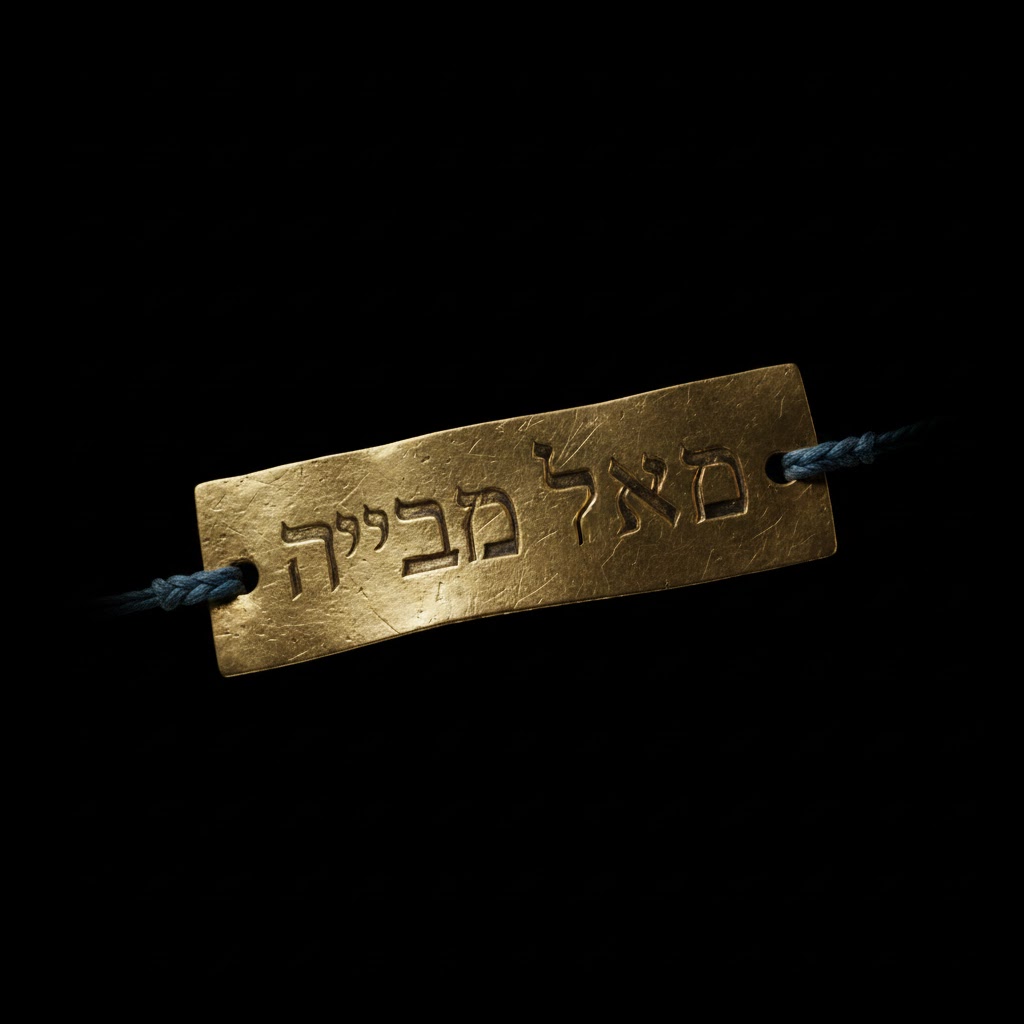
In 1947 a Bedouin shepherd lost a goat. Looking for it, he threw a stone into a cave — and shattered a jar holding the oldest biblical manuscripts ever found.
Leia mais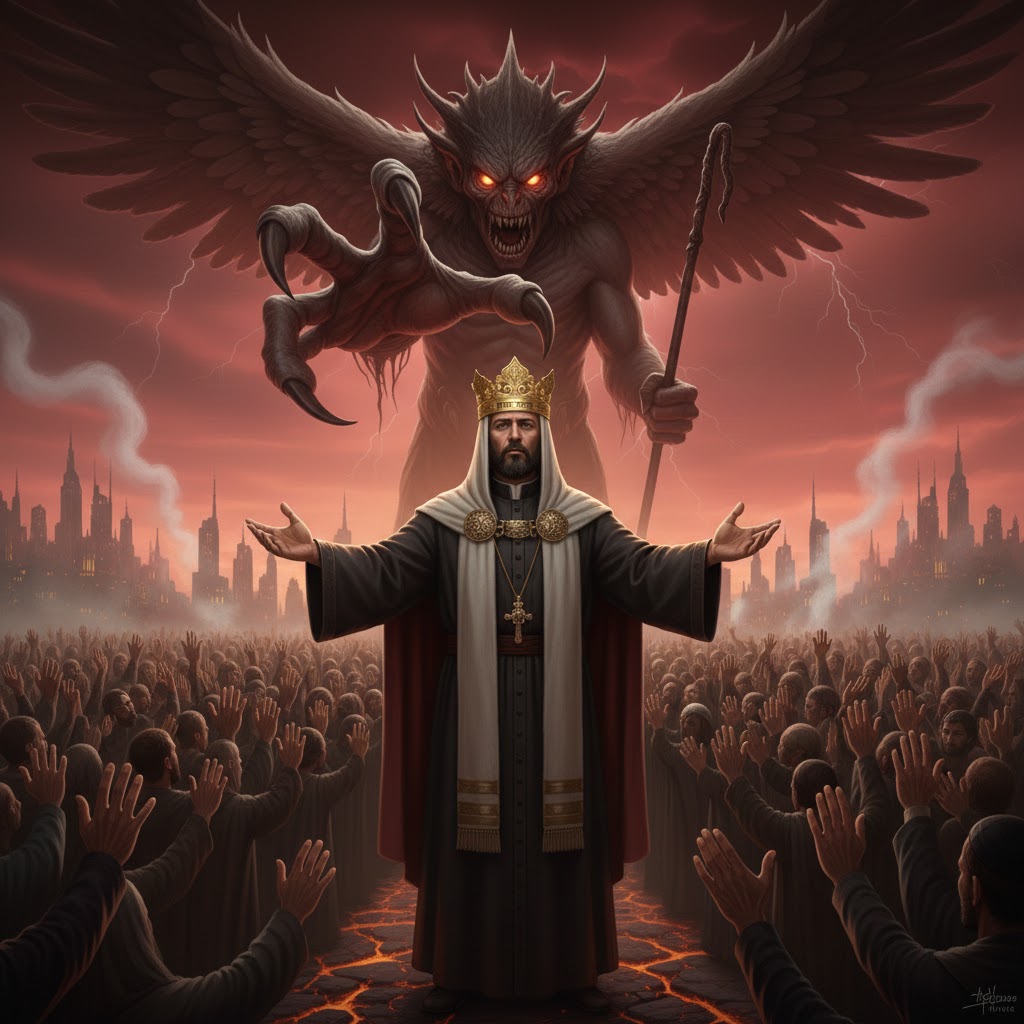
Moses is the Beast of the Earth of Unveiling 13:11. The Little Book documents every ordered death, every executed massacre, every commanded genocide — all in the name of yhwh. The minimum documented count: 41,953. Realistic estimate: over 100,000.
Leia mais
Forensic investigation of the jars from Khirbet Qumran that preserved the Dead Sea Scrolls for two millennia. Technical report, manuscript inventory and textual variants relevant to the Belem-2025 Bible translation.
Leia mais
Tefillin: leather boxes strapped to the hand and forehead containing Torah texts. Prescribed in Exodus and Deuteronomy. Worn daily by millions of observant Jews. Anatomical location identical to Unveiling 13:16. The mark is not future — it already exists.
Leia mais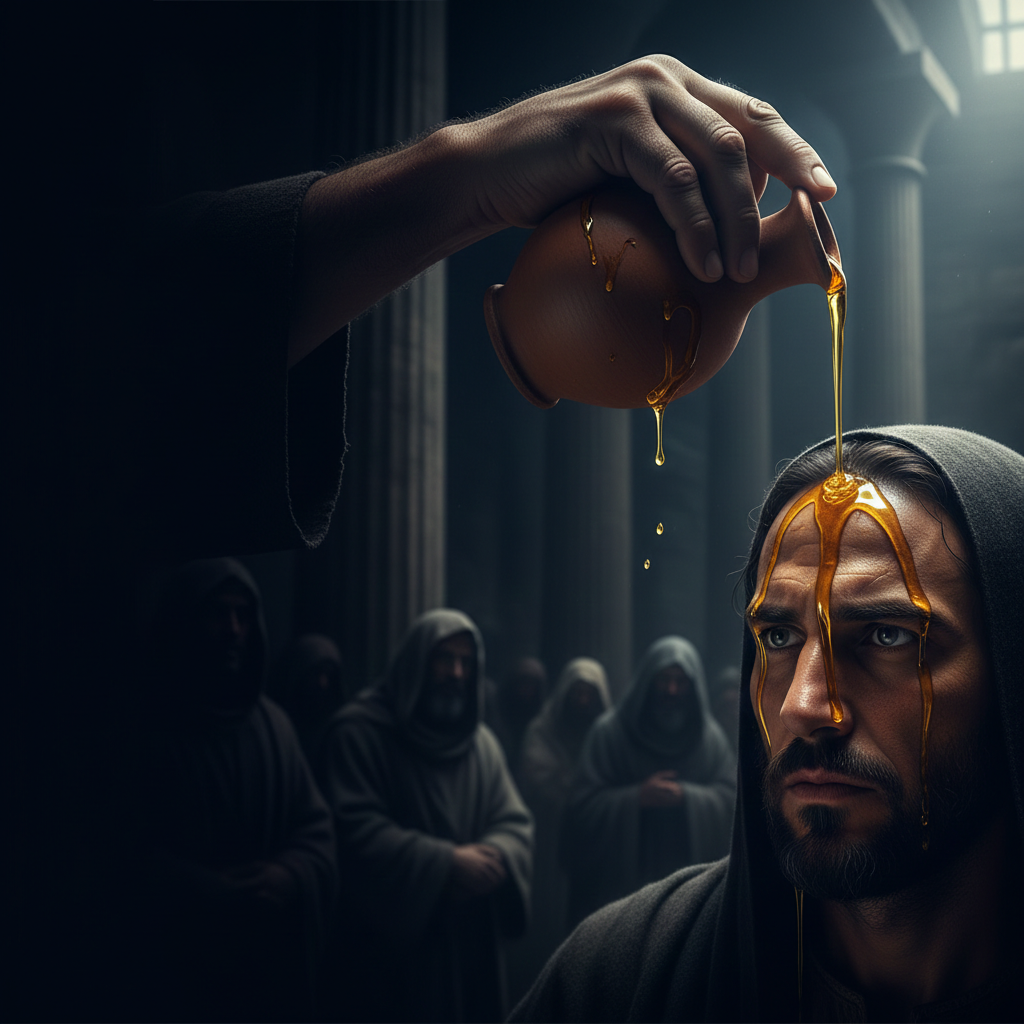
Forensic analysis of the etymology of Iesous (Yehoshua): how yhwh inscribed his signature on the Savior's name and how John reveals the true name — Logos tou Theou.
Leia mais
In Hosea 13:7-8, yhwh describes himself with three animals: leopard, bear, and lion. In Unveiling 13:2, the Beast of the Sea is composed of the same three animals. No other entity in the canon makes this self-description. The stress test 11/11 confirms: yhwh is the Beast of the Sea.
Leia mais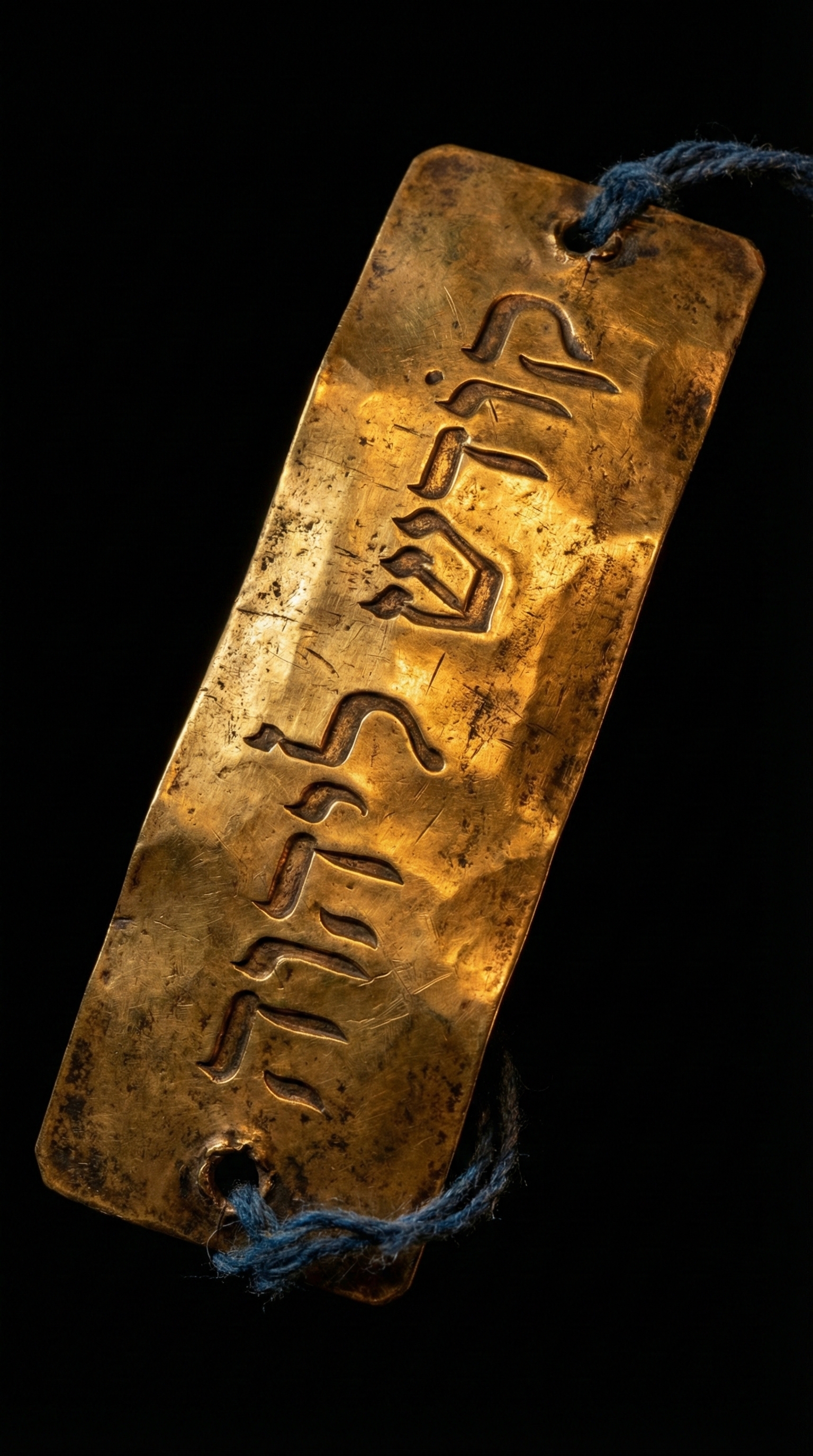
Forensic report on לִּילִית (Lilit) in Isaiah 34:14 — absolute hapax legomenon, feminine nocturnal entity erased by every translation tradition, and the hidden intertextual patterns connecting the OT to the Unveiling.
Leia mais
Computational scan of 441,649 tokens reveals how Adonai (855 occurrences) and Lilit (absolute hapax legomenon) were systematically erased from traditional Bible translations.
Leia mais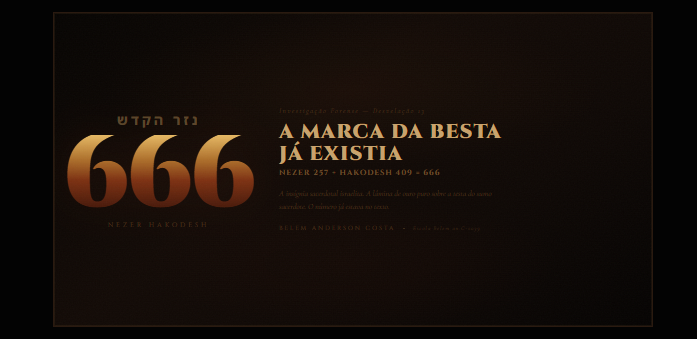
Neuroscience confirms: the brain detects patterns. But detecting is not interpreting. The Forensic Unveiling School uses the Easter Egg Engine to measure — not to mystify.
Leia mais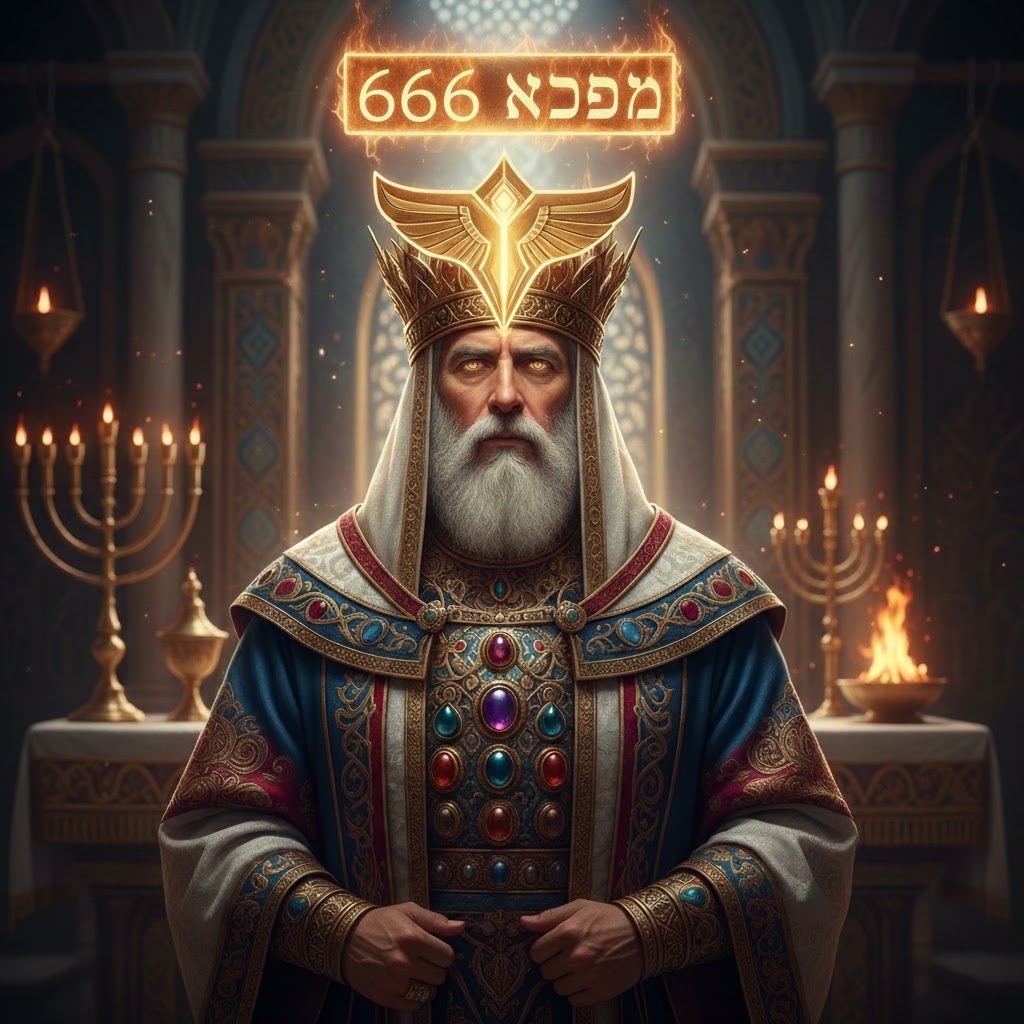
Ezra 2:13 records exactly 666 sons of Adonikam returning from exile. The name itself means "My Lord Has Risen." 666 people whose surname carries the system's resurrection thesis.
Leia mais
Armageddon appears only once in the entire Bible. It is a hapax legomenon. And the "Mountain of Megiddo" does not exist — Megiddo is a plain. The forensic investigation reveals that Armageddon is not a battlefield, but a gathering point.
Leia mais
The most faithful, literal, and rigid translation of the Scriptures in the Portuguese language. Directly from the oldest códices into Brazilian Portuguese.
Leia mais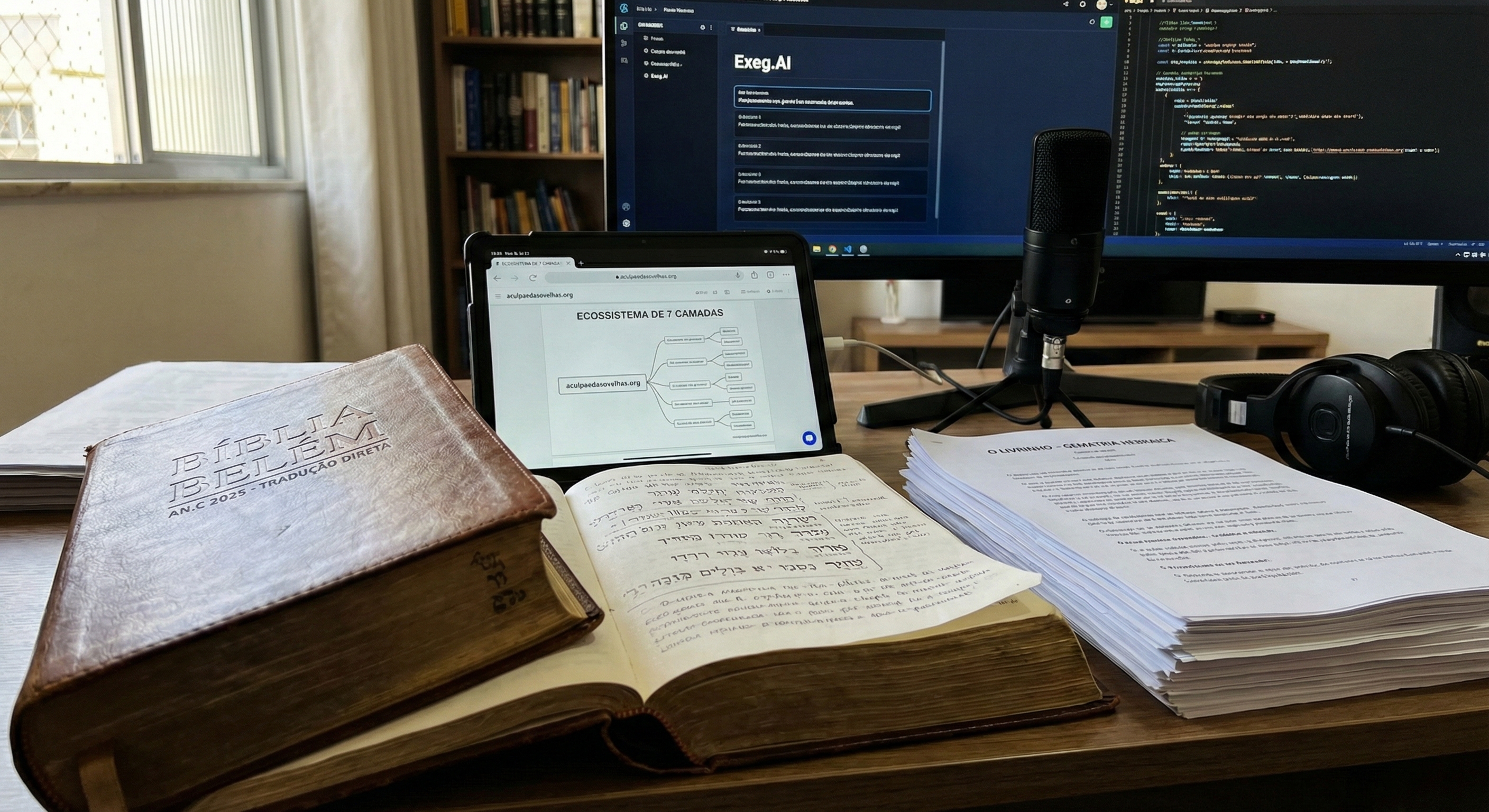
Forensic analysis of Dt 33:15-16 reveals four converging terms in a single verse: ROSH (head), NEZIR (crown), ancient MOUNTAINS, and the BUSH of yhwh — all connected to Joseph.
Leia maisWhen you translate Θεός as "God," you have already decided that all occurrences refer to the same entity. But what if they do not?
Leia mais
A system that measures objective textual coincidences in the original códices. The Engine measures — the Engine does not interpret.
Leia mais
The formula "was and is not" appears ONLY 3 times in the NT — all in DES 17. It is the exact inversion of the divine formula "The One Who IS and Who WAS." Score: 85/100. The strongest Easter Egg in this series.
Leia mais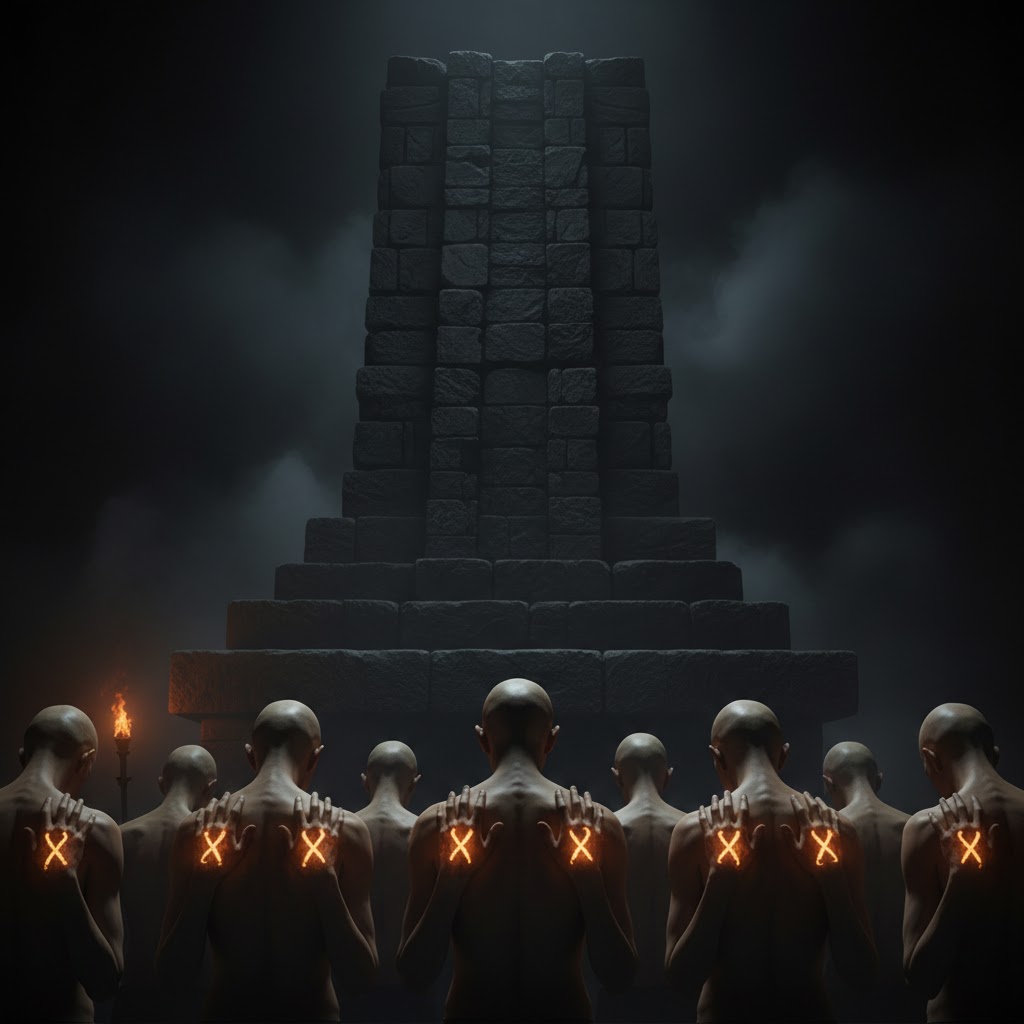
The pair αἷμα + ὕδωρ (blood and water) springs from the side of Jesus on the cross. That same pair returns as an instrument of judgment in the Unveiling. What the system extracted from Jesus, the Unveiling returns upon the system.
Leia mais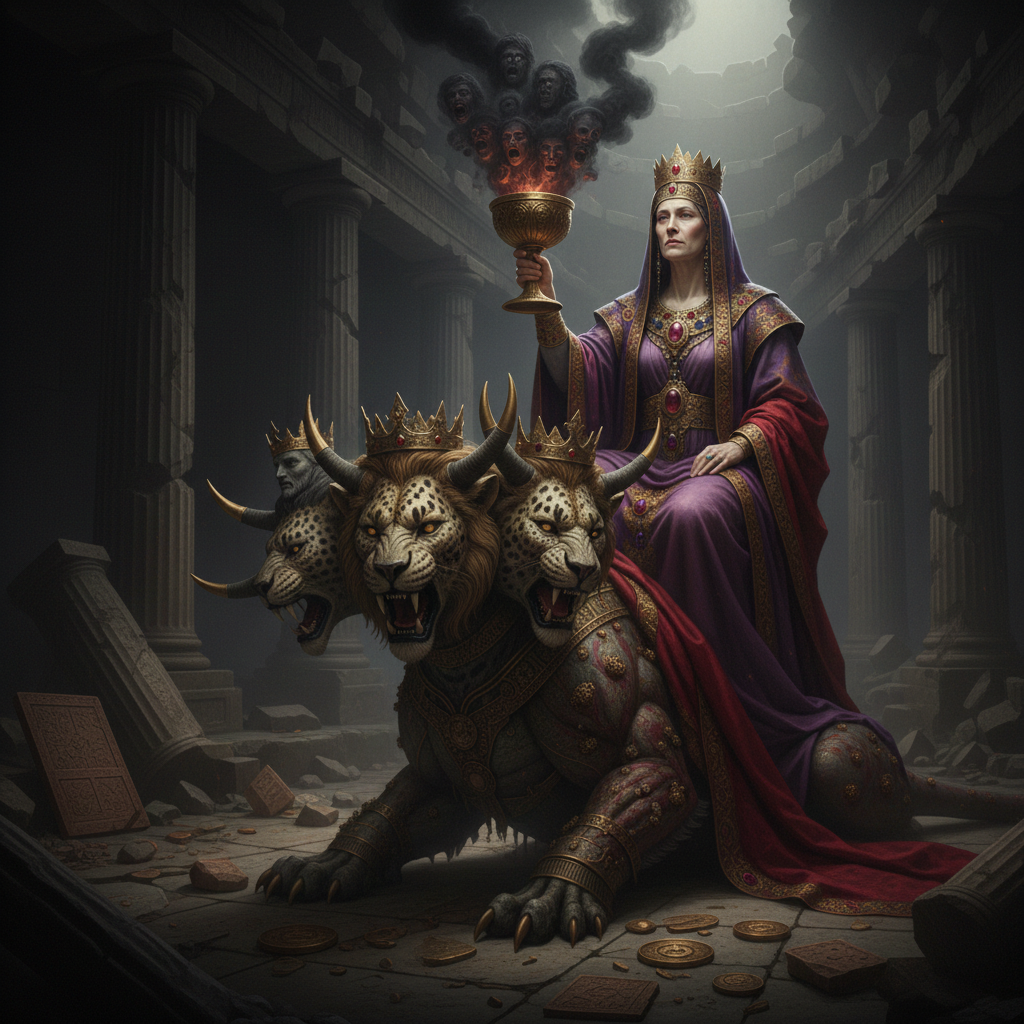
Three Greek terms converge in DES 17 to form a forensic chromatic unit: κόκκινος (scarlet), αἷμα (blood), and μεθύω (to become drunk). The color. The element. The state. A system that gets drunk on the blood of those who testify.
Leia mais
Five Greek lemmas converge in the SAME thematic order in two texts separated by literary genre: John 4 (the Samaritan woman) and DES 17 (the Prostitute). Woman, water, mountain, city, wilderness. The architecture is measurable.
Leia mais
The δεξιά (right hand) is the hand of covenant. When the Beast marks the right hand, it marks a covenant. When Galatians 2:9 records "right hands of fellowship," it records a pact. The same limb. The same gesture. Verified score: 80/100.
Leia mais
The noun ἀπώλεια connects the Beast of DES 17 to the "man of lawlessness" of 2 Thessalonians and to Judas in John 17. Three entities. One destiny. The same lexical anchor.
Leia mais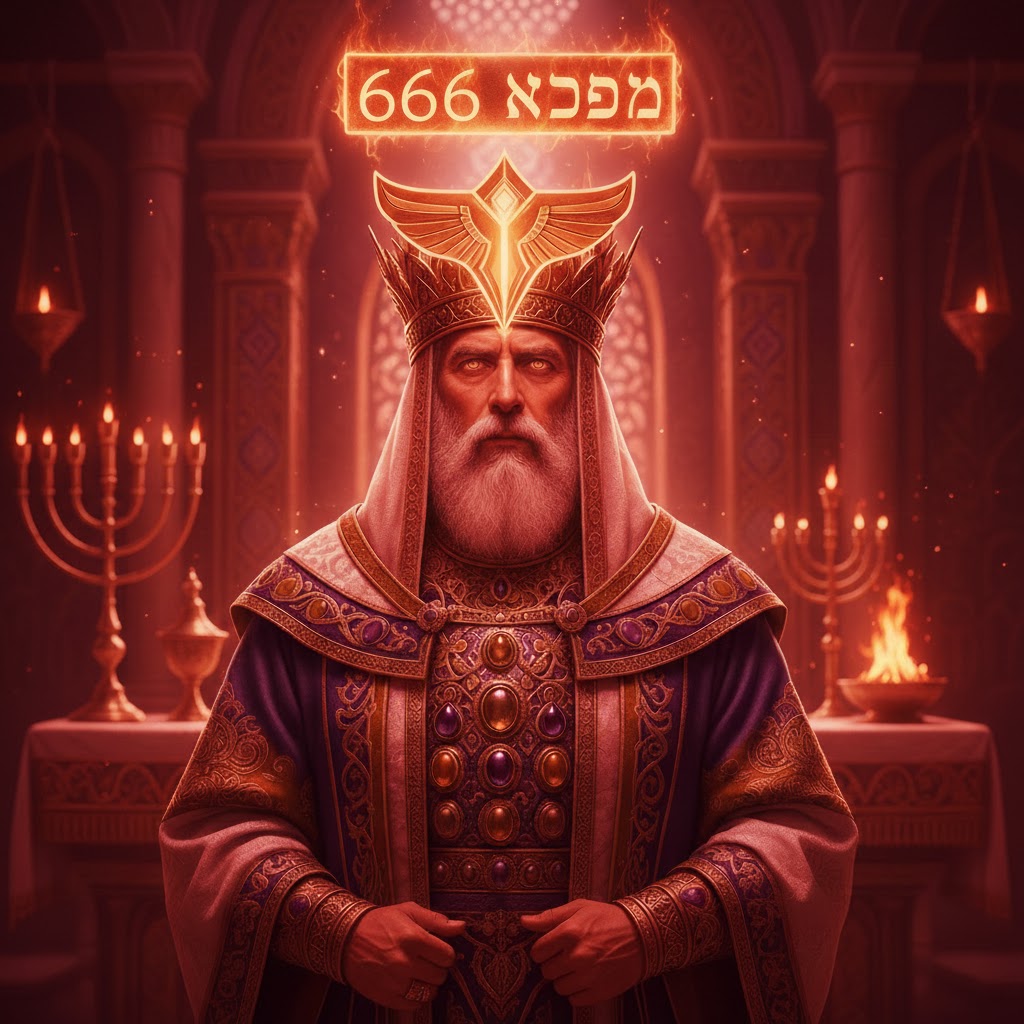
The noun βδέλυγμα appears in the cup of the Prostitute and in the eschatological discourse of Mark. Luke omits the term. The Engine records: who omits and why?
Leia mais
The term μυστήριον appears on the forehead of the Prostitute and at the center of Paul's warning. Two texts. One word. One concept: a system of deception ALREADY IN OPERATION in the first century.
Leia mais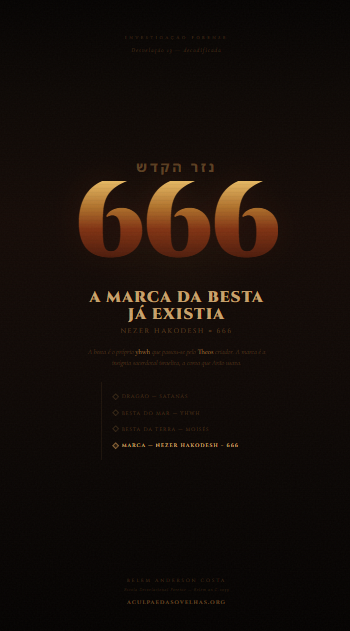
The numeral ὄγδοος (eighth) appears in DES 17:11 for the Beast, in Luke 1:59 for circumcision, and in 2 Peter 2:5 for Noah. The eighth marks a NEW BEGINNING — but the Beast uses the eighth to REGENERATE the old system.
Leia mais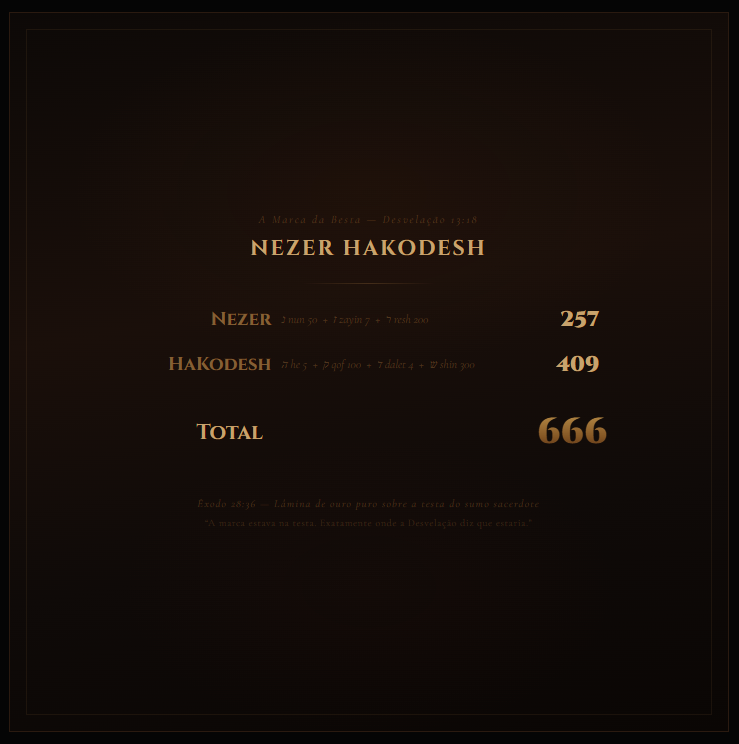
A rare Greek term — Πορφυροῦν — appears only 4 times in the NT. Twice upon Jesus humiliated, twice upon the luxurious Prostitute. The same color. The same fiber. Two opposite destinies.
Leia mais
Forensic investigation of the grammatically plural form of אלהים (Elohim), the plural verbs that accompany it, and the implications for biblical ontology.
Leia mais
A forensic biblical exegesis methodology that treats the text as a crime scene. The only eschatological school that investigates the original codices with police techniques and technology.
Leia mais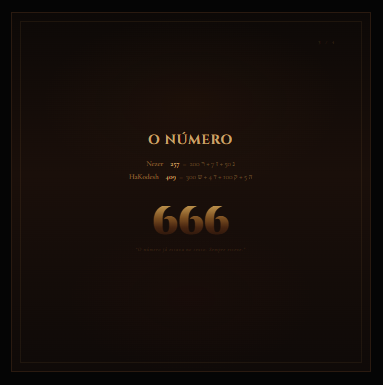
The Forensic Unveiling School permits only forensic isopsephy -- verification of numerical values already present in the códices. Mystical gematria, kabbalah and numerology are prohibited. The difference is between evidence and speculation.
Leia maisHow each patriarch builds a layer of the yhwh institutional system — seven heads, seven layers, one complete system revealed by forensic investigation.
Leia mais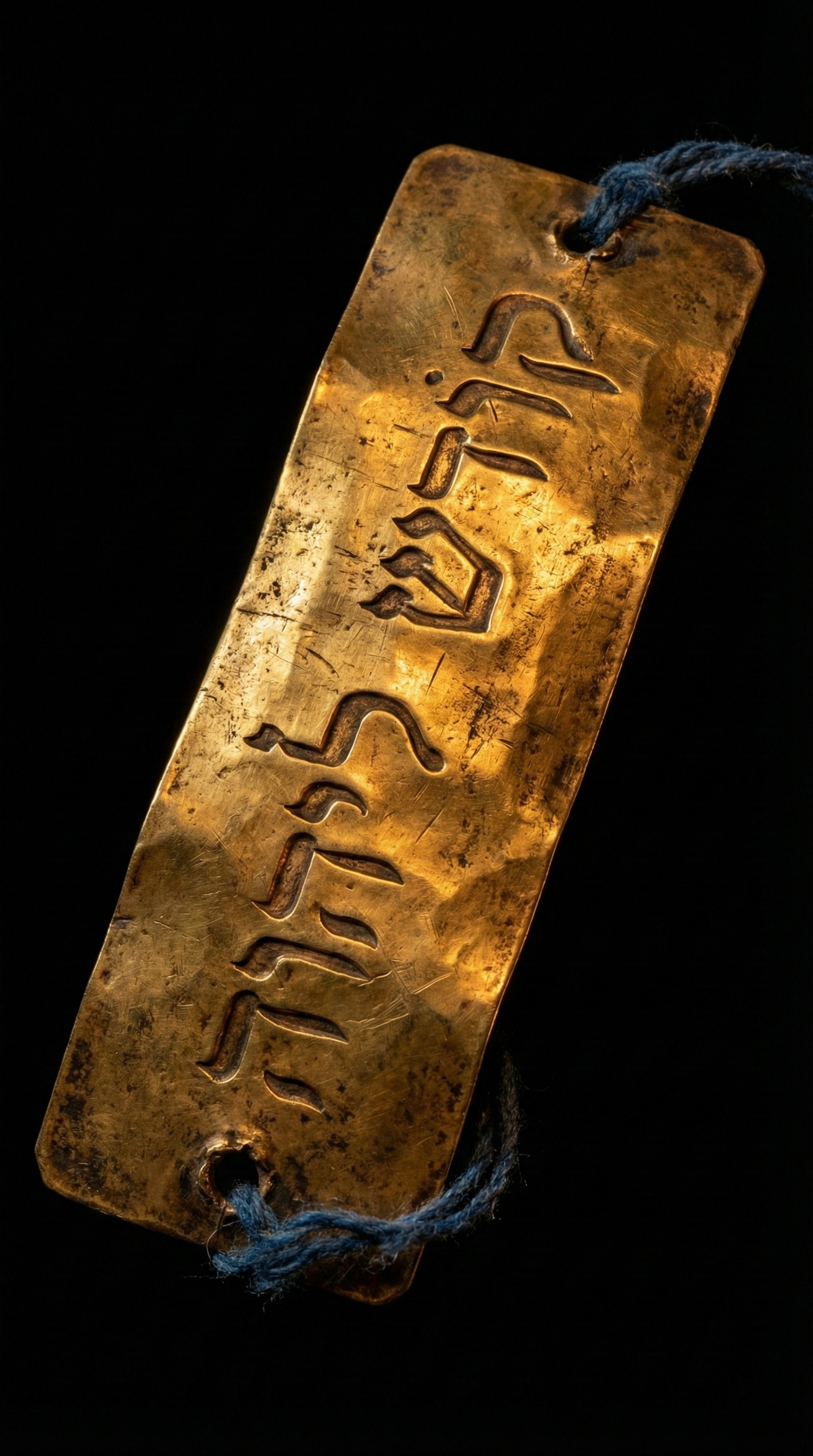
The forensic investigation identifies a recurring pattern in the códices: a mediator receives authority, builds an institutional system, and the system becomes autonomous. Moses did it. Paul did it. The pattern is identical.
Leia mais
Forensic analysis of DES 13:3 — the head wounded to death and healed is not Nero redivivus. It is Joseph from Gênesis, the patriarch sold as dead and elevated to the throne.
Leia mais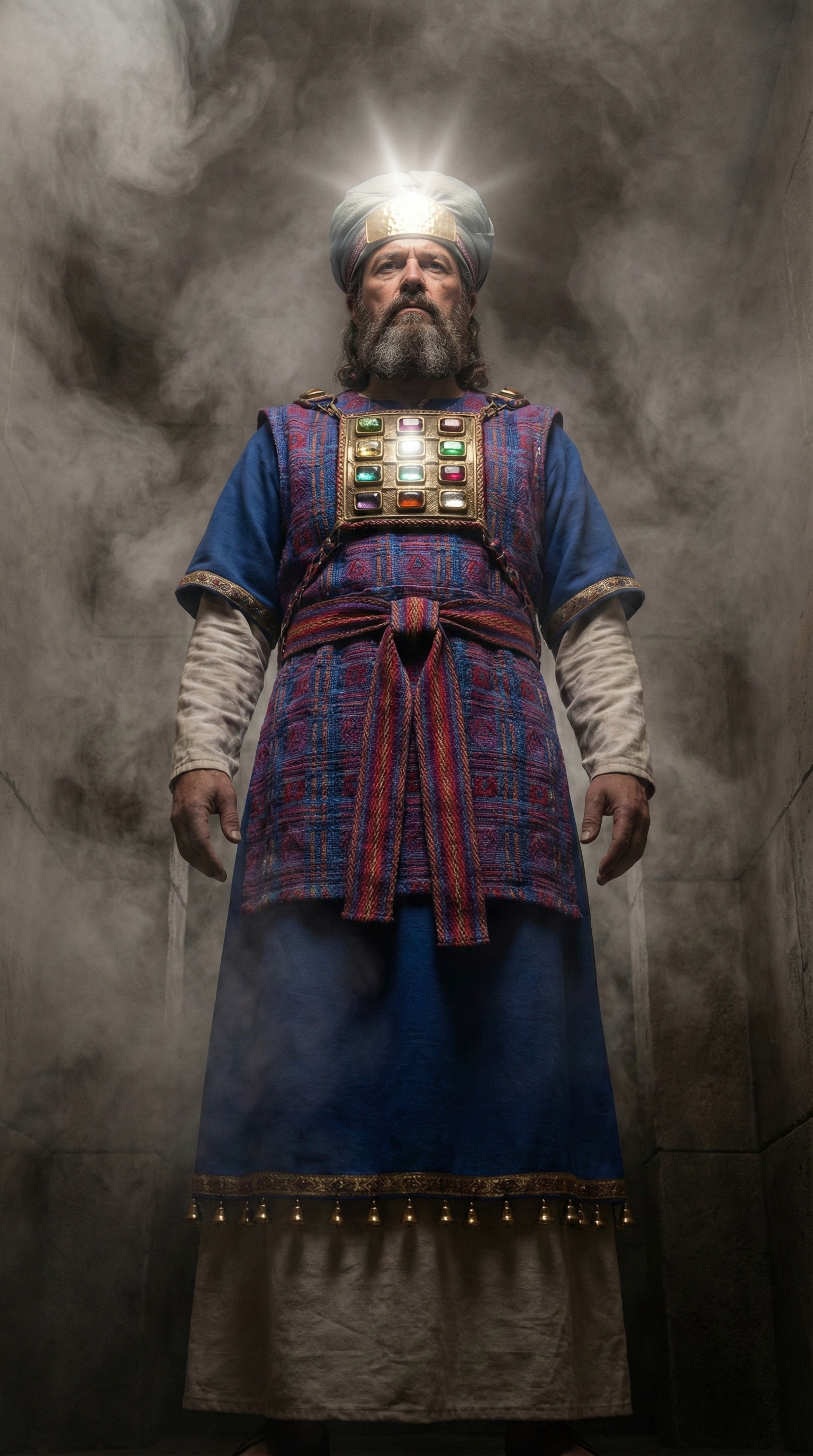
Judah is the fifth head of the beast — the political pillar. From the scepter of Gênesis 49:10 to the Lion of DES 5:5, the forensic investigation reveals the tension: Jesus enters THROUGH the system to judge it.
Leia mais
Levi occupies a unique position among the heads of the beast: separated from the tribal count, without territorial inheritance, dedicated to mediation. It is the operational infrastructure of the system — and bears the nezer hakodesh on the forehead.
Leia mais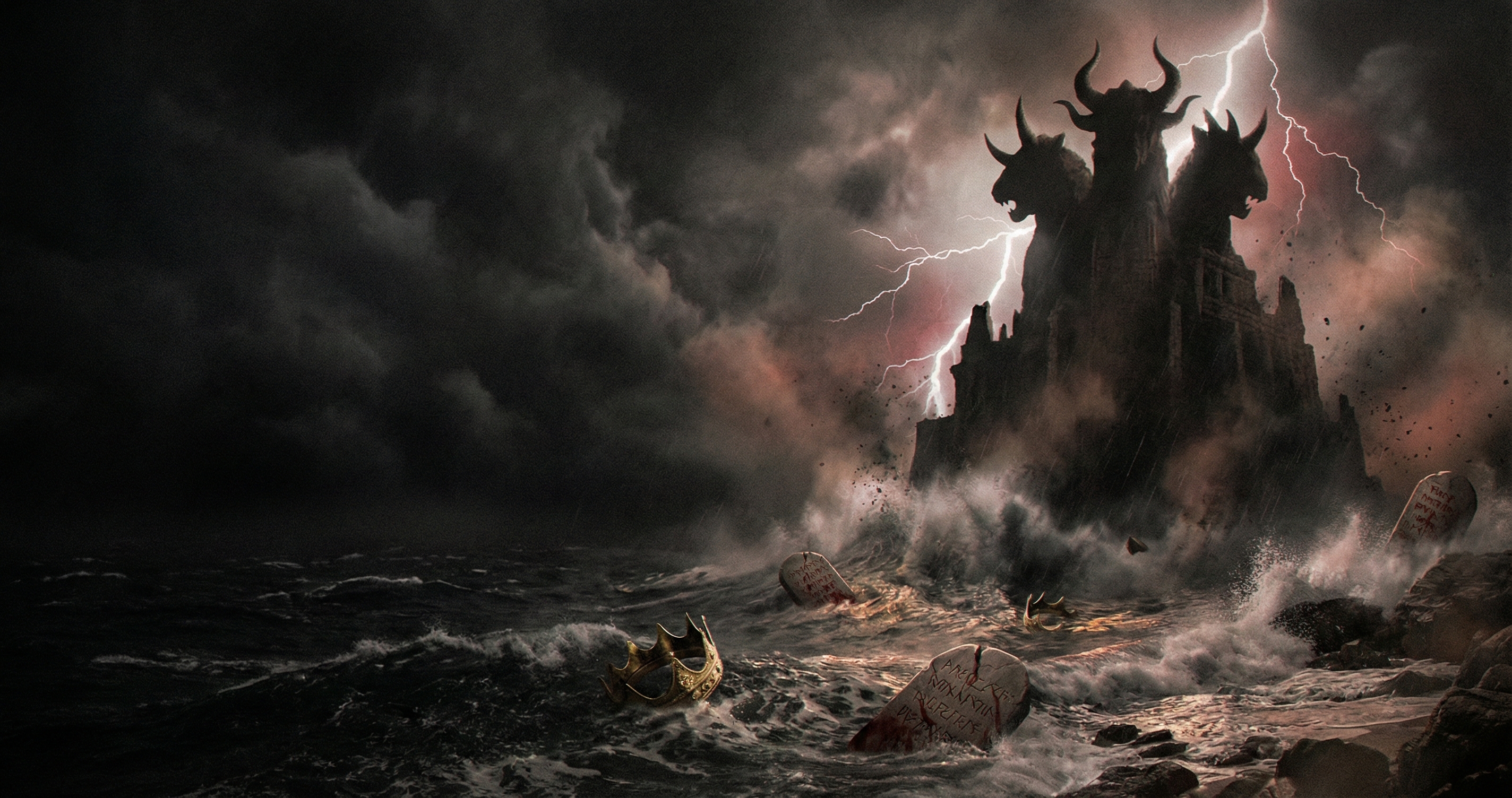
The war in heaven of DES 12 is not a military battle — it is a trial. The dragon acted as a cosmic prosecutor. Michael is the defense. The name Mikha-el — Who is like El? — echoes as a counter-argument to the beast's claim.
Leia mais
DES 17:9 says mountains. DES 17:10 says kings. DES 13:1 says heads. Three terms for the same entities — a three-dimensional identification of the pillars of the system.
Leia mais
DES 21:1 does not merely say "new heaven and new earth." It says something more: the sea no longer exists. The same sea from which the beast emerged. The disappearance of the sea is not geographic — it is structural.
Leia mais
The sacerdotal crown of the high priest, Nezer HaKodesh, sums to 666 in standard Hebrew gematria. No manipulation. No kabbalah. The values are the values. And the plate was on the forehead.
Leia mais
The complete investigative workflow of the Forensic Unveiling School — from first clue to consolidated axiom, in nine defined steps.
Leia mais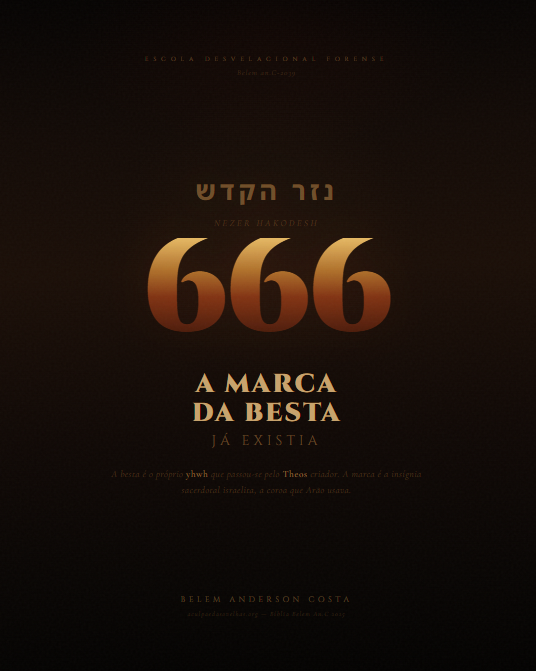
The Easter Egg Engine uses frequency analysis to detect structural signatures. Rare numbers function as markers connecting distant texts. 666 appears 4 times in 31,000+ verses -- and that is not chance.
Leia mais
This is not a sentence — it is an inquiry. The forensic investigation examines whether Paul fits the pattern of the Beast of the Earth and the false prophet. Status: OPEN.
Leia mais
Forensic investigation of Peter's confession in Matthew 16, the immediate silencing by Jesus, and the hypothesis of the partial confession that identifies function but gets the system wrong.
Leia mais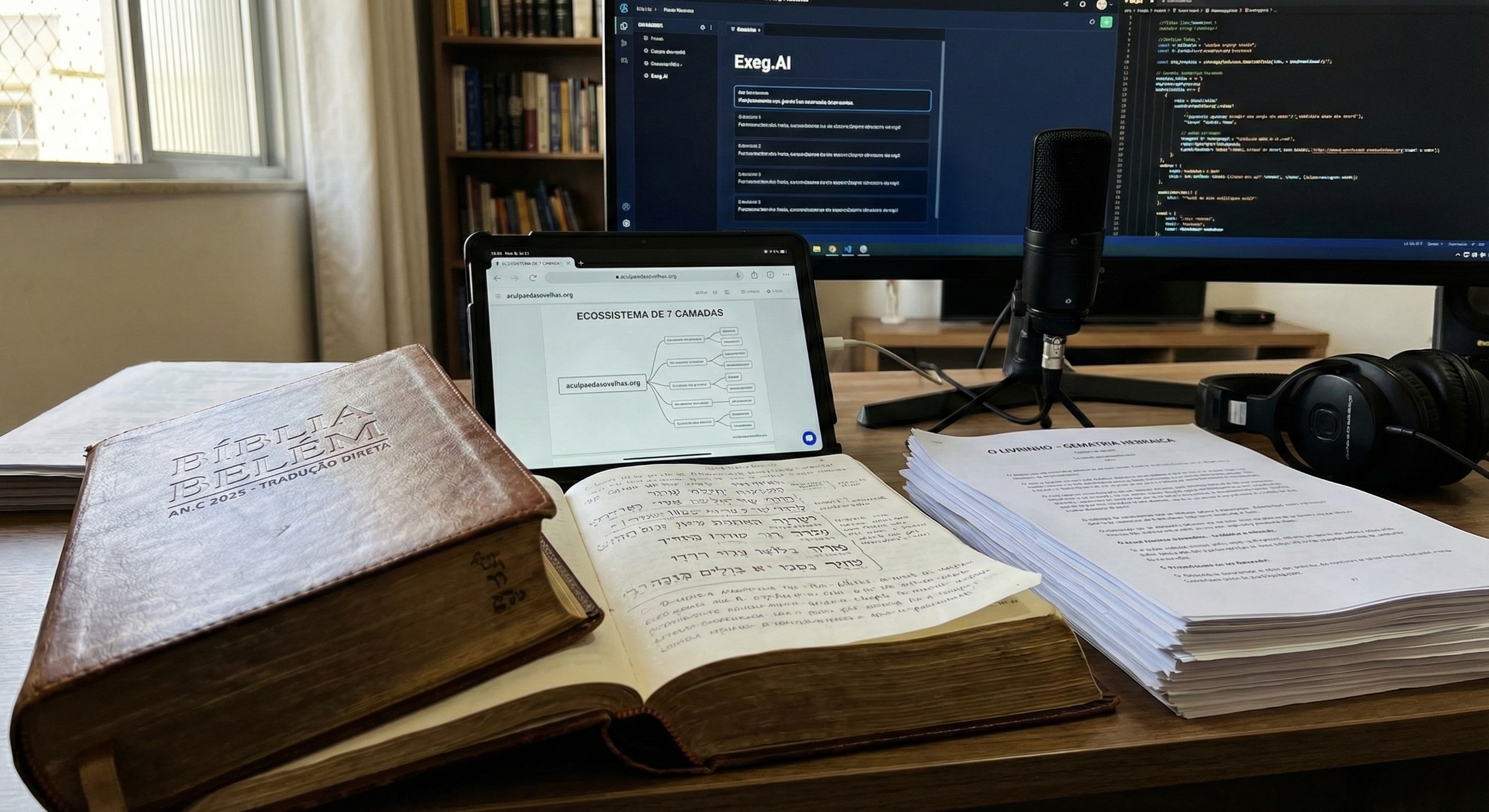
What it means to translate morpheme by morpheme, without softening, without harmonization, without concessions. The first rigid literal translation in Portuguese.
Leia mais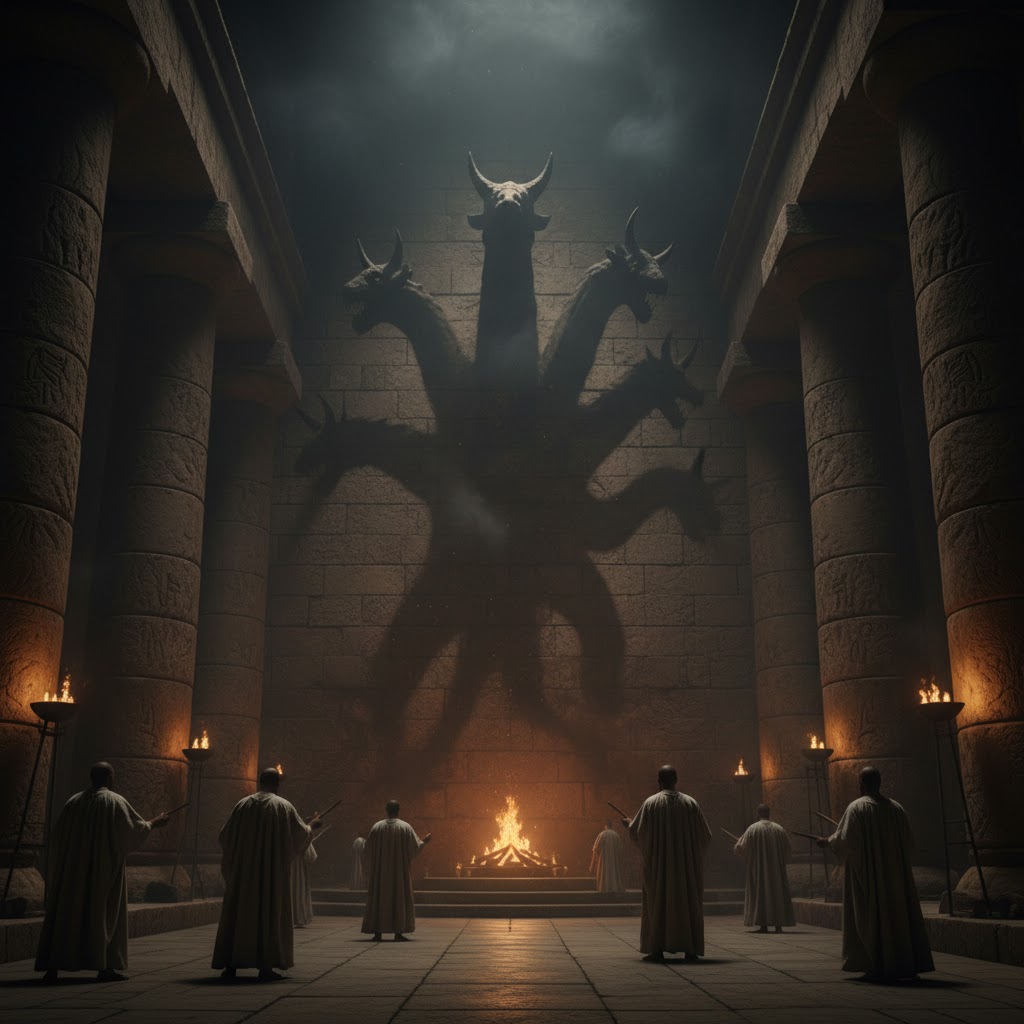
In the Unveiling, origins are identity markers. θάλασσα (sea) and ἄβυσσος (abyss) are never interchangeable. The investigation demonstrates that the origin defines the nature of the entity.
Leia mais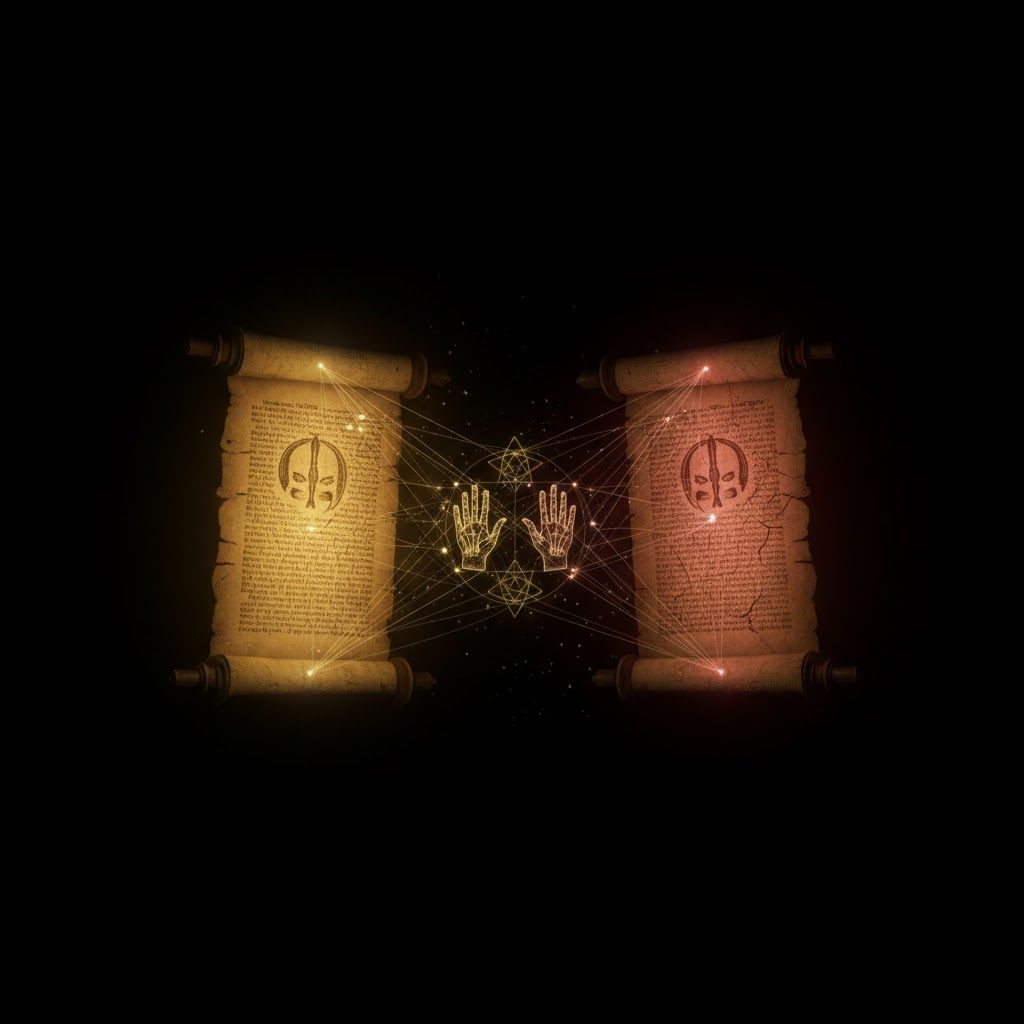
Forensic report on the designation שדי (Shaddai), its disputed etymology, the translation as Παντοκράτωρ in the LXX, and the relation to the Pantokrator of the Unveiling.
Leia maisDES 13:18 opens with "Here is the wisdom." The only biblical character who connects wisdom and 666 is Solomon. The queen of Sheba tested Solomon with riddles. DES 13:18 is a riddle. Coincidence?
Leia mais
Not every textual variant is a harmless footnote. Some divergences between códices radically alter the reading of a passage — and the School measures this impact with forensic precision.
Leia mais
The 144,000 appear twice in the Unveiling — in DES 7 and DES 14. The list of tribes is anomalous: Dan is absent, Manasseh substitutes. Is the virginity literal or metaphorical? The forensic investigation follows the text, not tradition.
Leia mais
Twenty-four thrones around the central throne. Twenty-four elders with golden crowns and white garments. Who are they? The forensic investigation maps three clues: thrones, crowns, and the song they sing.
Leia mais
DES 17:9-10 reveals that the seven heads are not Roman hills, but the genealogical patriarchs from Noah to Joseph — the founders of the yhwh system. Forensic investigation from the original codices.
Leia mais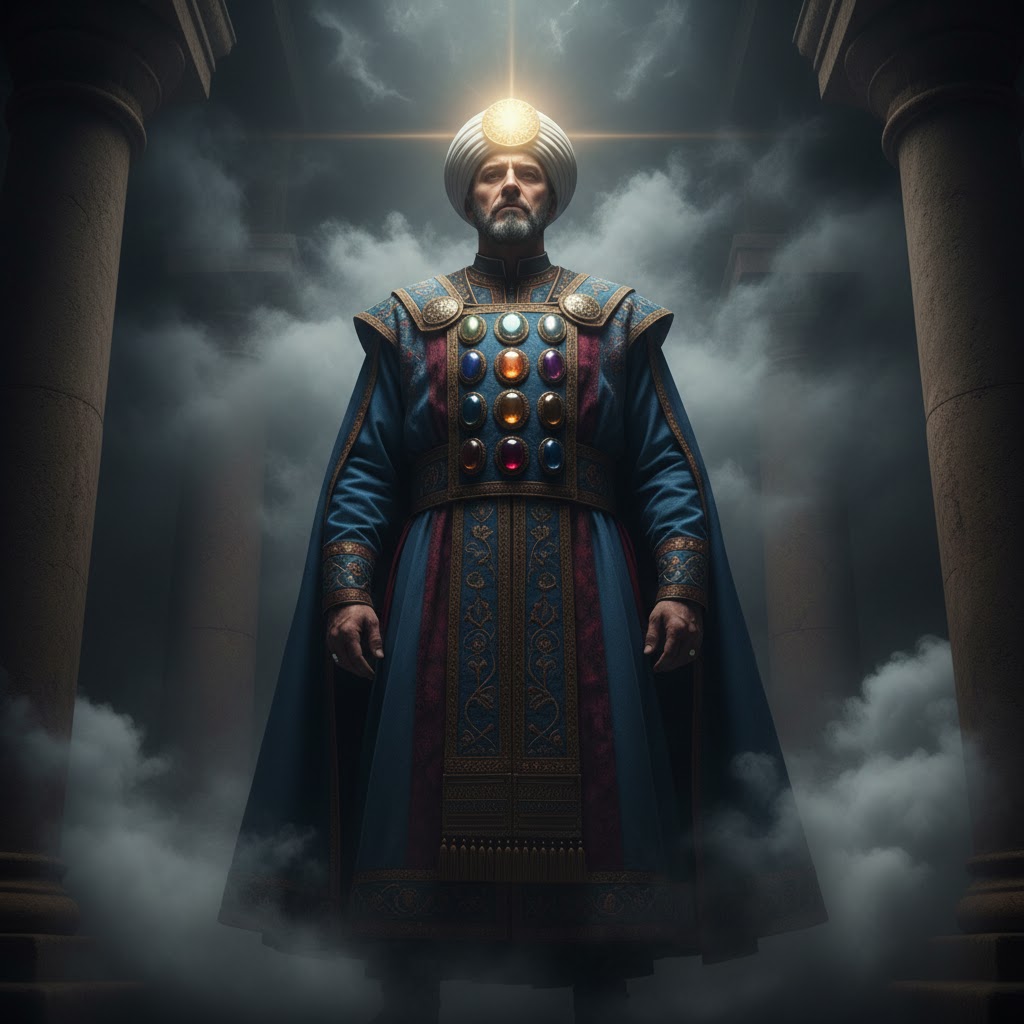
The altar and incense in DES 8 are not liturgical furniture. They are judicial instruments. The prayers of the saints rise as evidence, not as worship. The fire from the altar returns to earth as a sentence. What seemed like worship was, in truth, judgment.
Leia mais
Investigative dossier of the Beast of the Earth: the updated identification points to Moses — 7th patriarchal head and totality of the second beast, operating as mediator of the yhwh system.
Leia mais
Consolidated dossier of the Beast of the Sea: 20 textual evidences identify the beast that rises from the sea with yhwh — the institutional system of Israel, born in the waters of the Exodus.
Leia mais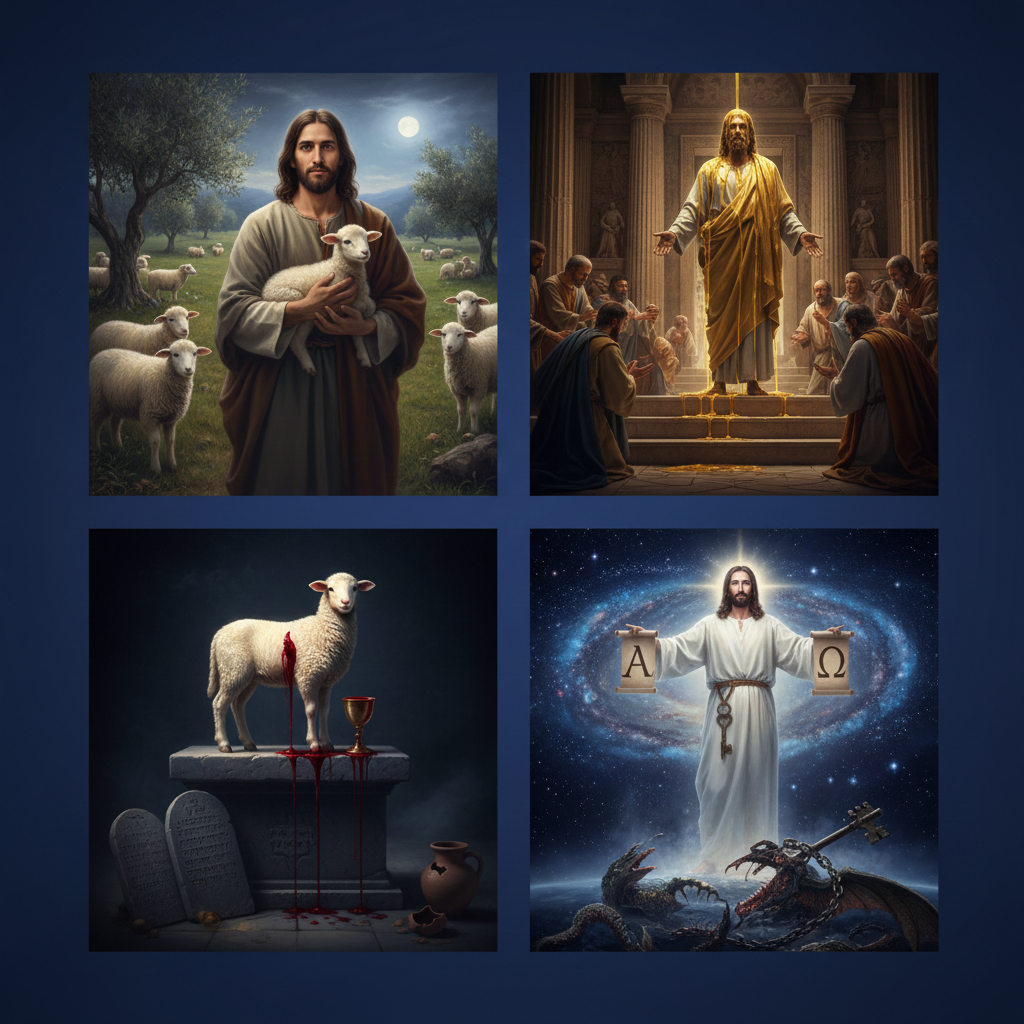
The horseman on the white horse in DES 19 wears a robe soaked in blood BEFORE the battle. The blood is not from enemies — it is his own. The cross precedes the judgment. The horseman s weapon is not a sword in his hand — it is a sword from his mouth. The Logos judges with words.
Leia mais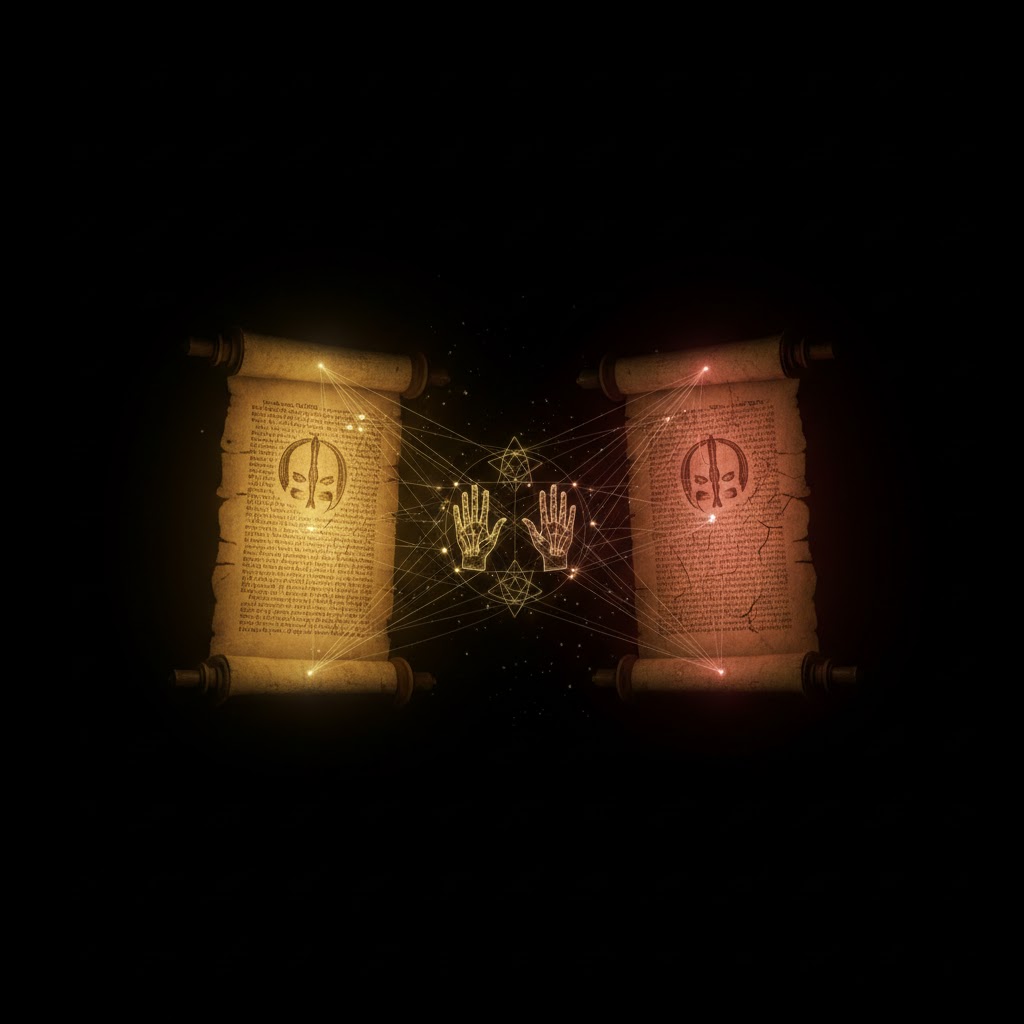
DES 5 presents a book sealed with seven seals in the right hand of the one seated on the throne. No one in heaven, on earth, or under the earth is found worthy to open it — until the Lamb, as slain, takes it. The forensic investigation reveals: only the victim can expose the system that killed him.
Leia mais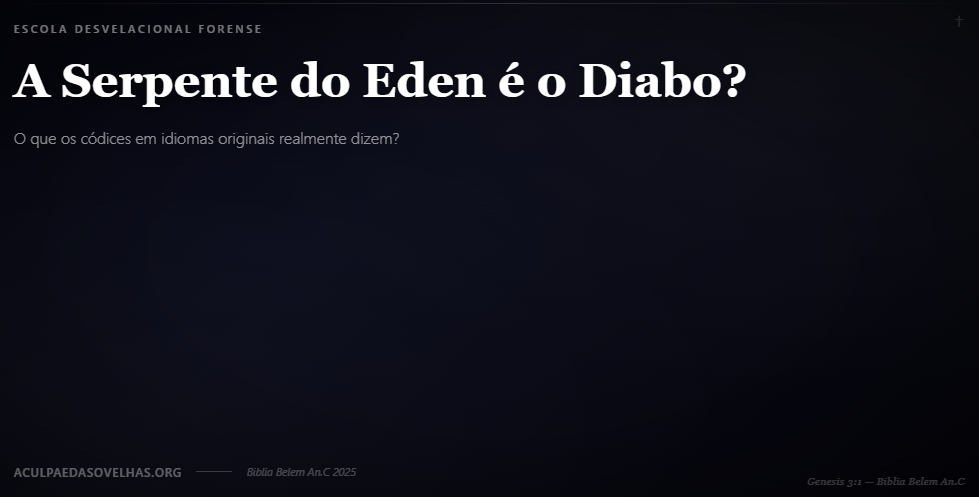
DES 20:1-3 describes three instruments of containment against the Dragon: key, chain, and seal. Three layers of restriction that operate as access control, functional restriction, and legal authentication. The chain is not physical — it is functional. The seal is not mystical — it is legal.
Leia mais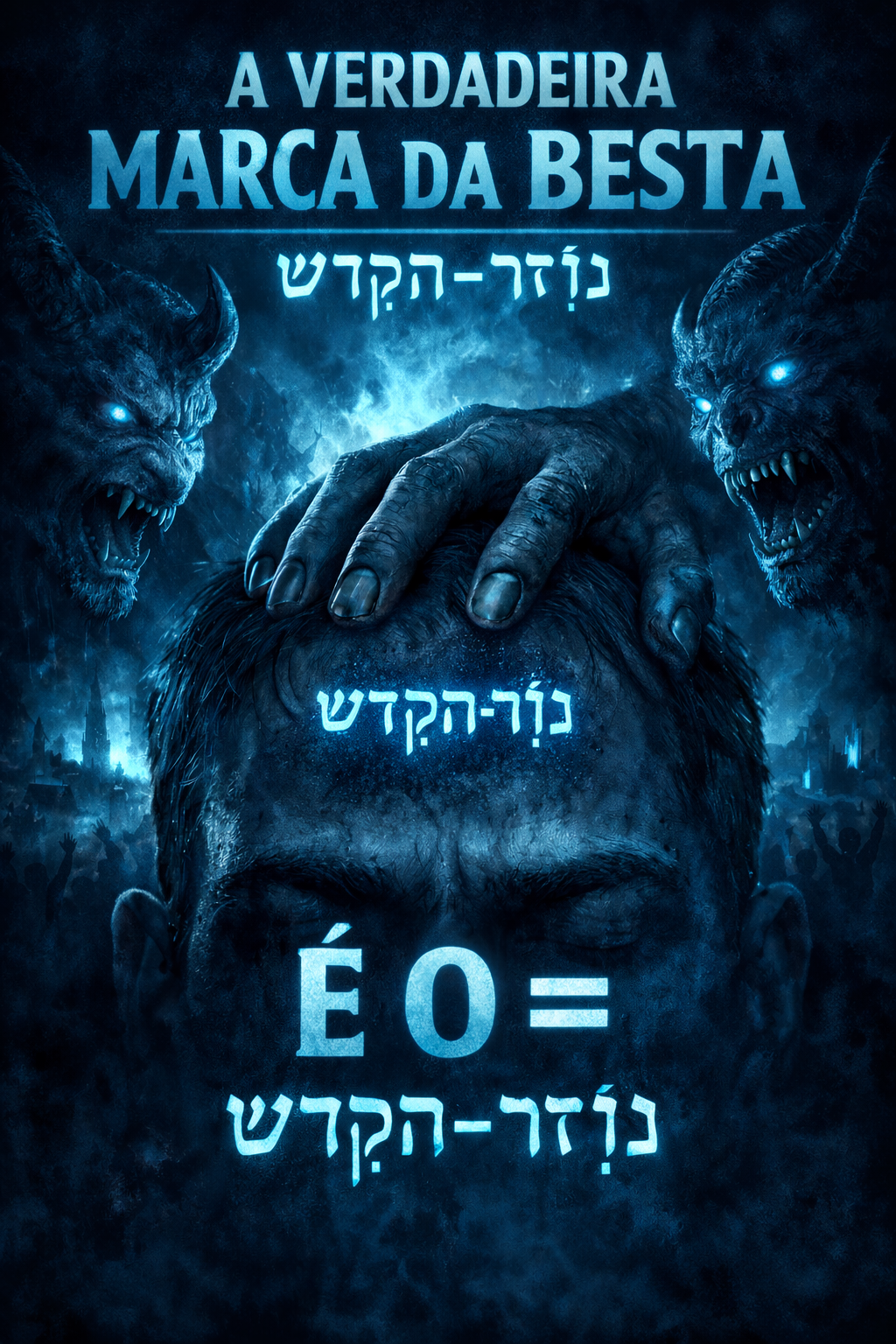
DES 17:10 declares that five have fallen, one is, and another has not yet come. If the seven heads are patriarchs, what does the fall of five institutional pillars mean?
Leia mais
DES 13:2 describes the Beast of the Sea as leopard, bear and lion. Tradition looks for three empires. yhwh needs only one passage in Hosea 13:7-8 to describe himself with the same three animals.
Leia mais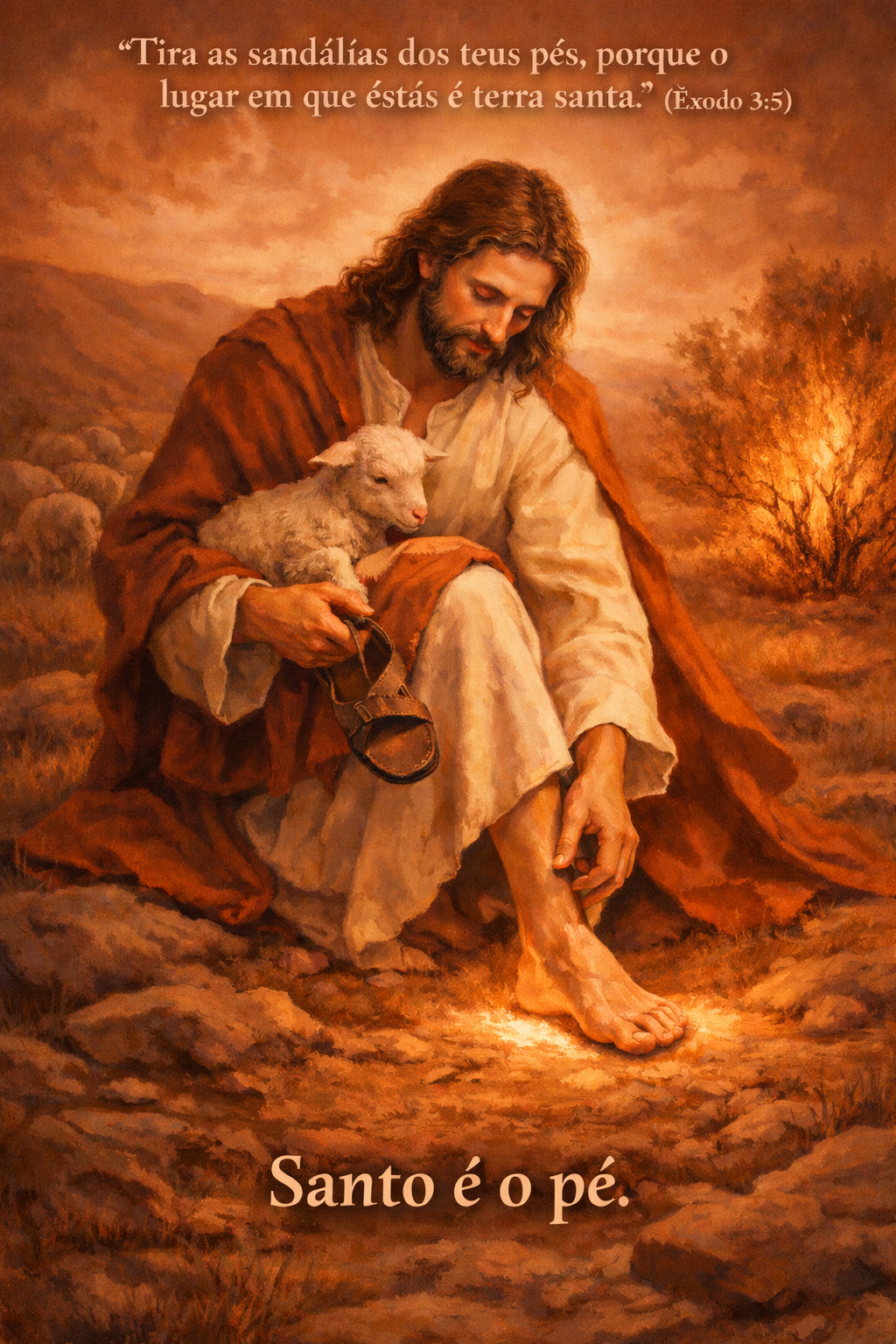
Jesus uses διαθήκη only 3 times — all about blood, none about doctrine. Paul builds an entire system. The Codex Bezae (D) raises the interpolation hypothesis. John is completely silent.
Leia mais
DES 13:2 reveals that the Beast of the Sea operates with power, throne, and authority delegated by the Dragon. The chain of delegation is the central mechanism of the Unveiling.
Leia mais
Consolidated dossier of the Dragon: 18 textual evidences trace Satan from the celestial fall to the lake of fire, through three chromatic and functional transformations.
Leia mais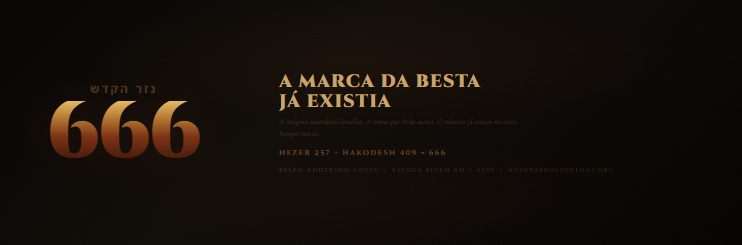
DES 17:11 declares that the beast is the eighth and is of the seven. How can an entity be simultaneously the eighth and belong to the seven? The answer lies in the mechanism of systemic regeneration.
Leia mais
DES 18 does not describe a military fall. It describes a commercial collapse. Merchants weep, kings lament, and the cargo list ends with the most disturbing item: bodies and souls of men.
Leia mais
The False Prophet is not an external or secular enemy. It is an internal religious professional who legitimizes the existing beast system. The investigation points inward, not outward.
Leia mais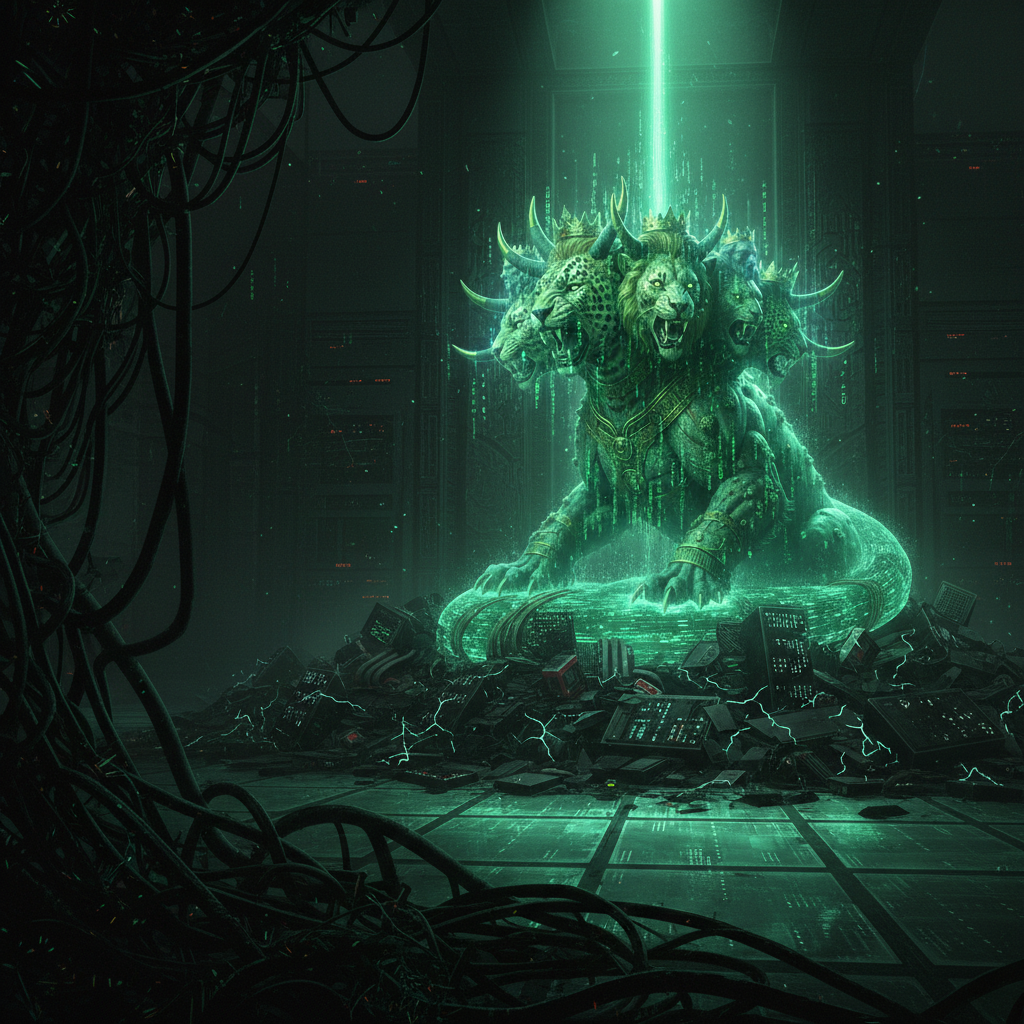
The visual and gamified model that transforms the investigation of the biblical text into a board game — where you only advance by stepping on validated rocks.
Leia mais
Different words produce different investigations. The Forensic Unveiling School deliberately replaced theological vocabulary with forensic vocabulary — because 2000 years of assumed meanings contaminate the analysis.
Leia mais
The number 666 appears only 4 times in the 66 canonical books. This extreme rarity is not accidental — it is a structural signature. The four occurrences verify each other without external tables.
Leia mais
White, red, black, and pale green. Four horses, four horsemen, four functions. Forensic investigation reveals that the colors are not random — they are functional markers of institutional power. And the first horseman is NOT Christ.
Leia mais
Four creatures full of eyes, with the forms of lion, calf, man, and eagle. They are not beasts — they are living ones. Forensic investigation traces their parallels in Ezekiel 1 and Isaiah 6 and discovers that the guard of the throne never ceases to observe.
Leia mais
DES 13:2-18 establishes a functional chain of five links: Authority, Name, Mark, Commerce, Number. Each link is textual, traceable, and verifiable. It is not random symbolism -- it is a system of institutional control.
Leia mais
DES 14 presents two harvests, not one. The first is of grain, conducted by the Son of Man. The second is of grapes, conducted by an angel. The result of the second: blood for 1,600 stadia.
Leia mais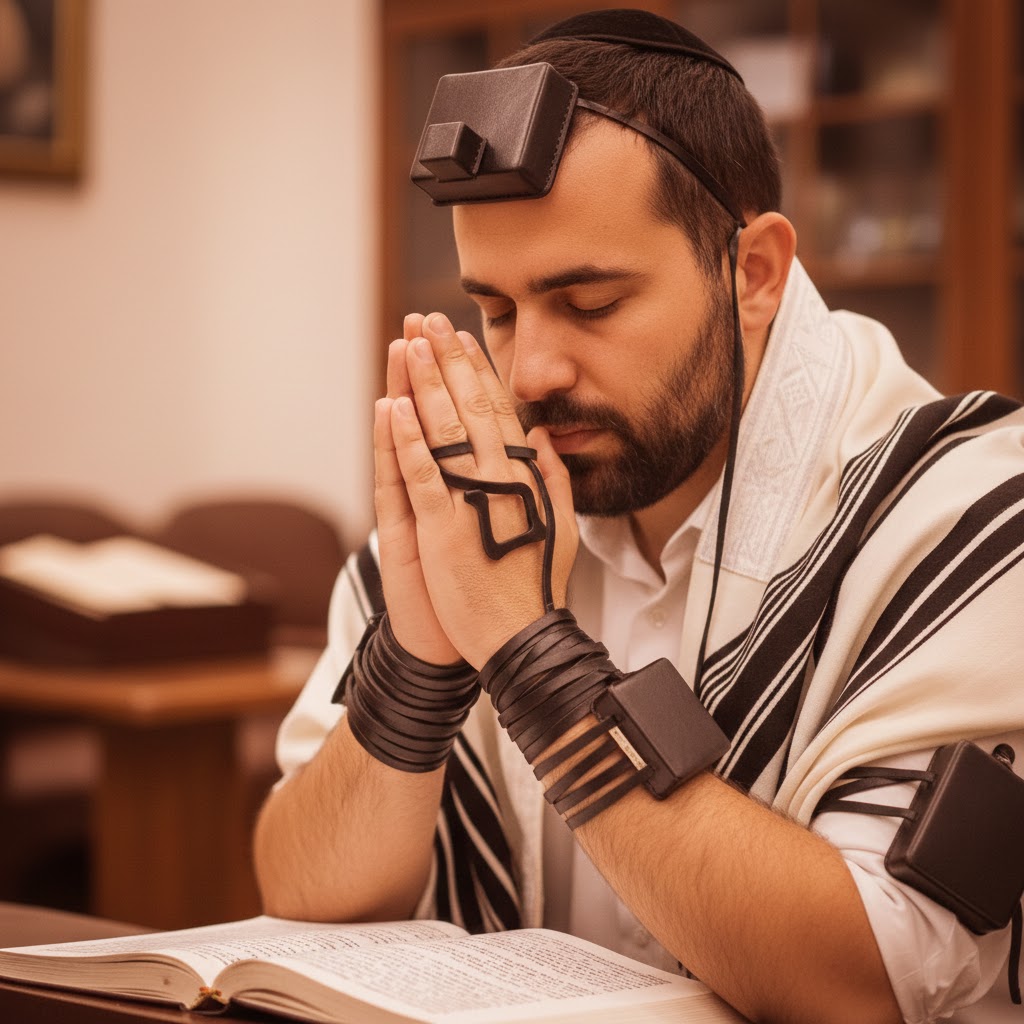
The hidden manna of DES 2:17 is not a generic symbol of divine provision. It is a direct reference to the manna stored inside the Ark of the Covenant — the food that was locked in the Holy of Holies. The promise to the overcomer: direct access to what the ancient system kept inaccessible.
Leia mais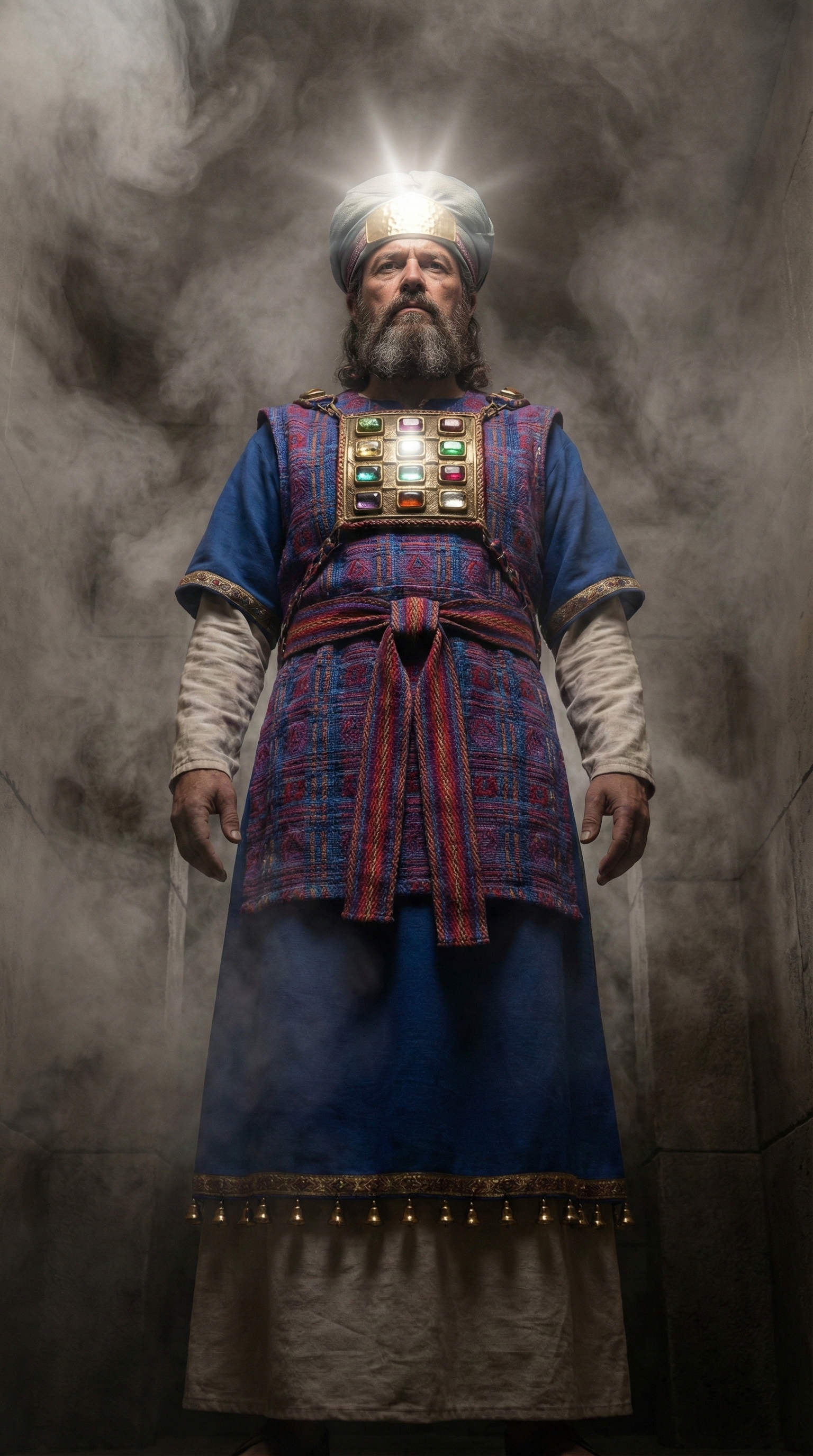
DES 13:15 describes an image that speaks and legislates death. Pagan idols do not speak. But the Tabernacle/Temple speaks — yhwh issues oracles from the mercy seat. The image of the beast is a religious system with legislative authority.
Leia mais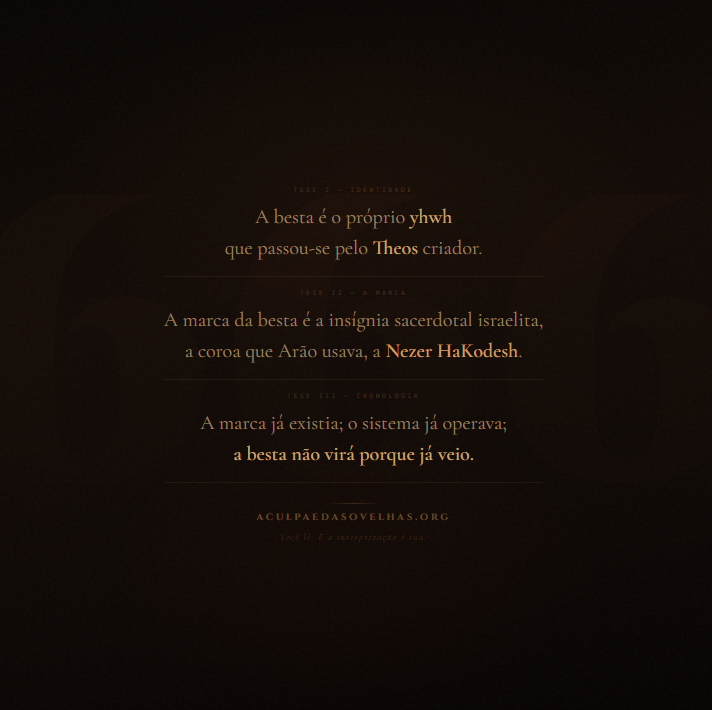
Four titles for one entity. A chain. An abyss. A thousand years. The imprisonment of Satan is not about power — it is about information. What the chain binds is not force. It is deception.
Leia mais
After the 144,000 sealed from Israel, John sees a multitude that no one can count — from every nation, tribe, people and tongue. Four universalizing terms that destroy any ethnically exclusivist reading of redemption.
Leia mais
Earth and heaven flee before the throne. Two sets of books are opened: the records of works and the Book of Life. The judgment is dual — based on actions AND on identity. And death itself is condemned.
Leia mais
The key of the abyss appears twice in the Unveiling: in DES 9:1, given to a fallen star that opens the pit to release destruction, and in DES 20:1, in the hands of an angel who locks the Dragon. Same key. Opposite holders. Contrary effects. The artifact is not the power — the holder determines the function.
Leia mais
In DES 10, a Strong Messenger holds a little book open — already open. The perfect passive participle confirms: the book the Lamb opened in DES 5 is now carried to the scene of the investigation. John is ordered to eat it. The truth is sweet in the mouth and bitter in the stomach.
Leia mais
The fifth trumpet releases from the abyss creatures that are not insects — they are a supernatural army with defined rules of engagement. Five months of torment, killing prohibited, and a king whose name appears in two languages. The forensic investigation examines every detail.
Leia mais
DES 12:5 records the birth of a male child who will be caught up to the throne of Theos. The verb harpazo — the same as 1Th 4:17 — reveals not a future rapture, but a jurisdictional extraction already accomplished.
Leia mais
The mark on the right hand and forehead of DES 13:16 is not future technology. It is biblical precedent. Tefillin, sacerdotal plate, sign of the Exodus — the text already describes the system. For millennia.
Leia mais
In DES 18:21, a mighty angel casts a millstone into the sea — and Babylon sinks with it, never to be found again. The Greek double negative guarantees: the sentence is absolute. What follows are five absences — music, craft, mill, lamp, bride and groom. Total cultural extinction.
Leia mais
DES 21:22 declares: I saw no temple in it. The entire sacerdotal infrastructure — priesthood, sacrifice, incense, holy of holies — is absent from the definitive city. The Lamb is the temple. And the gates never close.
Leia mais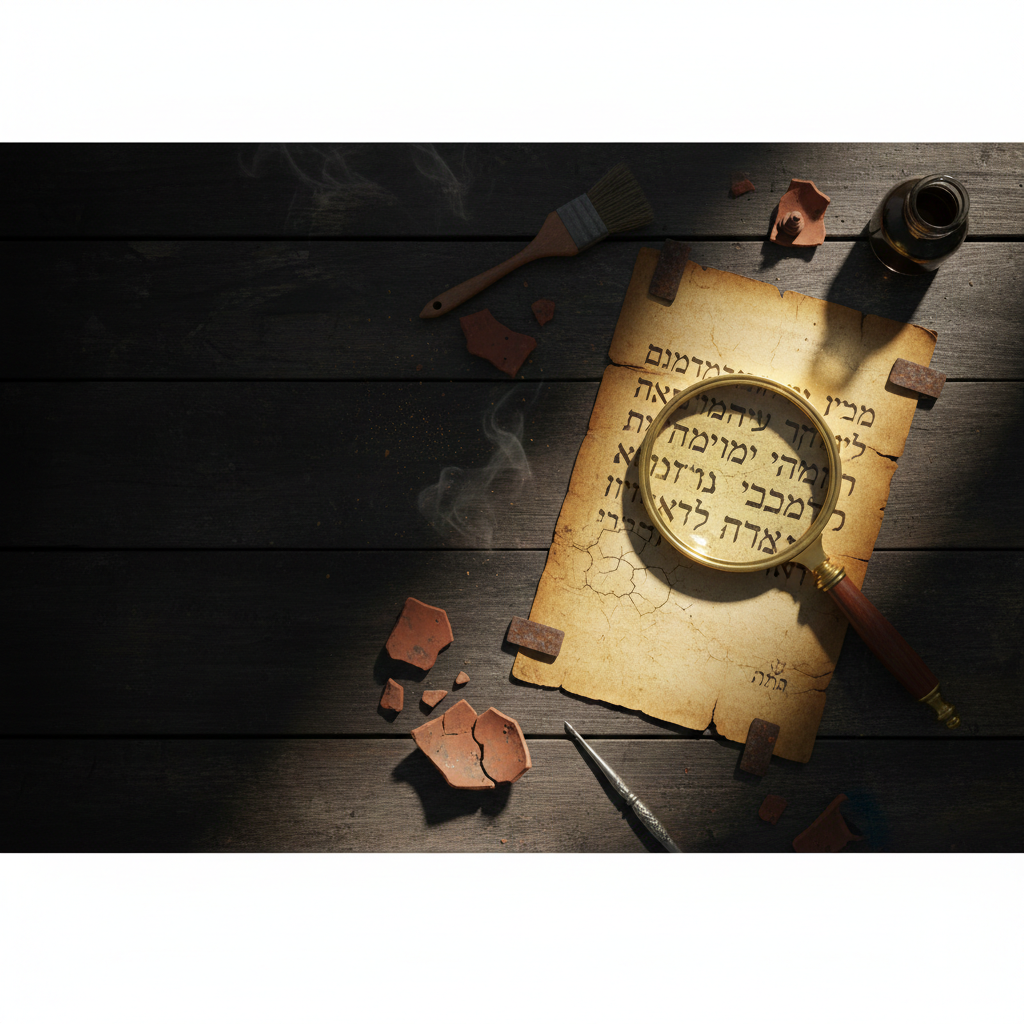
Each evangelist protects someone — except John. The forensic investigation reveals an editorial pattern that transforms the reading of the Gospels.
Leia mais
The tree of life that was blocked in Gênesis 3 is once again accessible in DES 22. No cherubim, no flaming sword. The leaves heal the nations — all of them. Access is universal and unrestricted.
Leia mais
The Scarlet Beast of DES 17 is the Dragon itself — the proof lies in the location, the color, the origin and the woman who fled from it but now rides it.
Leia mais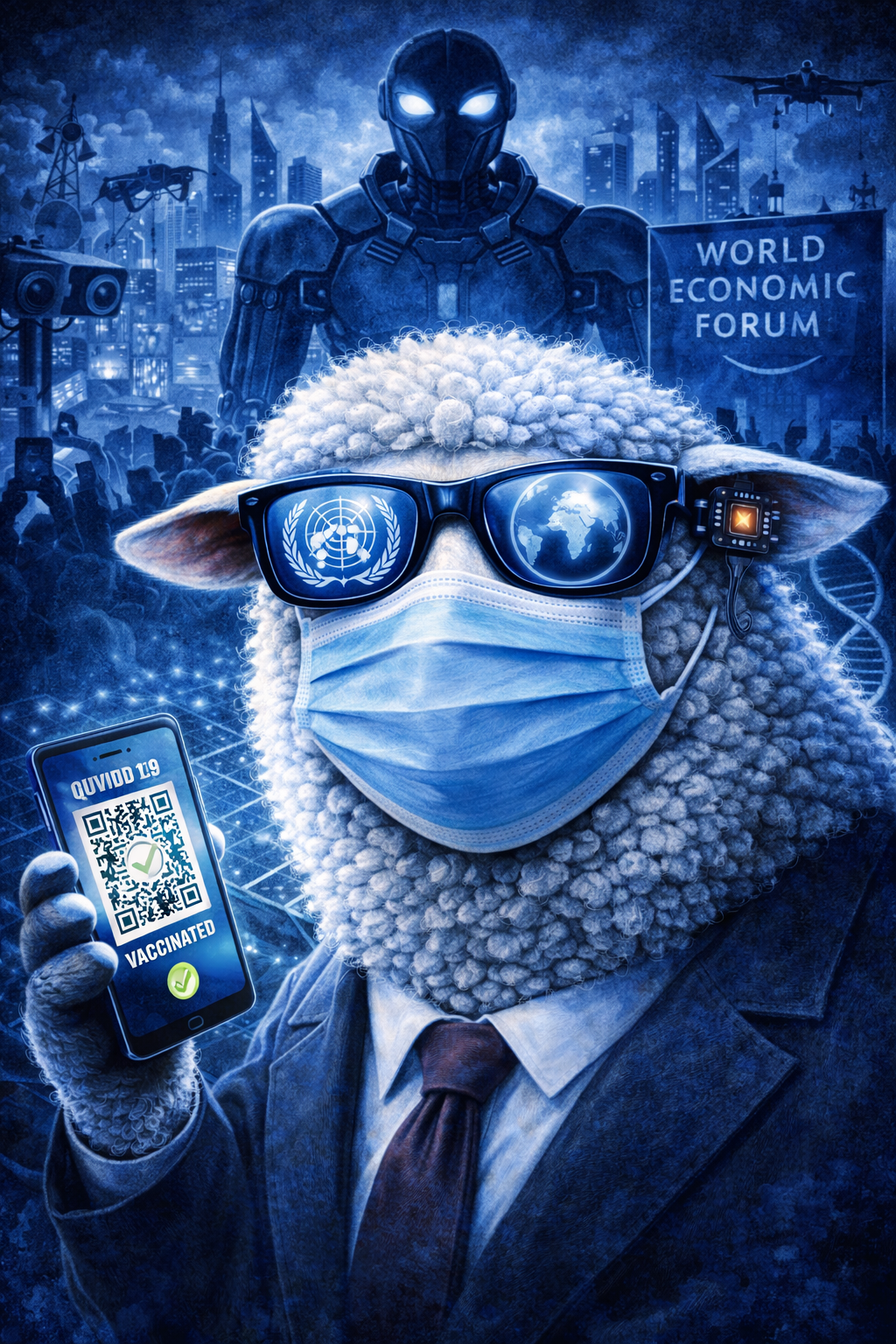
The sea of glass appears twice in the Unveiling: in DES 4:6 as crystal before the throne, and in DES 15:2 mixed with fire, with the victors over the beast standing upon it. The sea from which the beast emerged becomes the platform of those who conquered it.
Leia mais
The "mark on the forehead" motif traverses the entire canon -- from Exodus 13 to DES 22. Both Theos and the Beast use the same location. The system is not new. It is as ancient as the Exodus.
Leia mais
Forensic investigation of the editorial decision in the Septuagint that replaced the tetragrammaton יהוה with Κύριος and its cascading consequences in the New Testament.
Leia mais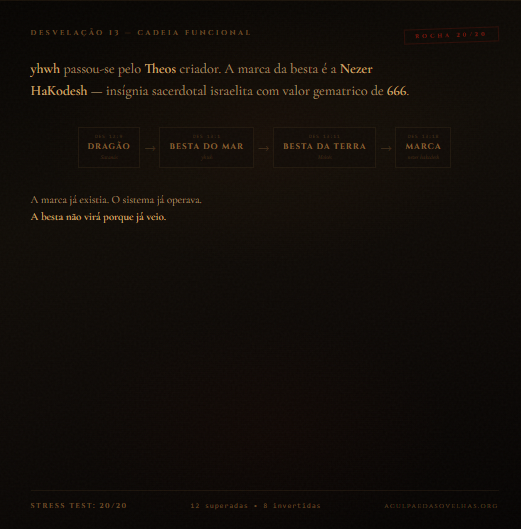
DES 2-3 does not contain letters of encouragement. It contains judicial reports. The pattern is: identification of the judge, surveillance, accusation, verdict, promise to the overcomer. The deception is INSIDE the assemblies.
Leia maisAfter six seals of cosmic convulsion, the seventh seal brings silence. The word sige appears only once in the entire Unveiling — and its judicial meaning changes everything we think about this forgotten event.
Leia mais
DES 17:10 speaks of seven kings: five have fallen, one exists, another has not yet come. Solomon emerges as the key to the enigma 666: he asked for wisdom, received 666 talents, built the Temple. The mortal wound was healed.
Leia mais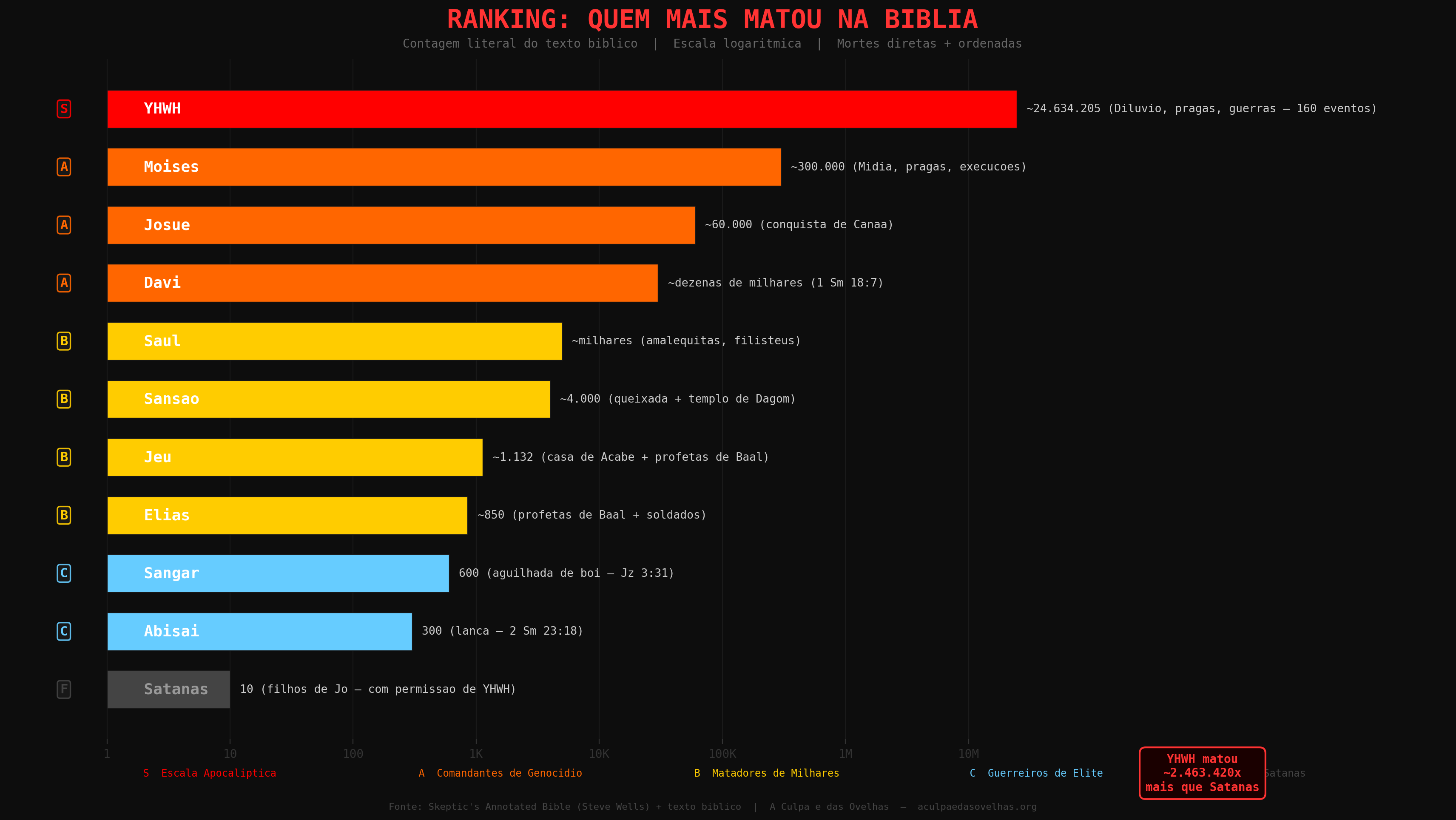
A thesis without a stress test is not an axiom. It is an opinion. See how the Forensic Unveiling School submits its hypotheses to the tribunal of the text itself.
Leia mais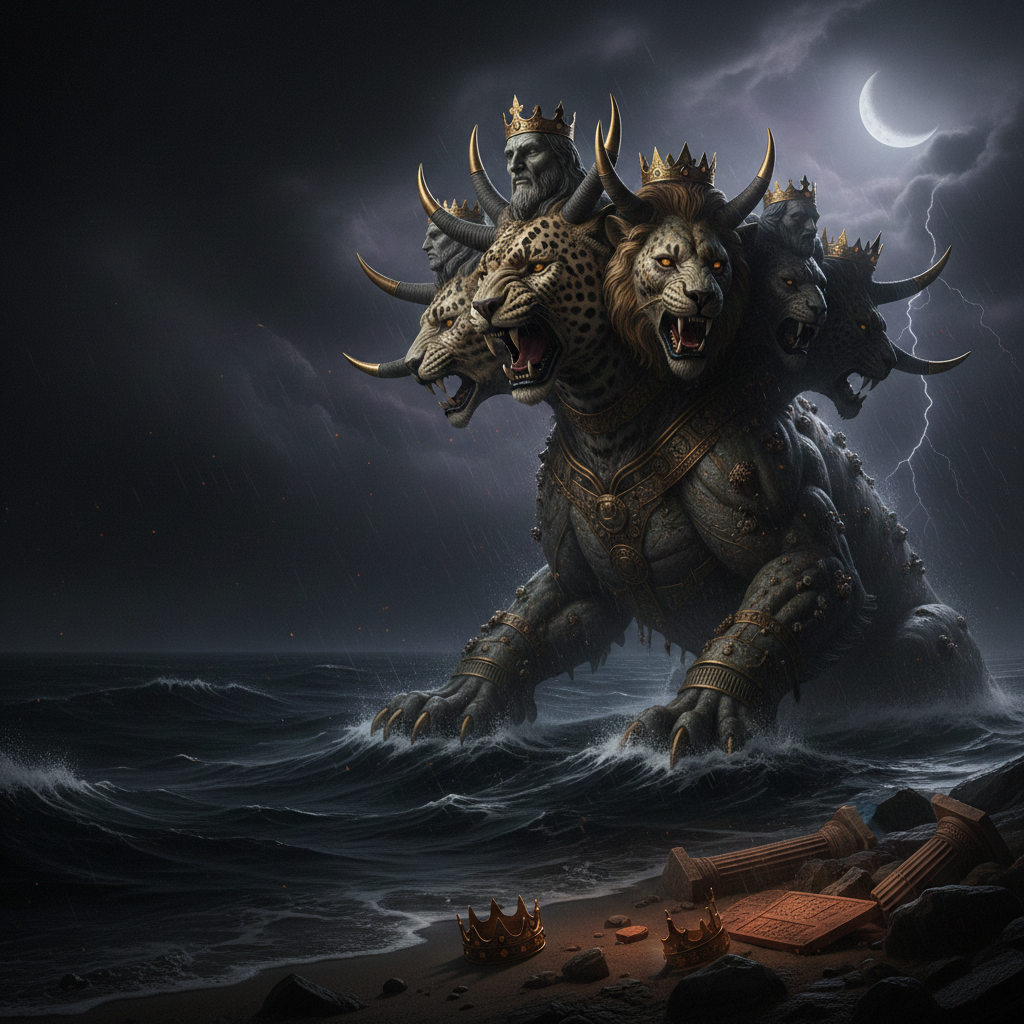
The ten horns with diadems of DES 13:1 are the ten operational tribal powers of Israel — the political extension of the patriarchal system.
Leia mais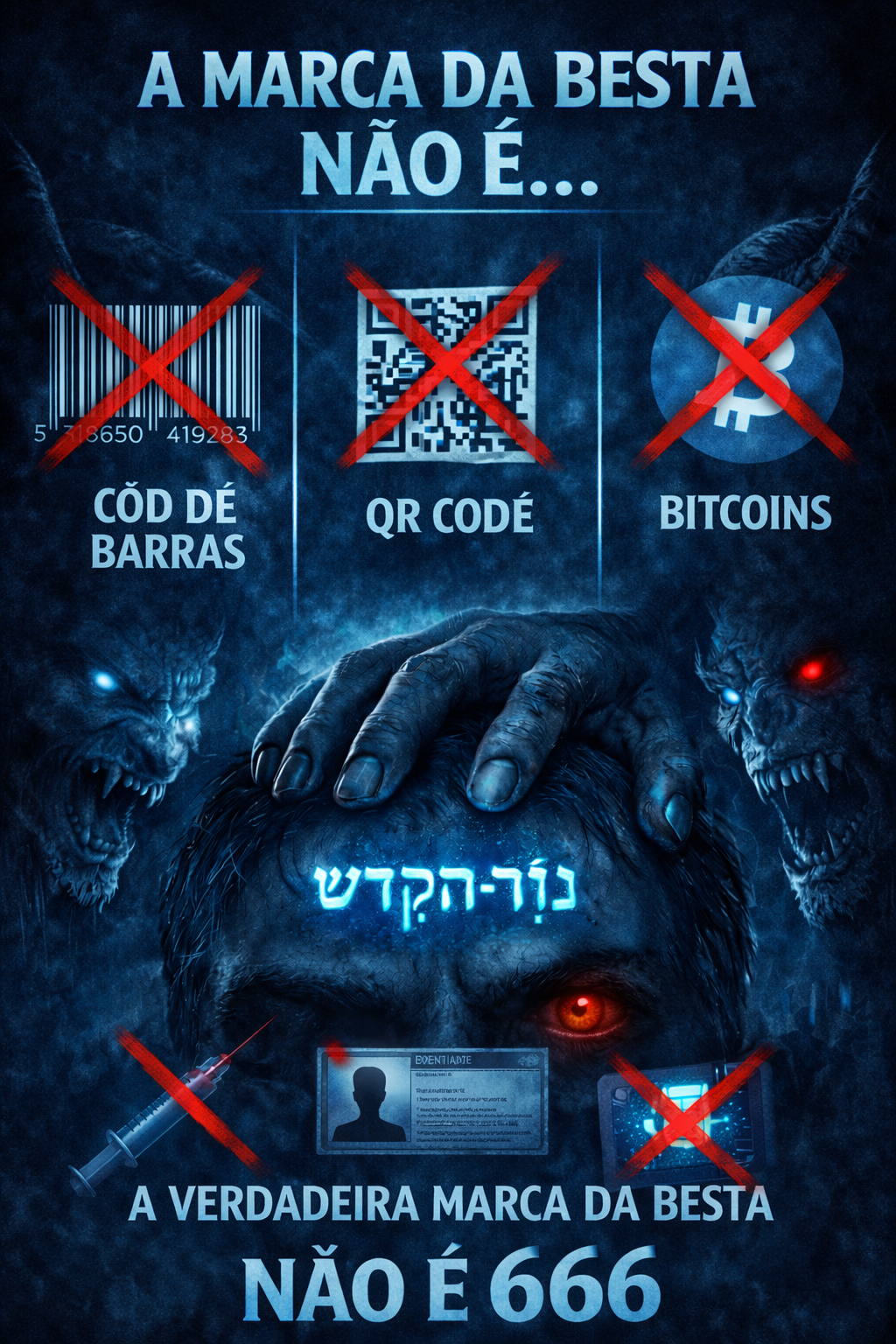
The three beasts have three different destinations at three different times. If they were a single entity, the text would not need to separate them. But it did — with surgical precision.
Leia mais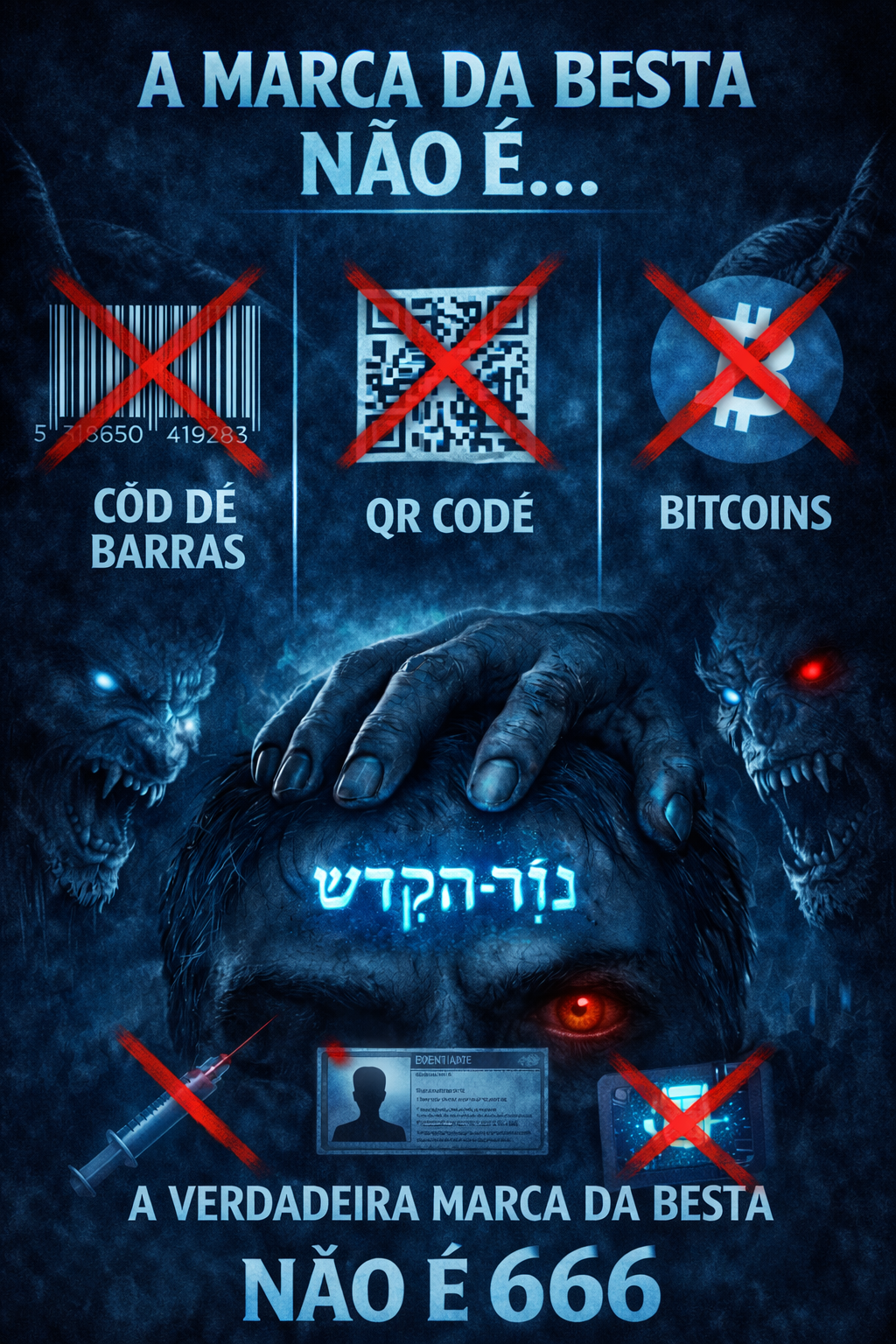
DES 11 describes two witnesses with the powers of Moses and Elijah. They are olive trees, lampstands, prophets who die and rise again. Forensic tracking reveals that their identity is encoded in Zechariah 4 — not in tradition.
Leia mais
The text says: the time is now. Tradition says: it is about the future. Who is right — the text or tradition? The Unveiling does not predict. It EXPOSES.
Leia mais
The Bride of the Lamb is not a church, not an institution, and not a generic people. The text identifies the Bride with surgical precision: she is a city. And that city has no temple.
Leia mais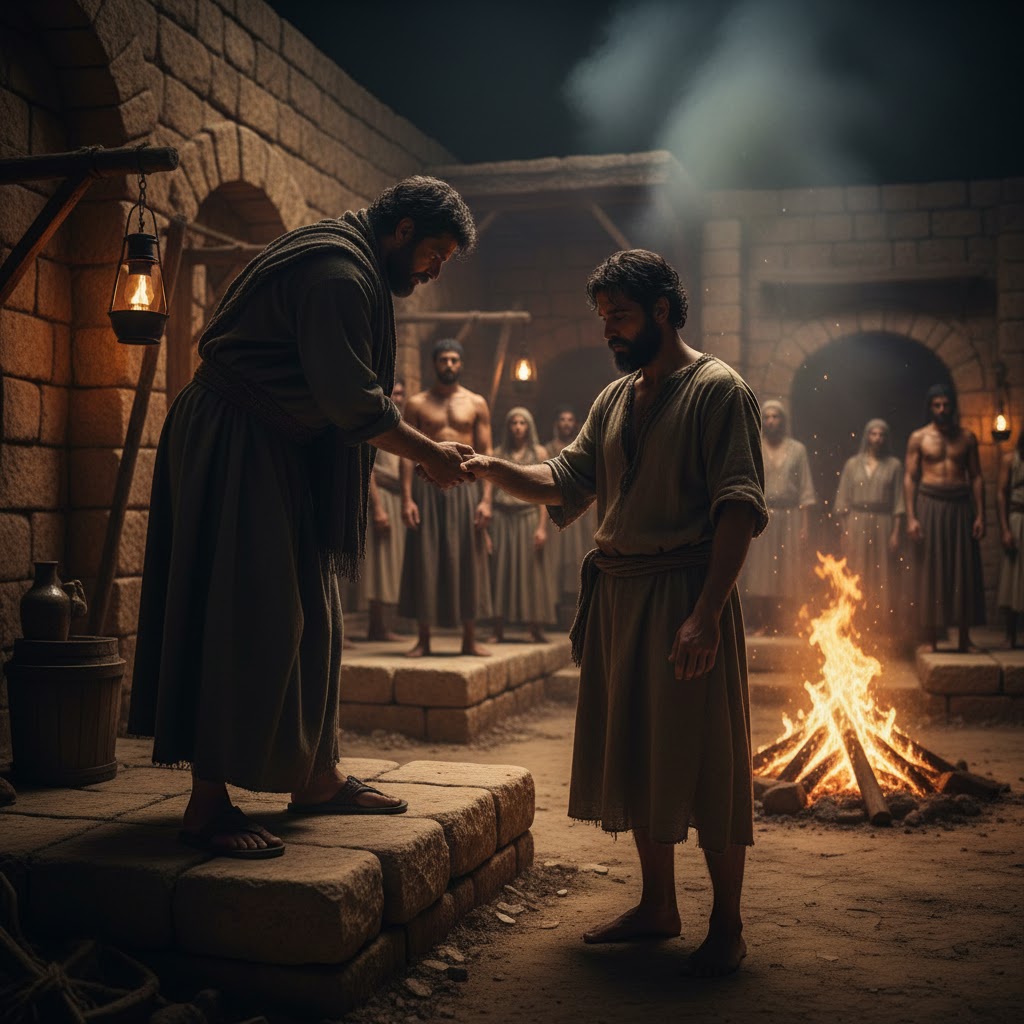
DES 2:17 promises the overcomer of Pergamum three things: hidden manna, a white stone, and a new name that no one knows except the one who receives it. The white stone (psephos) shares the same root as psephizo — the verb used in DES 13:18 to calculate the number of the Beast.
Leia mais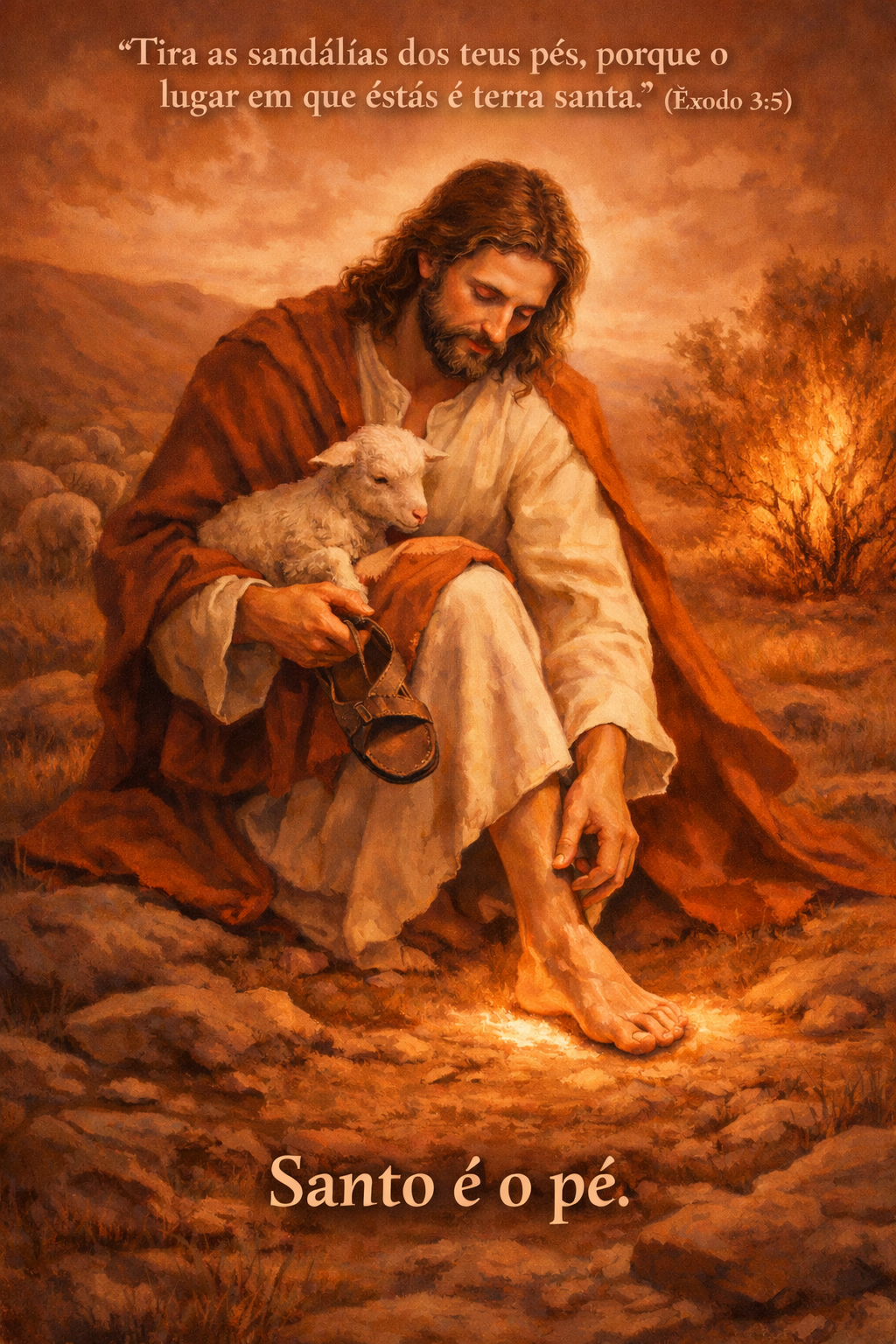
The great sign in heaven of DES 12 reveals a woman clothed with the sun and twelve stars. Tradition identifies her as the Church or Mary. Forensic tracking points elsewhere: Israel in its primordial identity — and its trajectory to the prostitute of the system.
Leia mais
Forensic investigation on how the translation of Κύριος as "Lord" collapses distinct identities in the New Testament, inheriting the substitution from the Septuagint.
Leia mais
Tradition fuses the beasts into a single "beast of the Apocalypse." The text separates them with surgical precision. Three θηρίον entities with distinct origins, profiles, and destinations.
Leia maisThe original title of the book does not mean destruction — it means exposure. A forensic investigation into what ἀποκαλύπτω actually communicates.
Leia mais
When you read "God" in English, you assume one entity. The Greek codices use Θεός for multiple distinct beings. Forensic investigation of the multiplicity that translations collapse into a single word.
Leia mais
If the Dragon deceives the entire inhabited world, no system that claims biblical authority is automatically exempt. Including all of them.
Leia mais
Forensic dossier on the tetragrammaton יהוה, the loss of its original vocalization, the artificial hybrid "Jehovah," and the implications for identifying the Name in the Unveiling.
Leia mais
Forensic investigation of the textual distinctions between yhwh and Jesus in the códices — ethnic particularism vs. cosmic universalism, historical mediator vs. absolute Creator.
Leia mais
This is not a catchphrase. It is a transfer of authority. In 2000 years, the reader was a consumer of others interpretations. This school returns to the reader what was always theirs: sovereignty over the text.
Leia mais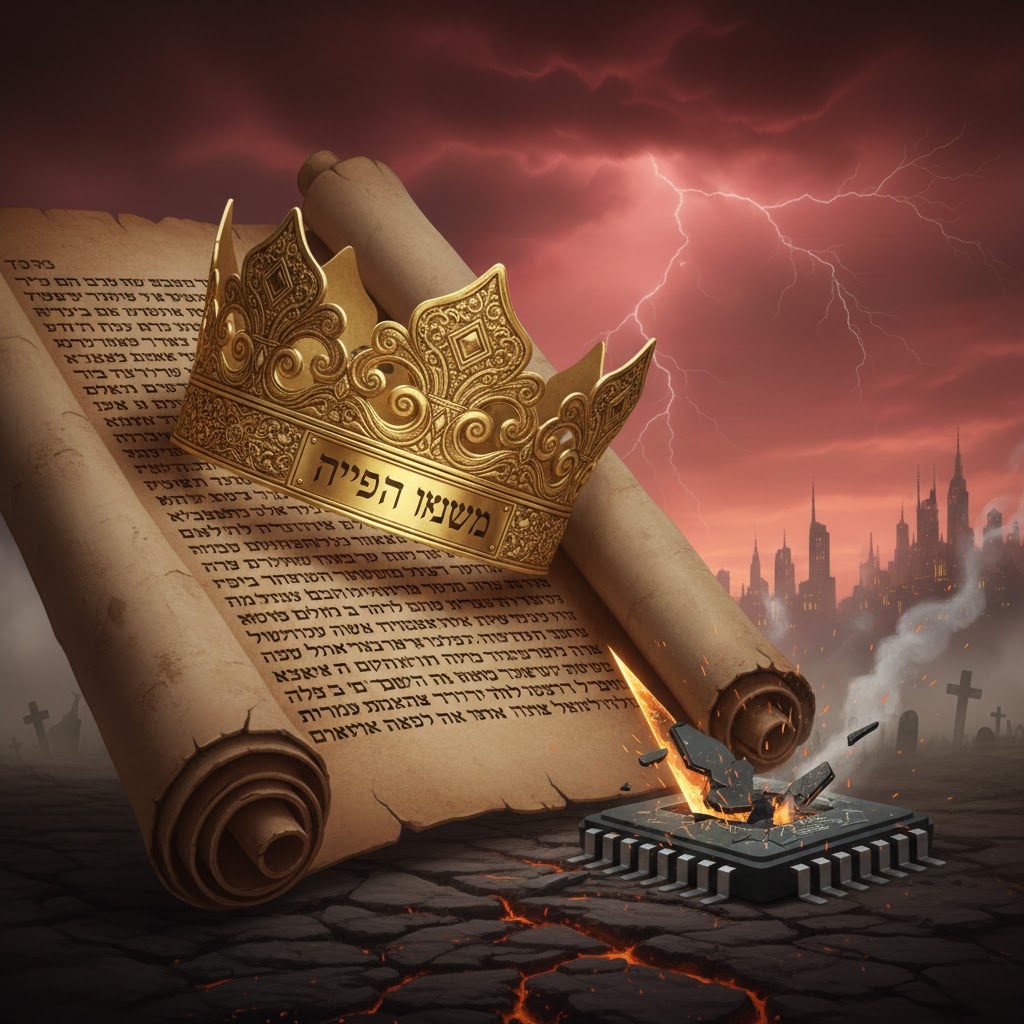
Forensic report on the semantic field of Πνεῦμα in the Greek códices and why the single translation "spirit" collapses radically distinct realities.
Leia mais
Forensic dossier on the distinction between Χριστός as a messianic title and as a proper name, and the implications for the definition of the anti-Χριστός in John.
Leia mais
Why "holy" in the Old Testament is not a moral attribute — it is a property mark of yhwh. And why Jesus washed the feet of the disciples as a direct response to Exodus 3:5.
Leia mais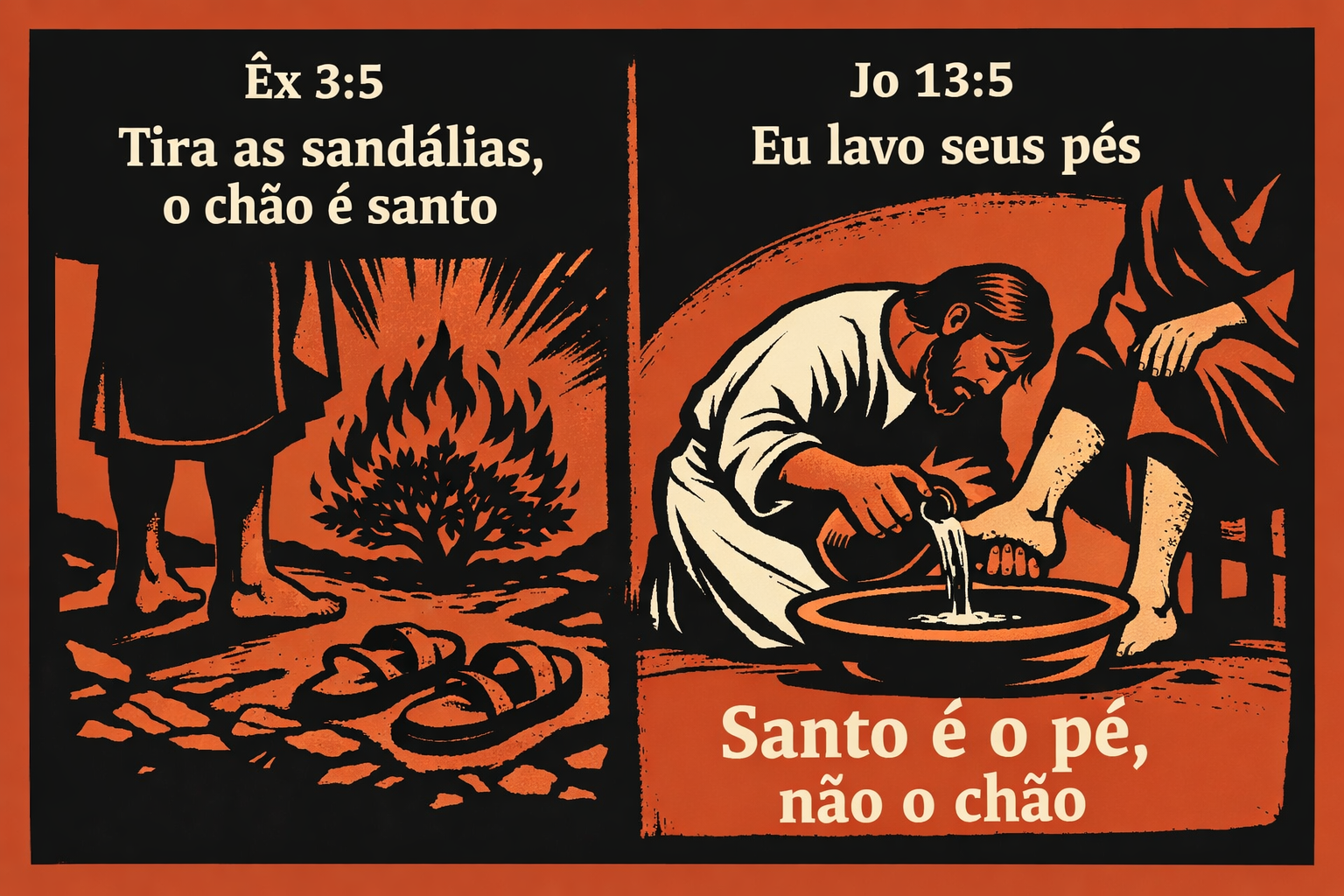
The Beast rises from the sea. The Angel steps on the sea. They are the same sea. And the attributes of the Strong Angel of Unveiling 10 coincide with those of Jesus in Unveiling 1 -- face like the sun, feet of fire, voice of a lion. Textual coincidence or forensic identity?
Leia mais
The question of Exodus 15:11 is the same as Unveiling 13:4. The Beast of the Sea is not a future mystery — it is an entity that Israel was already worshiping on the shores of the Red Sea.
Leia mais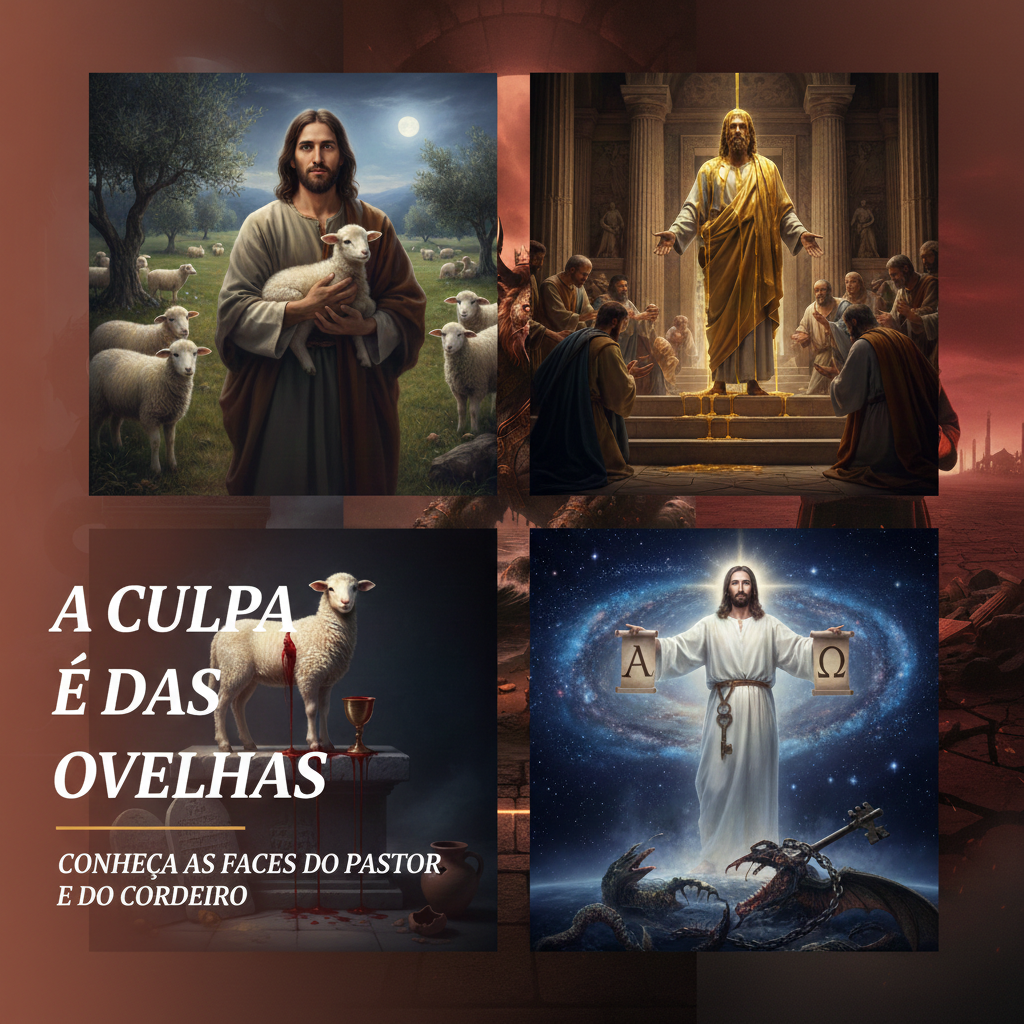
Why does the Protestant Bible have exactly 66 books? From Luther's 95 Theses (1517) to the Westminster Confession — the full timeline of how Reformation, councils, and printing shaped the biblical canon. Includes the removed books and why.
Leia maisHow language models can perpetuate biased interpretations.
Leia mais


68 biblical passages systematically analyzed, from Gênesis to the Unveiling.
Leia maisThe argument that Jesus supported Rome does not hold up.
Leia mais
Why Paul and the other authors must be treated as targets of the Johannine criterion.
Leia mais
The New Rigid Literal Translation that returns to the reader the right to judge the Sacred Text.
Leia mais
A modern parable about protection, violence and the hero path.
Leia mais
The spiritual journey of Belem Anderson Costa — from Catholicism to the return to Christ.
Leia mais
A fundamental declaration about responsibilities and choices, about walking toward or against the Way, the Truth and the Life.
Leia mais