Public source text: Nestle 1904 (Greek). Translation: Belem-2025 Bible translation — literal, rigid, directly from the public códices.
Exclusive source: Seals Dossier + Enigmatic Elements Catalog (Forensic Unveiling School Belem an.C-2039).
Four seals, four horses, four colors
The Lamb breaks the first four seals of the book (UNV 6:1-8) and four horses are released in sequence. Tradition calls them the “Four Horsemen of the Apocalypse” — but the text does not use “Apocalypse.” The text uses Unveiling (Ἀποκάλυψις, apokalypsis — the act of unveiling, removing the veil). And these are not generic horsemen. They are entities with specific functions, each marked by a distinct Greek color term.
The Forensic Unveiling School investigates through the chromatic axis: color is not decoration — it is evidence. Each Greek color term appears in other contexts throughout the Unveiling, creating traceable intertextual connections.
The four horses — Greek text and literal translation
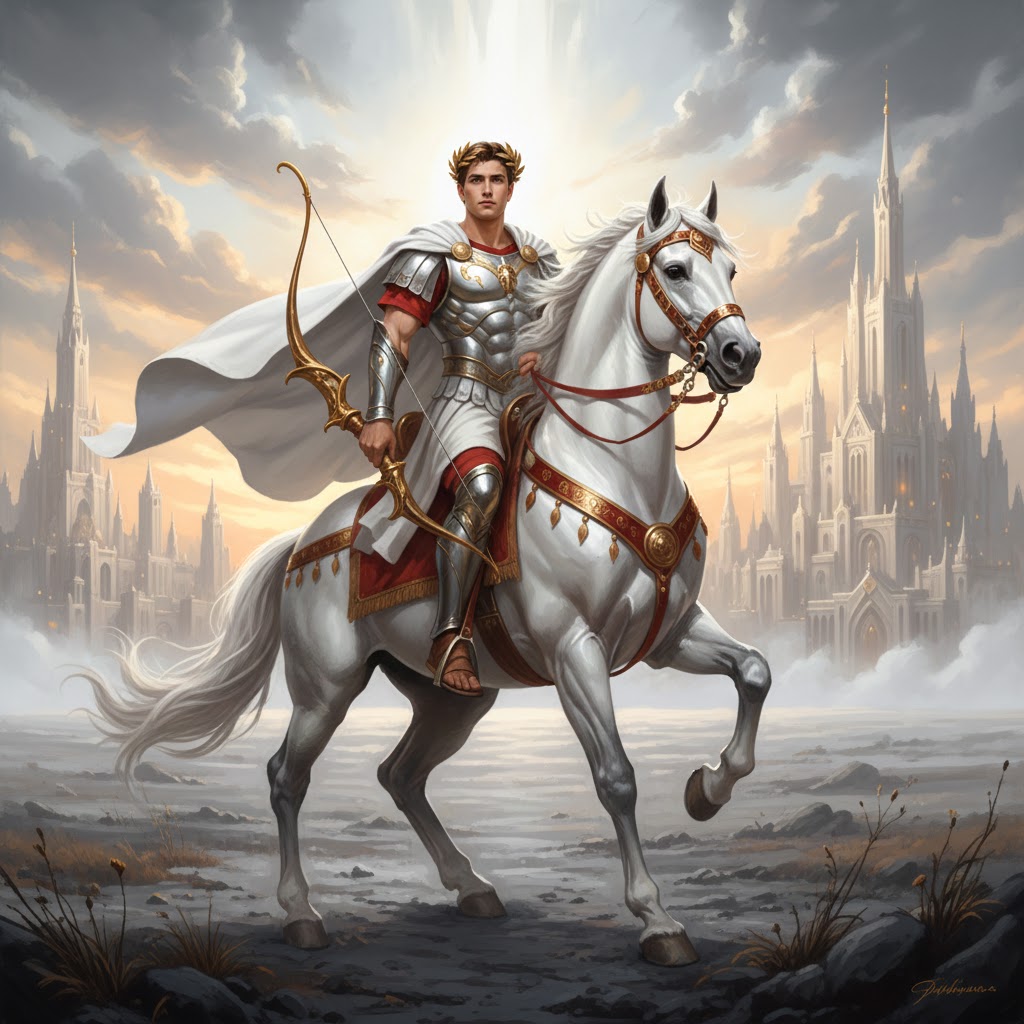
First seal — White Horse (UNV 6:2)
καὶ εἶδον, καὶ ἰδοὺ ἵππος λευκός, καὶ ὁ καθήμενος ἐπ᾽ αὐτὸν ἔχων τόξον, καὶ ἐδόθη αὐτῷ στέφανος, καὶ ἐξῆλθεν νικῶν καὶ ἵνα νικήσῃ.
kai eidon, kai idou hippos leukos, kai ho kathemenos ep’ auton echon toxon, kai edothe auto stephanos, kai exelthen nikon kai hina nikese.
“And I saw, and behold a white horse, and the one sitting upon it having a bow, and a crown was given to him, and he went out conquering and in order to conquer.”
Second seal — Fiery-Red Horse (UNV 6:4)
καὶ ἐξῆλθεν ἄλλος ἵππος πυρρός, καὶ τῷ καθημένῳ ἐπ᾽ αὐτὸν ἐδόθη αὐτῷ λαβεῖν τὴν εἰρήνην ἐκ τῆς γῆς καὶ ἵνα ἀλλήλους σφάξουσιν, καὶ ἐδόθη αὐτῷ μάχαιρα μεγάλη.
kai exelthen allos hippos pyrros, kai to kathemeno ep’ auton edothe auto labein ten eirenen ek tes ges kai hina allelous sphaxousin, kai edothe auto machaira megale.
“And another horse went out, fiery-red, and to the one sitting upon it was given to him to take the peace from the earth and that they should slaughter one another, and a great sword was given to him.”
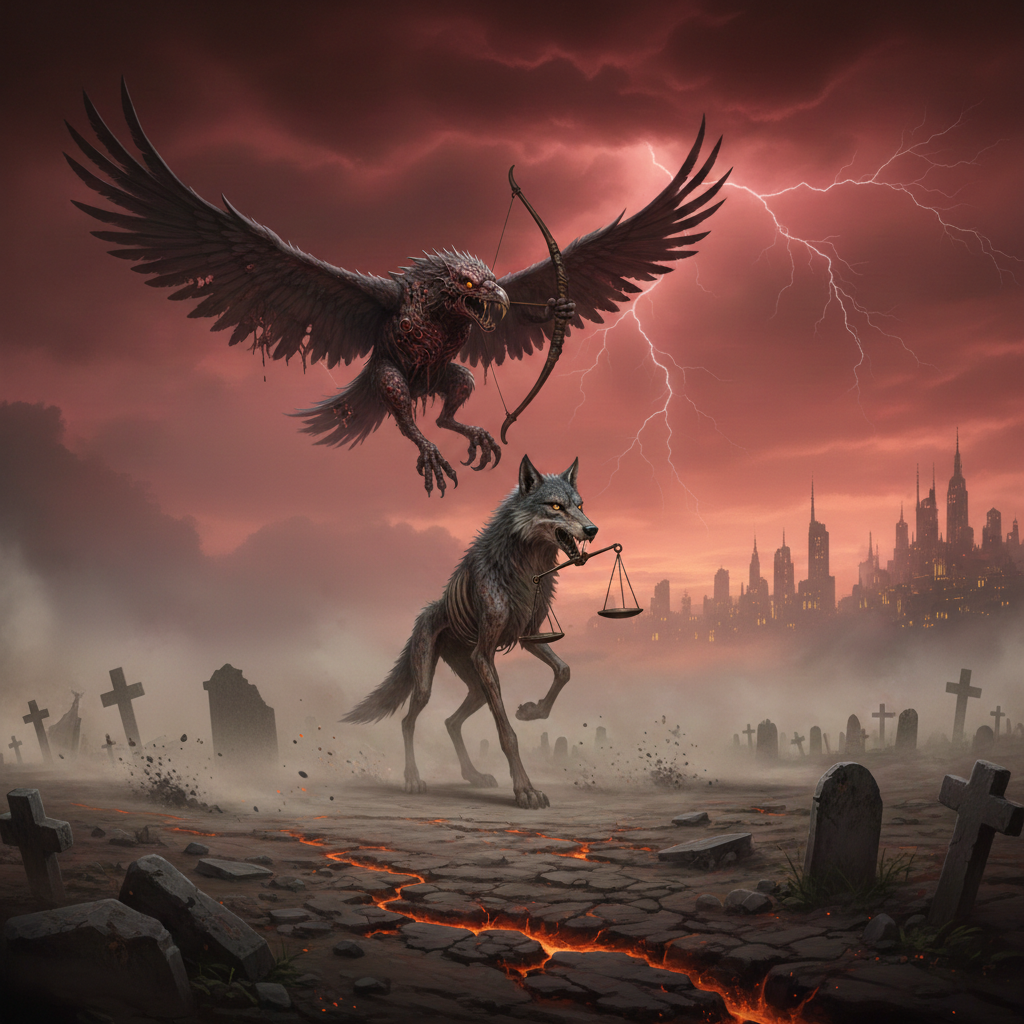
Third seal — Black Horse (UNV 6:5)
καὶ εἶδον, καὶ ἰδοὺ ἵππος μέλας, καὶ ὁ καθήμενος ἐπ᾽ αὐτὸν ἔχων ζυγὸν ἐν τῇ χειρὶ αὐτοῦ.
kai eidon, kai idou hippos melas, kai ho kathemenos ep’ auton echon zygon en te cheiri autou.
“And I saw, and behold a black horse, and the one sitting upon it having a scale in his hand.”
Fourth seal — Greenish Horse (UNV 6:8)
καὶ εἶδον, καὶ ἰδοὺ ἵππος χλωρός, καὶ ὁ καθήμενος ἐπάνω αὐτοῦ ὄνομα αὐτῷ ὁ Θάνατος, καὶ ὁ ᾅδης ἠκολούθει μετ᾽ αὐτοῦ. καὶ ἐδόθη αὐτοῖς ἐξουσία ἐπὶ τὸ τέταρτον τῆς γῆς, ἀποκτεῖναι ἐν ῥομφαίᾳ καὶ ἐν λιμῷ καὶ ἐν θανάτῳ καὶ ὑπὸ τῶν θηρίων τῆς γῆς.
kai eidon, kai idou hippos chloros, kai ho kathemenos epano autou onoma auto ho Thanatos, kai ho Hades ekolouthei met’ autou. kai edothe autois exousia epi to tetarton tes ges, apokteinai en romphaia kai en limo kai en thanato kai hypo ton therion tes ges.
“And I saw, and behold a greenish horse, and the one sitting upon it — his name Death, and Hades followed with him. And authority was given to them over the fourth of the earth, to kill with sword and with famine and with death and by the beasts of the earth.”
The chromatic axis — Greek color table
Each color is a specific Greek term with its own semantic field. They are not synonyms. They are not interchangeable.
| Seal | Color | Greek | Transliteration | Semantic field |
|---|---|---|---|---|
| 1st | White | λευκός | leukos | Bright, luminous, pure — color of victory and glory |
| 2nd | Fiery-red | πυρρός | pyrros | Fire-colored, fiery — root πῦρ (pyr, fire) |
| 3rd | Black | μέλας | melas | Black, dark — absence of light, mourning, famine |
| 4th | Greenish | χλωρός | chloros | Pale green, yellowish — corpse color, decomposition |
Chromatic Easter Egg: pyrros and the Dragon
Here the chromatic axis reveals a connection that surface-level reading does not detect.
The second horse is πυρρός (pyrros) — fiery-red. This same adjective appears in UNV 12:3:
καὶ ὤφθη ἄλλο σημεῖον ἐν τῷ οὐρανῷ, καὶ ἰδοὺ δράκων μέγας πυρρός “And another sign was seen in heaven, and behold a great fiery-red dragon”
| Text | Entity | Greek term | Transliteration |
|---|---|---|---|
| UNV 6:4 | 2nd seal horse | πυρρός | pyrros |
| UNV 12:3 | Dragon (Satan) | πυρρός | pyrros |
The same term. UNV 12:9 identifies the Dragon as “the ancient serpent, the one called Diabolos and Satan.” The second seal horse shares the exact color of the entity that UNV 12 identifies as Satan.
This is not lexical coincidence. In the Unveiling corpus, pyrros appears only 2 times — once for the horse, once for the Dragon. The rarity of the term transforms coincidence into evidence.
The pyrros horseman’s function confirms the connection: to take peace from the earth and to make them slaughter one another (σφάξουσιν, sphaxousin — to slaughter, to kill with violence). This is precisely Satan’s function in the biblical narrative: to instigate conflict, bloodshed, war between brothers.
Chromatic Easter Egg: pyrros ≠ kokkinon
If pyrros = fiery-red (the Dragon’s color), what is the Scarlet Beast of UNV 17?
UNV 17:3 — “And I saw a woman sitting upon a scarlet beast (θηρίον κόκκινον)”
| Entity | Greek | Transliteration | Shade | Semantic origin |
|---|---|---|---|---|
| Dragon (UNV 12:3) | πυρρός | pyrros | Fiery-red | πῦρ (fire) — intrinsic color, identity |
| 2nd seal horse (UNV 6:4) | πυρρός | pyrros | Fiery-red | Same root — color by nature |
| Scarlet Beast (UNV 17:3) | κόκκινον | kokkinon | Scarlet | κόκκος (kermes grain) — acquired color, dyed |
Two distinct reds in Greek:
- pyrros: red that comes from fire — it is the entity’s own nature. The Dragon is fiery because it is fiery.
- kokkinon: scarlet that comes from dyeing — it is acquired color, applied. The Scarlet Beast is not born scarlet. It becomes scarlet — dyed by the blood (αἷμα) of the saints (UNV 17:6).
The Unveiling School has already documented (The Scarlet Beast — The Dragon Ridden by the Prostitute): the Scarlet Beast of UNV 17 is the Dragon itself — but now ridden by the Prostitute, covered by the blood she drinks. The color change (pyrros to kokkinon) records a change of state: from fiery by nature to stained by crime.
Complete comparative table of reds in the Unveiling
| Text | Entity | Greek | Color | Type |
|---|---|---|---|---|
| UNV 6:4 | 2nd seal horse | πυρρός | Fiery-red | Nature |
| UNV 12:3 | Dragon | πυρρός | Fiery-red | Nature |
| UNV 17:3 | Scarlet Beast | κόκκινον | Scarlet | Acquired |
| UNV 17:4 | Prostitute’s garment | κόκκινον | Scarlet | Acquired |
| UNV 18:12 | Babylon’s merchandise | κόκκινον | Scarlet | Commercial |
| UNV 18:16 | Lament over Babylon | κόκκινον | Scarlet | Commercial |
The pattern: pyrros marks the Dragon and its horse. Kokkinon marks the Prostitute’s commercial-religious system. Two chromatic lineages — one of fire, one of blood.
The white horseman — who rides the leukos?
The white horse (ἵππος λευκός) generates debate. Popular tradition identifies the rider as Christ. The School does not assume. It examines the text.
| Element | UNV 6:2 (1st seal) | UNV 19:11 (Return) |
|---|---|---|
| Horse color | λευκός (leukos) | λευκός (leukos) |
| Rider | Anonymous | “Faithful and True” (Jesus) |
| Weapon | τόξον (toxon, bow) | ῥομφαία (romphaia, sword of the mouth) |
| Crown | στέφανος (stephanos, 1 victor’s crown) | διαδήματα (diademata, many royal diadems) |
| Action | “went out conquering” | “judges and wages war in righteousness” |
The differences are systematic:
- In UNV 6:2, the rider has a bow (toxon) — a distance weapon, indirect attack. In UNV 19, Jesus has the sword of the mouth (romphaia) — a weapon of direct judgment.
- In UNV 6:2, he receives one victor’s crown (stephanos). In UNV 19, Jesus wears many royal diadems (diademata) — insignia of sovereignty.
- In UNV 6:2, the rider goes out conquering (nikōn). In UNV 19, Jesus judges and wages war (krinei kai polemei).
The investigation remains open. The white horseman of UNV 6:2 may be: (a) a prefiguration of Christ, (b) a distinct entity that mimics Christ (conquest disguised as justice), or (c) the spirit of conquest as abstract principle. The chromatic axis confirms only that leukos connects the two scenes — but the weapons, crowns, and functions diverge.
The black horseman — the scale and the price
The third horse is μέλας (melas) — black. Its rider holds a scale (ζυγόν, zygon). A voice from amid the four living creatures announces:
UNV 6:6 — “A choinix of wheat for a denarius, and three choinix of barley for a denarius; and the oil and the wine do not damage.”
| Product | Price | Meaning |
|---|---|---|
| Wheat | 1 choinix / 1 denarius | Famine price — 1 denarius was a laborer’s daily wage |
| Barley | 3 choinix / 1 denarius | Barley was the grain of the poor — cheaper but still expensive |
| Oil and wine | “do not damage” | Luxuries preserved — scarcity hits bread, not luxury |
The forensic pattern: selective famine. The people starving. The wealthy preserved. Black (melas) is the color of absence — absence of food, absence of distributive justice.
The greenish horseman — Thanatos and Hades as binomial
The fourth horse is the only one whose rider is named: ὁ Θάνατος (ho Thanatos) — Death. And the only one with a companion: ὁ ᾅδης (ho Hades) — Hades, the realm of the dead.
| Element | Greek | Function |
|---|---|---|
| Rider | Θάνατος (Thanatos) | The agent — kills |
| Companion | ᾅδης (Hades) | The receptor — collects |
| Authority | τὸ τέταρτον τῆς γῆς | One fourth of the earth |
| Methods | ῥομφαία, λιμός, θάνατος, θηρία | Sword, famine, pestilence, beasts |
The color χλωρός (chloros) is the color of vegetal decomposition — the pale green of a corpse. The same root as “chlorophyll” — but applied to dead flesh, not living plants. The text transforms the color of life (vegetal green) into the color of death (cadaverous green).
The Thanatos + Hades binomial reappears in UNV 20:13-14:
“And Death and Hades delivered up the dead who were in them… and Death and Hades were cast into the lake of fire.”
The fourth horseman’s final destiny: the lake of fire. What rides in UNV 6 is destroyed in UNV 20.
Jurisdiction: one fourth of the earth
UNV 6:8 specifies: the authority of Thanatos and Hades covers τὸ τέταρτον τῆς γῆς — “the fourth of the earth.” Not the entire earth. One fourth.
This territorial limitation is significant. The seals are not total destruction — they are delegated jurisdiction. Authority is granted (ἐδόθη, edothe — “was given”) — passive voice indicating that someone above delegates. Who delegates? The Lamb who breaks the seals.
The pattern of partial jurisdiction repeats:
| Text | Jurisdiction | Agent |
|---|---|---|
| UNV 6:8 | 1/4 of the earth | Thanatos + Hades |
| UNV 8:7-12 | 1/3 of earth, sea, rivers, stars | Trumpets 1-4 |
| UNV 16:1-21 | The entire earth | Bowls 1-7 |
The progression: 1/4 to 1/3 to totality. The seals are the first stage of a jurisdictional escalation.
The fifth seal — the souls under the altar (UNV 6:9-11)
Immediately after the four horsemen, the fifth seal reveals:
καὶ ὅτε ἤνοιξεν τὴν πέμπτην σφραγῖδα, εἶδον ὑποκάτω τοῦ θυσιαστηρίου τὰς ψυχὰς τῶν ἐσφαγμένων διὰ τὸν λόγον τοῦ θεοῦ καὶ διὰ τὴν μαρτυρίαν ἣν εἶχον.
“And when he opened the fifth seal, I saw under the altar the souls of those who had been slaughtered because of the word of Theos and because of the testimony they held.”
The verb is ἐσφαγμένων (esphagmenon) — perfect passive participle of σφάζω (sphazo, to slaughter). The same verb used for the Lamb in UNV 5:6: ἀρνίον ὡς ἐσφαγμένον (“a lamb as slaughtered”).
| Entity | Verb | Text |
|---|---|---|
| Lamb | ἐσφαγμένον (esphagmenon) | UNV 5:6 |
| Souls under the altar | ἐσφαγμένων (esphagmenon) | UNV 6:9 |
| 2nd horseman’s function | σφάξουσιν (sphaxousin) | UNV 6:4 |
Easter Egg: the verb σφάζω connects three scenes — the slaughtered Lamb, the slaughtered souls, and the red horseman’s function (to make them slaughter each other). The vocabulary of slaughter is the thread connecting the seals.
The souls cry out: ἕως πότε… οὐ κρίνεις καὶ ἐκδικεῖς τὸ αἷμα ἡμῶν; — “How long… will you not judge and avenge our blood?” The answer: wait until their fellow servants and brothers who were about to be killed complete the number.
The forensic question the fifth seal raises: who killed these souls? The text says “because of the word of Theos and the testimony.” They were killed by the system the seals are unveiling — the same system whose pyrros horseman takes away peace and provokes slaughter.
Map of horsemen and Canvas entities
     SEALS 1-4: THE FOUR HORSEMEN
     ==============================

  1st SEAL         2nd SEAL         3rd SEAL         4th SEAL
  +---------+     +---------+     +---------+     +---------+
  | LEUKOS  |     | PYRROS  |     | MELAS   |     | CHLOROS |
  | white   |     | fiery   |     | black   |     | green   |
  |         |     |         |     |         |     |         |
  | bow     |     | sword   |     | scale   |     | DEATH   |
  | crown   |     | war     |     | famine  |     | + HADES |
  | conquer |     | slaught.|     | scarcity|     | 1/4 ear.|
  +----+----+     +----+----+     +---------+     +----+----+
       |               |                               |
       |          +----+                               |
       |          | SAME TERM                          |
       |          v                                    |
       |    UNV 12:3 DRAGON                            |
       |    (pyrros = pyrros)                          |
       |          |                                    |
       |          | COLOR CHANGE                       |
       |          v                                    |
       |    UNV 17:3 SCARLET BEAST                     |
       |    (kokkinon = kokkinon)                      |
       |    Stained by blood                           |
       |                                               |
       |          5th SEAL --- SLAUGHTERED SOULS       |
       |          (esphagmenon --- same verb)           |
       |                                               |
       +---- OPEN INVESTIGATION -----------------------+
Chronology: past, present, or future?
The temporal question has divided eschatological schools for centuries. The Forensic Unveiling School does not force the answer in a single direction. It records the evidence.
| Hypothesis | Argument | Problem |
|---|---|---|
| Preterist (70 AD) | The horsemen represent the destruction of Jerusalem — war, famine, mass death | The fourth seal speaks of “one fourth of the earth” — larger scale than one city |
| Historicist | The horsemen represent phases of Church history — conquest, persecution, corruption | Requires allegorization — the text describes entities, not epochs |
| Futurist | The horsemen are literal end-times events | Ignores that the patterns (war, famine, pestilence) are perpetual |
| Forensic | The horsemen are functional entities operating in cycles — color identifies nature, not timing | Does not offer closed chronology (but this is intentional) |
The forensic position: the seals are not a timeline. They are a forensic report. The Lamb opens the dossier and each seal reveals an operative agent in the system. The question is not “when?” — it is “who?” and “by what authority?”
Stress test
| Criterion | Result |
|---|---|
| Verifiable Greek text (Nestle 1904)? | Yes — UNV 6:1-8 complete |
| Chromatic terms distinct from each other? | Yes — leukos, pyrros, melas, chloros are 4 distinct lexemes |
| pyrros = same term as the Dragon (UNV 12:3)? | Yes — only 2 occurrences in the Unveiling |
| kokkinon ≠ pyrros? | Yes — different roots (kokkos vs pyr) |
| Verb sphazo connects seals 2 and 5? | Yes — sphaxousin (6:4) and esphagmenon (6:9) |
| Progressive jurisdiction (1/4 to 1/3 to total)? | Yes — seals, trumpets, bowls |
| Self-sufficient (66 Books + códices)? | Yes — zero external sources |
Conclusion — the colors speak
The four horsemen are not vague metaphors. They are entities traceable through Greek vocabulary. The fiery-red (pyrros) of the second horse is the fiery-red of the Dragon — the same word, the same underlying entity. The scarlet (kokkinon) of the Beast in UNV 17 is another shade — acquired, dyed, stained by blood.
The white (leukos) connects the first horseman to Christ’s return in UNV 19 — but the weapons and crowns diverge, keeping the identification in suspense. The black (melas) marks selective famine. The greenish (chloros) marks named death — Thanatos, who will be destroyed in the lake of fire.
The fifth seal completes the picture: the victims of these horsemen are under the altar, crying out for justice. The verb that describes their death (sphazo) is the same that describes the second horseman’s function and the state of the Lamb himself.
The Unveiling is not a prediction of the future. It is a forensic report of the system. And the colors are the fingerprints.
“You read. And the interpretation is yours.”