The number that barely appears
Public source text: WLC (Westminster Leningrad Codex) + Nestle 1904. Translation: Belem-2025 Bible translation – literal, rigid, straight from public códices.
Most people think 666 is a frequently occurring “biblical” number. Forensic investigation reveals the opposite: in the 31,000+ verses of the 66 canonical books, the number 666 appears exactly four times. Not five. Not ten. Four.
When a number appears only 4 times in the entire collection, each occurrence becomes a piece of evidence. And pieces of evidence connect – not by speculation, but by textual tracking.
The four occurrences
1) Unveiling 13:18 (NT)
ὁ ἀριθμὸς αὐτοῦ ἑξακόσιοι ἑξήκοντα ἕξ ho arithmos autou hexakosioi hexekonta hex “His number: six hundred and sixty-six.”
The passage that launched two millennia of speculation. The text opens with: “ὧδε ἡ σοφία ἐστίν” (hode he sophia estin) – “Here is the wisdom.” And closes with the number. Who connects wisdom and 666 in the códices? Let us examine the remaining occurrences.
2) 1 Kings 10:14 (OT)
וַיְהִי מִשְׁקַל הַזָּהָב אֲשֶׁר בָּא לִשְׁלֹמֹה בְּשָׁנָה אֶחָת שֵׁשׁ מֵאוֹת שִׁשִּׁים וָשֵׁשׁ כִּכַּר זָהָב vayehi mishqal hazahav asher ba lishlomoh beshanah echat shesh meot shishim vashesh kikkar zahav “And the weight of the gold that came to Solomon in one year was six hundred and sixty-six talents of gold.”
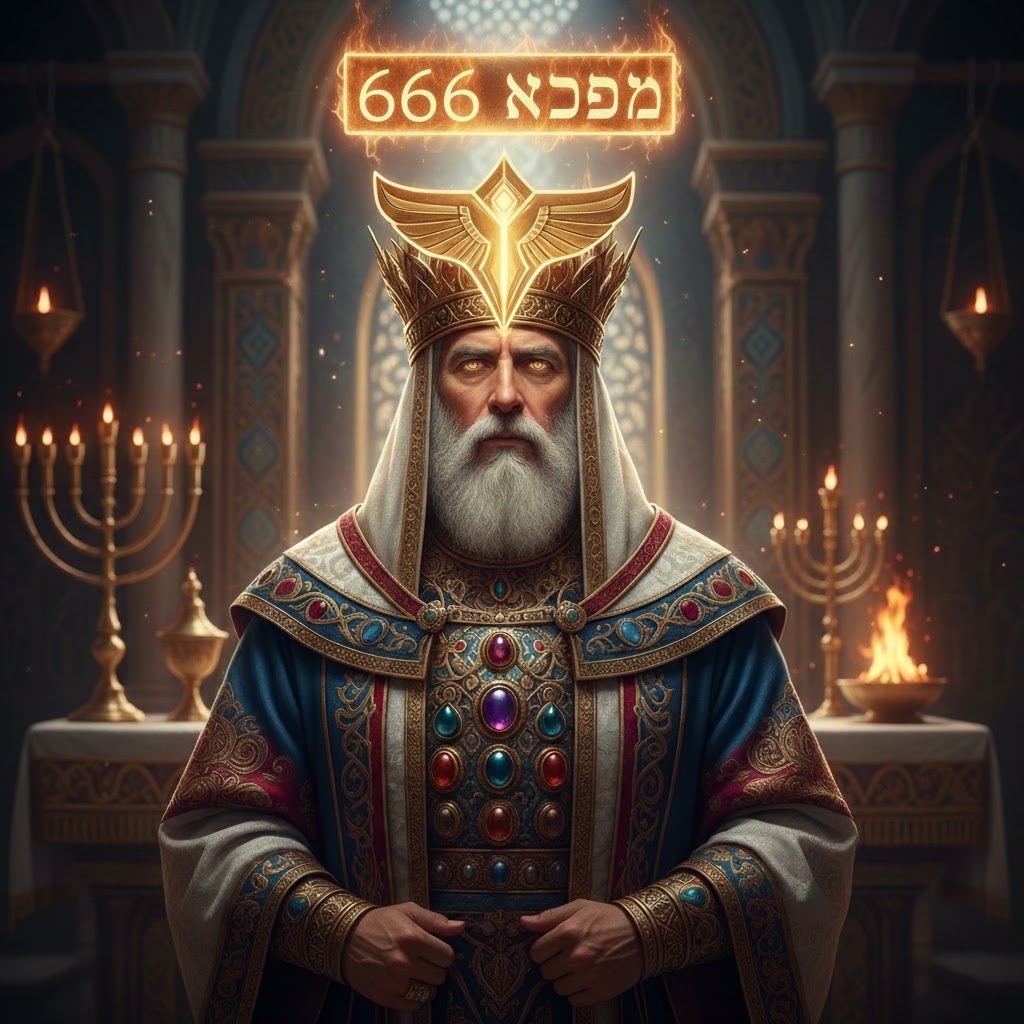
Solomon. The only canonical man simultaneously connected to wisdom (sophia) and the number 666. The coincidence is not a coincidence – it is a signature.
3) 2 Chronicles 9:13 (OT)
וַיְהִי מִשְׁקַל הַזָּהָב אֲשֶׁר בָּא לִשְׁלֹמֹה בְּשָׁנָה אֶחָת שֵׁשׁ מֵאוֹת וְשִׁשִּׁים וָשֵׁשׁ כִּכְּרֵי זָהָב vayehi mishqal hazahav asher ba lishlomoh beshanah echat shesh meot veshishim vashesh kikrei zahav “And the weight of the gold that came to Solomon in one year was six hundred and sixty-six talents of gold.”
Exact parallel of 1 Kings 10:14. The canonical repetition is not redundancy – it is documentary confirmation. Two independent witnesses recording the same numerical datum. In forensic terms: two sources corroborate the same evidence.
4) Ezra 2:13 (OT)
בְּנֵי אֲדֹנִיקָם שֵׁשׁ מֵאוֹת שִׁשִּׁים וְשִׁשָּׁה benei Adoniqam shesh meot shishim veshishah “Sons of Adonikam: six hundred and sixty-six.”
Adonikam (אֲדֹנִיקָם, Adoniqam) = “My Lord (Adon) Has Risen (Qam).” Six hundred and sixty-six people whose name means “My Lord Has Risen” return from exile to rebuild the Temple system. The name carries the thesis.
Comparative frequency – the proof of rarity
Rarity is only visible when compared with adjacent numbers:
| Number | Occurrences in the canon | Classification |
|---|---|---|
| 6 | 215 | Common |
| 60 | 59 | Uncommon |
| 600 | 65 | Uncommon |
| 666 | 4 | Very Rare (Cat. D) |
| 7 | 463 | Very Common |
| 12 | 187 | Common |
| 40 | 159 | Common |
The series 6 -> 60 -> 600 -> 666 shows progressive rarefaction. The most composite number in the series is the rarest. This is not chance – it is deliberate marking.
Easter Egg: tradition looks for 666 in barcodes, microchips, and emperor names. The códices hide 666 in only 4 passages – and all point to wealth, institutional power, and the Yahweh (יהוה — yhwh; trad. “Jehovah”1) system.
The pattern connecting all four
When we place the 4 occurrences side by side, a pattern emerges:
| Occurrence | Text | Connection |
|---|---|---|
| DES 13:18 | “Here is the wisdom… 666” | Wisdom + number |
| 1 Kgs 10:14 | “666 talents of gold came to Solomon” | Wealth + Solomon (the wise) |
| 2 Chr 9:13 | “666 talents of gold came to Solomon” | Documentary confirmation |
| Ezra 2:13 | “666 sons of Adonikam” | Restoration of the system |
All occurrences point to the institutional system of Yahweh (yhwh): the Temple of Solomon, the wealth of the cult, the post-exile reconstruction. None points to Rome. None points to the future. All look inward at the canon itself.
The complete series: 6, 60, 600, 666
The series is not arbitrary. Each component is self-referencing:
- 6 = common number, present in everyday narratives
- 60 = present in measures, ages, counts
- 600 = Pharaoh’s chariots (Ex 14:7), men of war, large numbers
- 666 = unique signature – Solomon, Temple, restoration
The composition 600 + 60 + 6 in DES 13:18 is not a magical sum. It is an intertextual reference that points to the three layers of the system: power (600 chariots), structure (60 as measure), and the individual within the system (6 as unit).
Text interprets text
The central forensic principle is simple: the text interprets itself. We do not need external gematria-o-codigo-numerico-escondido-na-biblia/" class="autolink" title="gematria">gematria tables, emperor names, or political prophecies. The 4 occurrences of 666 verify each other:
- DES 13:18 asks: “Who has wisdom, let him calculate.”
- 1 Kings 10:14 answers: “Solomon – wisdom and 666 talents.”
- 2 Chronicles 9:13 confirms: “Same data, independent source.”
- Ezra 2:13 completes: “666 people rebuilding the system.”
No external source was necessary. No speculation was employed. The canon explains itself.
The rarity of 4 occurrences in 31,000+ verses is not weakness of the evidence – it is its strength. The rarer the marker, the more precise the signature.
Conclusion
The number 666 is not a code for Nero. It is not a barcode. It is not a microchip. It is a structural signature that appears 4 times in the 66 canonical books – and each occurrence points to the same system: the Temple, Solomon, institutional wisdom, and the restoration of the cult of yhwh.
The investigation did not begin with a thesis. It began with a count. And the count revealed the pattern.
“You read. And the interpretation is yours.”
Read the complete investigation
This article is one forensic cut from “O livrinho — A Culpa é das Ovelhas. Edition 666, the beasts exposed” — the original Portuguese book that applies the Desvelational Forensic School methodology to Revelation 13, the Enigma 666 and the identification of the Beasts. 369 pages. 12 chapters + 5 appendices. Hebrew and Greek codices. Zero ecclesiastical tradition.
Artificial form: vowels from Adonai (אֲדֹנָי → a, o, a) placed over consonants YHWH — Masoretic qere perpetuum. Medieval Latin readers merged both, producing “YeHoVaH” — a hybrid that never existed as a Hebrew word. The most accepted academic reconstruction is Yahweh /jah.ˈweh/, based on Greek transcriptions (Ιαβε — Clement of Alexandria, ~200 AD; Ιαουε — Theodoret of Cyrus, ~450 AD), abbreviated biblical forms (Yah — הַלְלוּ יָהּ), theophoric names (Yahu/Yeho — Eliyahu, Yehoshua) and Samaritan oral tradition (Yabe/Yawe). ↩︎