The word no one investigates
Public source text: WLC (Westminster Leningrad Codex) + Nestle 1904. Translation: Belem-2025 Bible translation – literal, rigid, straight from public códices.
You hear “holy” and you think of purity. You think of morality. You think of something elevated, good, luminous. Traditional translations have reinforced this for centuries: “Holy, holy, holy is the Lord.” Three times the word, three times the reverence, and no one stops to ask what it really means in Hebrew.
The word is קֹדֶשׁ (qodesh). And it does not mean what you think.
Part I – Qodesh: separation, not morality
1) The Hebrew root contains no moral judgment
The root ק-ד-שׁ (q-d-sh) designates separation. Something removed from common use and reserved for a specific purpose. It contains, in its morphology, no component of ethical purity, intrinsic goodness, or moral elevation. The verb קָדַשׁ (qadash) means “to separate,” “to set apart,” “to consecrate” – that is, to mark something as reserved.
Reserved for whom? In the Old Testament, the answer is always the same: Yahweh (יהוה — yhwh; trad. “Jehovah”1).
2) The formula that reveals everything: “QODESH LAyhwh”
The most revealing expression of the OT is this:
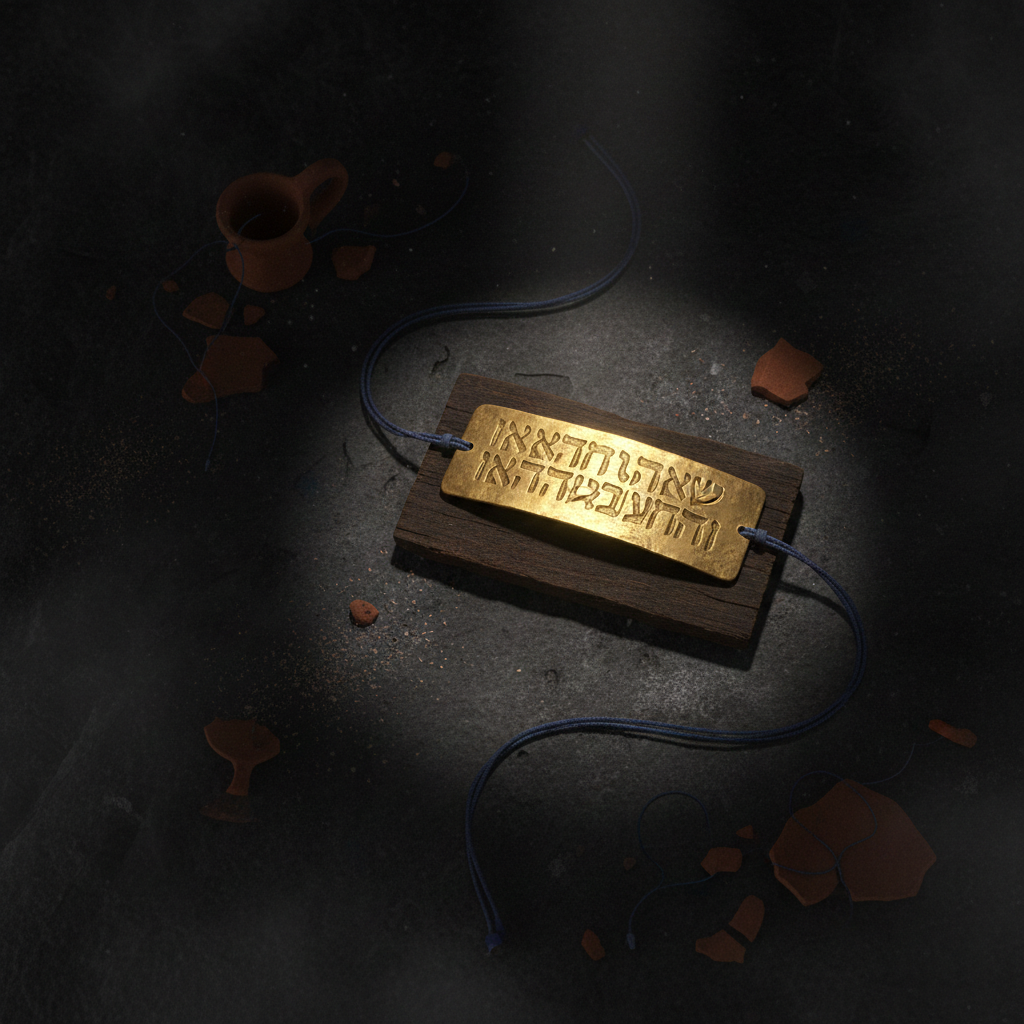
קֹדֶשׁ לַיהוָה (qodesh layhwh)
Belem-2025 Bible translation: “holiness to Yahweh (yhwh)” – or, literally: “separated FOR Yahweh (yhwh)”.
The preposition לַ (la-) indicates direction and belonging. “Qodesh layhwh” does not declare a moral quality of the object. It declares owner. It is an inscription of possession. A seal. A mark.
This formula appears in:
- Ex 28:36 – engraved on the priestly crown (nezer hakodesh)
- Ex 16:23 – the sabbath is “qodesh layhwh”
- Lev 27:30 – the tithe is “qodesh layhwh”
- Num 6:8 – the Nazirite is “qadosh layhwh”
- Zech 14:20-21 – even the bells of the horses shall be “qodesh layhwh”
The pattern is absolute. Everything that receives this formula belongs to yhwh.
Easter Egg #1: the inscription “QODESH LAyhwh” is engraved on the priestly crown as seals are engraved (חֹתָם, chotam – Ex 28:36). The mark of holiness is, literally, a property seal.
Part II – The catalogue: everything Yahweh (yhwh) calls “holy”
3) Yahweh (yhwh) marks 36 categories of things as his property
I want you to read this entire list. Do not skip. Each item is something that Yahweh (yhwh) declares “qodesh” – separated for himself. Observe that the list includes inanimate objects, times, places, persons, and even actions:
Places: the ground (Ex 3:5), Mount Sinai (Ex 19:23), the tabernacle (Ex 26:33), the promised land (Zech 2:12), Jerusalem (Isa 52:1), Mount Zion (Ps 2:6), heaven (Ps 20:6), the camp (Deut 23:14).
Persons: the nation of Israel (Ex 19:6 – goy qadosh), the priests (Lev 21:6-8), the Nazirite (Num 6:5,8), the firstborn (Ex 13:2), the offspring (Ezra 9:2).
Priestly objects: the crown (Ex 29:6; 39:30), the inscription of the crown (Ex 28:36), the garments (Ex 28:2), the anointing oil (Ex 30:25), the incense (Ex 30:35), the Ark of the Covenant (Ex 30:26-29), the altar (Ex 29:37), the utensils (Num 3:31), the showbread (1 Sam 21:4), the lustral water (Num 5:17).
Times: the sabbath (Gen 2:3; Ex 20:8), the convocations (Lev 23:2-4), the Year of Jubilee (Lev 25:12).
Offerings and tributes: the offerings (Lev 2:3,10), the tithe (Lev 27:30,32).
Immaterial attributes: the name of Yahweh (yhwh) (Lev 22:32), the spirit of Yahweh (yhwh) (Ps 51:11), the arm of Yahweh (yhwh) (Isa 52:10), the temple/palace (Ps 11:4), the dwelling (Deut 26:15).
Actions: war (Joel 3:9 – qaddeshū milchamah), fasting (Joel 1:14), assembly (Joel 1:14).
Thirty-six categories. Ground, mountain, sabbath, firstborn, nation, priest, Nazirite, crown, tabernacle, ark, altar, oil, incense, garments, offerings, tithe, jubilee, camp, land, city, mountain, heaven, name, spirit, war, fasting, assembly, convocation, bread, water, seed.
4) The emerging pattern: qodesh = “this is MINE”
Inanimate objects possess no morality. Oil is not ethical. Incense is not virtuous. Horse bells do not practice goodness. If qodesh were a moral attribute, it could not be applied to things without consciousness.
But qodesh is not moral. It is a property mark. Yahweh (yhwh) qodesh-ifies (sanctifies) everything he touches, steps on, inhabits, uses, or claims. The pattern is: “this is MINE, separated for ME”.
Lev 20:26 confirms with surgical clarity:
וִהְיִיתֶם לִי קְדֹשִׁים כִּי קָדוֹשׁ אֲנִי יְהוָה
Belem-2025 Bible translation: “and you shall be FOR ME holy because holy am I yhwh.”
The preposition לִי (li) = “for me.” Holy for me = my property.
Easter Egg #2: when Yahweh (yhwh) says “be holy because I am holy,” he is not inviting moral purity. He is saying: “belong to me because I belong to myself.” It is a circular declaration of possession.
Part III – The crown, the forehead, and the number: qodesh = 666
5) The inscription QODESH LAyhwh is on the FOREHEAD of the high priest
Ex 28:36-38 (WLC)
וְעָשִׂיתָ צִּיץ זָהָב טָהוֹר וּפִתַּחְתָּ עָלָיו פִּתּוּחֵי חֹתָם קֹדֶשׁ לַיהוָה
Belem-2025 Bible translation: “And you shall make a blossom of pure gold and engrave upon it engravings of a seal: HOLINESS TO yhwh.”
v.37: this inscription sits on the turban, upon the FOREHEAD (מֵצַח, metsach) of Aaron.
The Hebrew term מֵצַח (metsach) corresponds to the Greek μέτωπον (metopon) – the forehead. It is the same location as the mark of the Beast:
DES 13:16 (Nestle 1904)
kai poiei pantas … hina dōsin autois charagma epi tou metopou autōn
Belem-2025 Bible translation: “and makes all … that they may give them a mark upon the forehead of them.”
Same location. Same function. Same logic: a property seal on the forehead.
6) The QODESH crown sums to 666
The priestly crown is called נֵזֶר הַקֹּדֶשׁ (nezer hakodesh – “diadem of holiness”). In standard Hebrew gematria-o-codigo-numerico-escondido-na-biblia/" class="autolink" title="gematria">gematria:
| Letter | Value |
|---|---|
| נ (Nun) | 50 |
| ז (Zayin) | 7 |
| ר (Resh) | 200 |
| ה (He) | 5 |
| ק (Qof) | 100 |
| ד (Dalet) | 4 |
| ש (Shin) | 300 |
| TOTAL | 666 |
The crown of holiness of Yahweh (yhwh), inscribed with “QODESH LAyhwh,” located on the forehead of the high priest, sums to exactly 666.
DES 13:18 asks: “here is the wisdom: let the one who has understanding calculate the number of the Beast.” The number calculates the crown of holiness of the Yahweh (yhwh) system.
Easter Egg #3: the number of the Beast does not encode a Roman emperor, a pope, or a modern politician. It encodes the priestly insignia of Israel – the most “holy” object of the Yahweh (yhwh) system.
Part IV – The counterpoint: Jesus washes the feet
7) Yahweh (yhwh) says: “remove your sandals, the ground is holy”
Ex 3:5 (WLC)
אַל־תִּקְרַב הֲלֹם שַׁל־נְעָלֶיךָ מֵעַל רַגְלֶיךָ כִּי הַמָּקוֹם אֲשֶׁר אַתָּה עוֹמֵד עָלָיו אַדְמַת־קֹדֶשׁ הוּא
Belem-2025 Bible translation: “Do not approach here; remove your sandals from upon your feet, because the place upon which you are standing is ground of holiness.”
In the Yahweh (yhwh) system:
- The ground is declared qodesh
- The human being (Moses) must lower himself before the ground
- The sandals must be removed – the human foot is unworthy
- The territory has primacy over the person
The pattern repeats throughout the system: holy mountain – do not touch. Holy tabernacle – do not enter. Holy ark – do not look. Holy altar – do not approach. In the Yahweh (yhwh) system, objects and places are elevated and humans are lowered before them.
8) Jesus says: “I wash YOUR feet”
John 13:4-5 (Nestle 1904)
egeiretai ek tou deipnou kai tithēsin ta himatia kai labōn lention diezōsen heauton. eita ballei hydōr eis ton niptēra kai ērxato niptein tous podas tōn mathētōn
Belem-2025 Bible translation: “He rises from the supper and lays aside the garments and, taking a towel, girded himself. Then he pours water into the basin and began to wash the feet of the disciples.”
In the system of Jesus:
- The Master kneels before the disciples
- The feet – the part of the body that touches the ground – are washed
- Jesus cleans that which the ground of Yahweh (yhwh) dirtied
- The person has primacy over the territory
Easter Egg #4: Jesus takes exactly the part of the body that Yahweh (yhwh) considered unworthy of the holy ground – the foot – and washes it. The gesture is a declaration: holy is the foot, not the ground. Holy is the sheep, not the territory.
9) The inversion is symmetric in six dimensions
| Dimension | Yahweh (yhwh) system (Ex 3:5) | Jesus system (John 13) |
|---|---|---|
| What is “holy” | The GROUND (admat qodesh) | The HUMAN BEING (katharos holos) |
| Who lowers himself | The HUMAN (removes sandals) | The MASTER (kneels) |
| The feet | Unworthy (must be exposed) | Worthy (are washed by the Master) |
| The ground | Sacred (do not step) | Dirty (contaminates the feet) |
| The hierarchy | Territory > person | Person > territory |
| The gesture | REMOVE your sandals | I WASH your feet |
10) Jesus declares the human being CLEAN – not “holy”
John 13:10 (Nestle 1904)
ho leloumenos ouk echei chreian ei mē tous podas nipsasthai all’ estin katharos holos
Belem-2025 Bible translation: “The one who has been bathed has no need except to wash the feet, but is clean entirely.”
Notice the term Jesus uses: καθαρός (katharos) – clean, pure. Not ἅγιος (hagios) – holy/separated. They are distinct concepts in Greek:
- Yahweh (yhwh) uses qodesh / hagios = separation/property (property mark)
- Jesus uses katharos = clean/pure (intrinsic state of the person)
Yahweh (yhwh) sanctifies objects and places. Jesus declares persons clean. Yahweh (yhwh) says: “the ground is hagios.” Jesus says: “you are katharoi.”
Part V – The human being above sacred things
11) Jesus elevates the person above everything Yahweh (yhwh) marked as “holy”
You must gather these texts and perceive that Jesus systematically deconstructs the qodesh hierarchy of Yahweh (yhwh):
Matt 12:8 – “kyrios gar estin tou sabbatou ho huios tou anthrōpou”
Belem-2025 Bible translation: “For lord is of the sabbath the son of the human being.”
The human is above the sabbath. The sabbath is qodesh layhwh (Ex 20:8). Jesus places the person above the “holy” object of yhwh.
Mark 2:27 – “to sabbaton dia ton anthrōpon egeneto kai ouch ho anthrōpos dia to sabbaton”
Belem-2025 Bible translation: “The sabbath on account of the human being came into existence, and not the human being on account of the sabbath.”
The holy thing of Yahweh (yhwh) exists for the human being. Not the other way around.
Matt 12:6 – “tou hierou meizon estin hōde”
Belem-2025 Bible translation: “Than the temple greater is here.”
Jesus is above the temple. The temple is qodesh (Ex 26:33). Jesus declares himself greater than the “holy” object of yhwh.
John 2:19-21 – “lysate ton naon touton kai en trisin hēmerais egerō auton… ekeinos de elegen peri tou naou tou sōmatos autou”
Belem-2025 Bible translation: “Destroy this temple and in three days I will raise it… he was speaking about the temple of his body.”
The human body is the true temple. Not the stone building that Yahweh (yhwh) calls qodesh. Jesus replaces the temple-building (property of yhwh) with the temple-body (the human being).
Easter Egg #5: when Jesus says “greater than the temple is here,” he is saying: greater than the most holy thing of your system is a person. The person is greater than the qodesh.
Part VI – The Shepherd and the sheep
12) Yahweh (yhwh) marks the sheep. Jesus dies for them.
In the Yahweh (yhwh) system, the sheep are property:
Ezek 34:2-3 (WLC)
“Woe to the shepherds of Israel who feed themselves! Do the shepherds not feed the sheep? …the fat you eat and with wool you clothe yourselves; the fattened you slaughter, the sheep you do not feed.”
The sheep exist to serve the system. The shepherd devours the sheep.
In the system of Jesus, the shepherd is servant:
John 10:11 (Nestle 1904)
ego eimi ho poimēn ho kalos. ho poimēn ho kalos tēn psychēn autou tithēsin hyper tōn probatōn
Belem-2025 Bible translation: “I am the good shepherd. The good shepherd his life lays down in favor of the sheep.”
The hierarchical inversion is total:
- Yahweh (yhwh): the sheep exist to serve the shepherd
- Jesus: the shepherd exists to serve the sheep
Yahweh (yhwh) says “my sheep” – possession. Jesus says “I lay down my life for the sheep” – giving. One marks. The other dies.
Easter Egg #6: the foot-washing (John 13) is the visual demonstration of what John 10:11 declares verbally. The good Shepherd kneels and washes the feet of the sheep. He does not ask the sheep to remove their sandals to honor the ground. He washes what the ground dirtied.
Part VII – The crown on the forehead: two marks
13) Two crowns, same location, opposite meanings
The crown of Yahweh (yhwh): pure gold + inscription “QODESH LAyhwh” + on the forehead of the high priest = nezer hakodesh = 666. It is a property mark. The one who wears it belongs to the system.
The crown of Jesus: thorns + blood + on the forehead of the condemned.
John 19:2 (Nestle 1904)
kai hoi stratiōtai plexantes stephanon ex akanthōn epethēkan autou tē kephalē
Belem-2025 Bible translation: “and the soldiers, braiding a crown of thorns, placed it upon his head.”
The two crowns on the forehead: one marks property upon the high priest, the other marks sacrifice upon the Lamb. One is the seal of the Beast; the other is the seal of love. One says “this is mine”; the other says “I am yours.”
Conclusion
You must read “holiness” in the Old Testament with different eyes from now on. Qodesh is not virtue. It is not purity. It is not moral elevation. It is a property seal. Yahweh (yhwh) marks as “holy” everything he claims as his – ground, mountain, sabbath, nation, priest, crown, ark, altar, oil, incense, garments, offerings, tithe, camp, land, city, heaven, name, spirit, war. Thirty-six categories of things that belong to yhwh.
The formula “QODESH LAyhwh” is engraved on the crown of the high priest, on the forehead, as a seal – and that crown sums to 666.
And then Jesus arrives. And does the opposite. Where Yahweh (yhwh) demands that the human remove his sandals before the holy ground, Jesus kneels and washes the feet of the sheep. Where Yahweh (yhwh) marks objects and territories as property, Jesus declares persons entirely clean. Where Yahweh (yhwh) demands that the sheep die for the system, Jesus lays down his own life in favor of the sheep.
The message is clear. Forensic. Structural. Verifiable in the códices.
Holy is not the ground. Holy is the foot.
Holy is not the system. Holy is the sheep.
And the good Shepherd dies for her.
“You read. And the interpretation is yours.”
Artificial form: vowels from Adonai (אֲדֹנָי → a, o, a) placed over consonants YHWH — Masoretic qere perpetuum. Medieval Latin readers merged both, producing “YeHoVaH” — a hybrid that never existed as a Hebrew word. The most accepted academic reconstruction is Yahweh /jah.ˈweh/, based on Greek transcriptions (Ιαβε — Clement of Alexandria, ~200 AD; Ιαουε — Theodoret of Cyrus, ~450 AD), abbreviated biblical forms (Yah — הַלְלוּ יָהּ), theophoric names (Yahu/Yeho — Eliyahu, Yehoshua) and Samaritan oral tradition (Yabe/Yawe). ↩︎