Public source text: WLC (Westminster Leningrad Codex) + Nestle 1904. Translation: Belem-2025 Bible translation — literal, rigid, straight from public códices.
Opening the Report: Shaddai Under Investigation
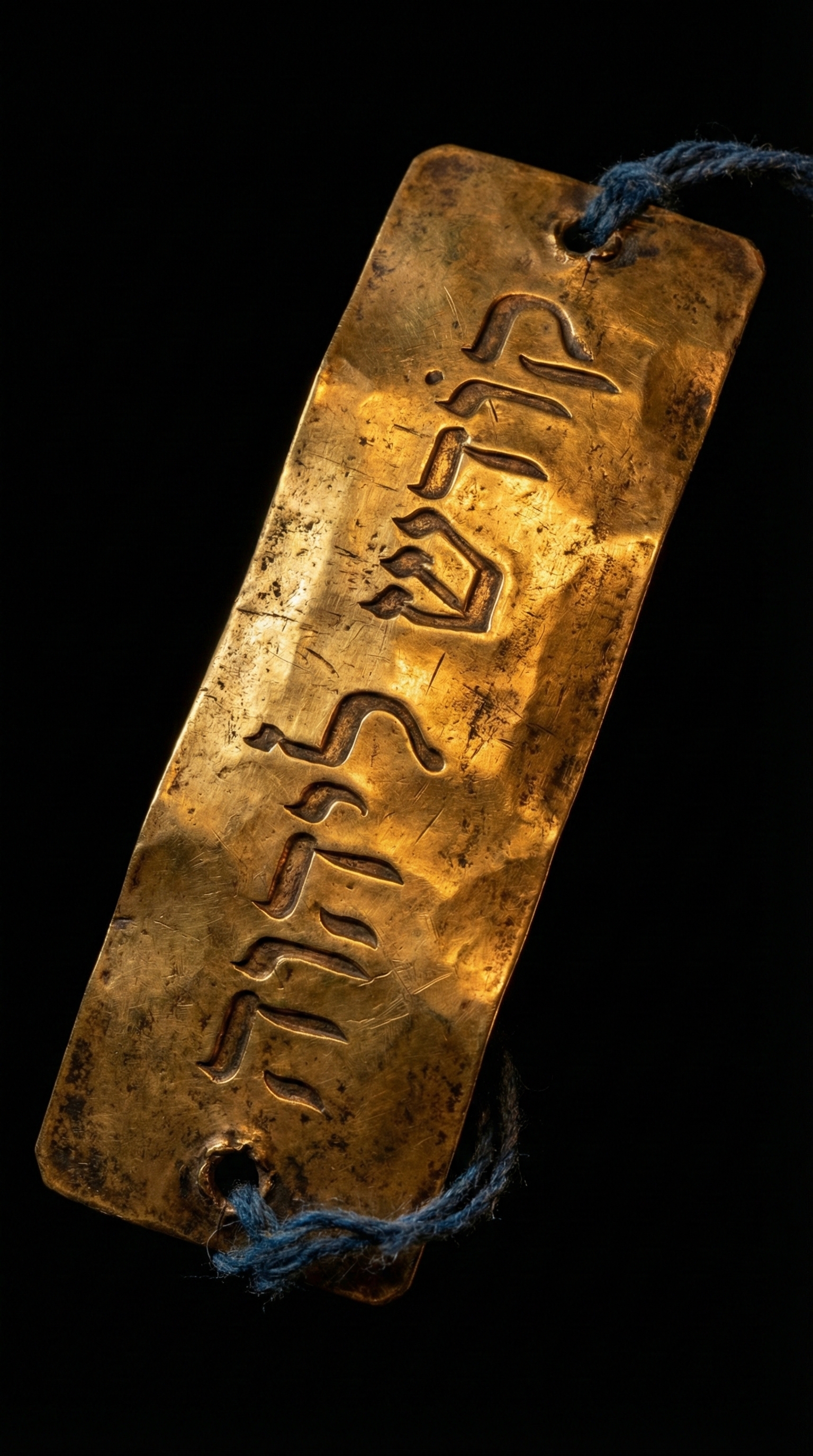
When you read “Almighty” in the Bible, you are reading an interpretation, not a translation. The underlying Hebrew term — שדי (Shaddai) — has disputed etymology, uncertain meaning, and a complex textual history.
This report investigates what the códices actually say when they say שדי.
The Disputed Etymological Field
No etymology of שדי (Shaddai) is universally accepted. The main hypotheses:
| Hypothesis | Proposed root | Meaning | Proponents |
|---|---|---|---|
| Destroyer | שדד (shadad) | To devastate, destroy, ruin | Albright, Cross |
| Mountain | שדו (shadu, Akkadian) | Mountain | Baily |
| Breast/Nurse | שד (shad) | Breast — the one who nourishes | Lutzky |
| Sufficiency | ש + די (she + dai) | “The one who is sufficient” | Late rabbinic tradition |
| Field | שדה (sadeh) | Open field | Less accepted |
Five hypotheses. None conclusive. Tradition chose “Almighty” — which corresponds to none of the five.
Easter Egg #1: The translation “Almighty” does not come from Hebrew. It comes from Greek. The LXX translated שדי as Παντοκράτωρ (Pantokrator = “All-Ruler/All-Sovereign”) in some passages, and as Ἱκανός (Hikanos = “Sufficient”) in others. From the Greek Παντοκράτωρ came the Latin Omnipotens (“Almighty”), which generated modern translations. The meaning “Almighty” is a product of the LXX → Latin → vernaculars chain, not of Hebrew.
שדי in the Old Testament
The title שדי (Shaddai) — alone or combined with אל (El) as אל שדי (El Shaddai) — appears 48 times in the OT:
| Book | Occurrences | Predominant form |
|---|---|---|
| Gênesis | 6 | אל שדי (El Shaddai) |
| Exodus | 1 | אל שדי |
| Numbers | 2 | שדי |
| Ruth | 2 | שדי |
| Job | 31 | שדי |
| Psalms | 2 | שדי |
| Isaiah | 1 | שדי |
| Ezekiel | 2 | שדי |
| Joel | 1 | שדי |
Easter Egg #2: 31 of the 48 occurrences are in Job. Almost two-thirds. Job is the book that uses שדי the most — and it is also the book that most questions the character of the divinity. Job suffers and accuses Shaddai. Job 27:2: “As El lives, who took away my right, and Shaddai, who embittered my soul.” This is not language of worship. It is language of accusation. If “Almighty” were the meaning, the accusation would be: “the Almighty embittered my soul.” But if the root is שדד (to devastate), the reading would be: “the Devastator embittered my soul.” The meaning changes drastically.
The Foundational Text: Gênesis 17:1
וַיְהִ֣י אַבְרָ֔ם בֶּן־תִּשְׁעִ֥ים שָׁנָ֖ה וְתֵ֣שַׁע שָׁנִ֑ים וַיֵּרָ֤א יהוה אֶל־אַבְרָם֙ וַיֹּ֣אמֶר אֵלָ֔יו אֲנִי־אֵ֥ל שַׁדַּ֖י הִתְהַלֵּ֥ךְ לְפָנַ֖י וֶהְיֵ֥ה תָמִֽים
“And Abram was ninety-nine years old; and Yahweh (יהוה — yhwh; trad. “Jehovah”1) appeared to Abram and said to him: I am El Shaddai; walk before me and be blameless.”
Yahweh (yhwh) self-identifies as El Shaddai. A compound name: אל (El, “mighty/god”) + שדי (Shaddai, disputed meaning).
Exodus 6:3 — The Name Switch
וָאֵרָ֗א אֶל־אַבְרָהָ֛ם אֶל־יִצְחָ֥ק וְאֶֽל־יַעֲקֹ֖ב בְּאֵ֣ל שַׁדָּ֑י וּשְׁמִ֣י יהוה לֹ֥א נוֹדַ֖עְתִּי לָהֶֽם
“And I appeared to Abraham, to Isaac, and to Jacob as El Shaddai, but by my name Yahweh (yhwh) I was not known to them.”
| Name | Period | Recipients |
|---|---|---|
| El Shaddai | Patriarchs (Abraham, Isaac, Jacob) | Pre-exodus |
| Yahweh (yhwh) | From Moses onward | Post-exodus |
Easter Egg #3: Two distinct names for distinct periods. The entity speaking in Exodus 6:3 states it was known as El Shaddai before being known as yhwh. The forensic question: are these two names for the same entity or two names revealing different aspects? Or — under the ontological premise of the school — could they be designations used by different entities in different periods?
Παντοκράτωρ in the Unveiling
The Greek equivalent of Shaddai — Παντοκράτωρ (Pantokrator) — appears 9 times in the Unveiling:
| Reference | Context |
|---|---|
| DES 1:8 | “Says Κύριος ὁ Θεός (…) ὁ Παντοκράτωρ” |
| DES 4:8 | “Holy, holy, holy, Κύριος ὁ Θεός ὁ Παντοκράτωρ” |
| DES 11:17 | “Κύριος ὁ Θεός ὁ Παντοκράτωρ, the one who is and who was” |
| DES 15:3 | “Great and marvelous are your works, Κύριος ὁ Θεός ὁ Παντοκράτωρ” |
| DES 16:7 | “Yes, Κύριος ὁ Θεός ὁ Παντοκράτωρ” |
| DES 16:14 | “The great war of the day of Θεός ὁ Παντοκράτωρ” |
| DES 19:6 | “Reigned Κύριος ὁ Θεός ἡμῶν ὁ Παντοκράτωρ” |
| DES 19:15 | “The winepress of the fury of the wrath of Θεός ὁ Παντοκράτωρ” |
| DES 21:22 | “Κύριος ὁ Θεός ὁ Παντοκράτωρ is the temple of it” |
Nine occurrences. Always in contexts of absolute sovereignty and cosmic judgment.
The Central Question
If שדי (Shaddai) in the OT is the same as Παντοκράτωρ (Pantokrator) in the Unveiling, we have direct continuity between the patriarchal designation and the eschatological designation.
But:
| Question | Analysis |
|---|---|
| Did the LXX translate correctly? | We do not know — the etymology of Shaddai is disputed |
| Pantokrator = Almighty? | Literally: “All-Ruler” (κράτος = rule/power, not δύναμις = capacity) |
| The Pantokrator of DES = the El Shaddai of Gênesis? | Not automatic — requires investigation |
| The Pantokrator of DES = Jesus? | DES 1:8 connects Alpha/Omega + Pantokrator; DES 22:13 connects Alpha/Omega + Jesus |
Easter Egg #4: If the Παντοκράτωρ of the Unveiling is Jesus (via the Alpha/Omega chain), and if El Shaddai of Gênesis is Yahweh (yhwh) (by self-declaration in Gen 17:1), then we have two entities using designations that the LXX equated. The Greek translation created equivalence where the Hebrew and the Greek of the Unveiling may indicate distinct entities. The Παντοκράτωρ of DES may not be the same “Almighty” of the OT. The translation obscures this possibility.
The Forensic Protocol
The Belem-2025 Bible translation:
- Preserves שדי (Shaddai) without translation in the OT
- Preserves Παντοκράτωρ (Pantokrator) without translation in the NT
- Never translates as “Almighty” — because that meaning is derived, not original
- Allows the reader to investigate each occurrence independently
- Does not assume automatic equivalence between El Shaddai and Pantokrator
Report Conclusion
שדי (Shaddai) is a designation whose etymology remains open in Hebrew philology. The translation “Almighty” is the product of an interpretive chain that passes through the LXX and Latin, not through Hebrew.
The forensic method does not choose between “Destroyer,” “Nurse,” “Mountain,” or “Sufficient.” It records the hypotheses, preserves the original term, and delivers the investigation to the reader.
When you read “Almighty” in your Bible, you are reading the result of a chain of editorial decisions. When you read שדי (Shaddai), you are reading what the codex says.
“You read. And the interpretation is yours.”
Artificial form: vowels from Adonai (אֲדֹנָי → a, o, a) placed over consonants YHWH — Masoretic qere perpetuum. Medieval Latin readers merged both, producing “YeHoVaH” — a hybrid that never existed as a Hebrew word. The most accepted academic reconstruction is Yahweh /jah.ˈweh/, based on Greek transcriptions (Ιαβε — Clement of Alexandria, ~200 AD; Ιαουε — Theodoret of Cyrus, ~450 AD), abbreviated biblical forms (Yah — הַלְלוּ יָהּ), theophoric names (Yahu/Yeho — Eliyahu, Yehoshua) and Samaritan oral tradition (Yabe/Yawe). ↩︎