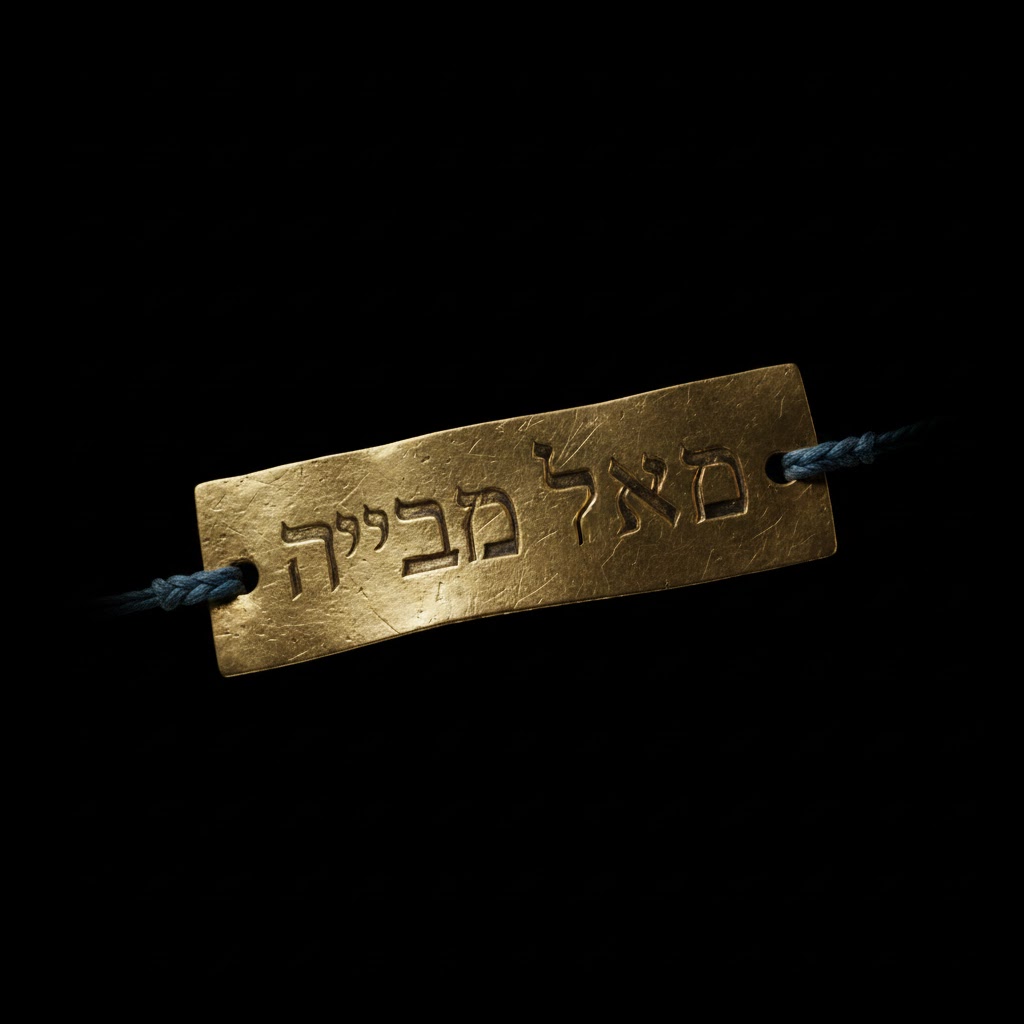
Public source text: WLC (Westminster Leningrad Codex) + Nestle 1904. Translation: Belem-2025 Bible translation — literal, rigid, straight from public códices.
The Most Frequent and Most Unknown Name
Four Hebrew consonants. Six thousand eight hundred occurrences in the Old Testament. The most recorded name in the entire Bible — and no one knows how it was pronounced.
יהוה
Yod. He. Vav. He.
This is the tetragrammaton (from the Greek τετραγράμματον, “four letters”). And this is the object of the present forensic investigation.
The Hebrew Writing System
Ancient Hebrew was a consonantal system. Vowels were not written. Pronunciation depended entirely on oral transmission — from father to son, from master to disciple, from priest to priest.
| Characteristic | Description |
|---|---|
| Type of writing | Consonantal (abjad) |
| Vowels | Not written in the original text |
| Transmission of vowels | Oral, communal |
| Addition of written vowels | Masoretes, 6th-10th century AD |
When oral transmission is interrupted, the vowels are lost. And that is what happened with the tetragrammaton.
The Masoretic Work
Between the 6th and 10th centuries AD, a family of Jewish scholars known as the Masoretes (בעלי המסורה, ba’alei ha-masorah) developed a system of vowel signs (nikkud) to preserve the pronunciation of the biblical text.
For the tetragrammaton, they did something different: they inserted the vowels of another word.
| Element | Value |
|---|---|
| Consonants | י ה ו ה (Y-H-V-H) |
| Inserted vowels | שְׁוָא (sheva), חוֹלָם (holam), קָמָץ (qamatz) |
| Origin of the vowels | אֲדֹנָי (Adonai) — “my Lord” |
| Graphic result | יְהוָֹה |
This combination was a reading signal — called qere/ketiv. The ketiv (written) read יהוה. The qere (spoken) read אדני (Adonai). The reader was meant to see the consonants of Yahweh (יהוה — yhwh; trad. “Jehovah”1) but pronounce Adonai.
The Birth of “Jehovah”
In the 13th century, European scholars who did not know the qere/ketiv convention read the consonants of Yahweh (yhwh) with the vowels that were written — and produced a hybrid name:
| Consonant | Vowel (from Adonai) | Result |
|---|---|---|
| Y (י) | e (sheva → e) | Ye |
| H (ה) | o (holam) | Ho |
| V (ו) | a (qamatz) | Va |
| H (ה) | - | H |
Result: YeHoVaH → Latinized as Jehovah.
Easter Egg #1: “Jehovah” is a name that never existed in Hebrew. It is the product of a medieval reading error — the fusion of the consonants of one name with the vowels of another. No ancient Hebrew speaker ever pronounced “Yehovah.” The name is as artificial as reading the consonants of “HOUSE” with the vowels of “MOOSE” and producing “HOOSE.”
The “Yahweh” Hypothesis
Some scholars proposed the vocalization Yahweh based on external evidence:
| Source | Transcription | Dating |
|---|---|---|
| Clement of Alexandria | Ἰαουέ (Iaoue) | 2nd-3rd century AD |
| Theodoret of Cyrus | Ἰαβέ (Iabe) | 5th century AD |
| Greek magical papyri | Ἰαω (Iao) | 1st-4th century AD |
| Gnostic texts | Ἰαω, Ἰαωθ | Various |
The evidence is not conclusive:
- Clement and Theodoret write centuries after the original use
- The magical papyri are a non-Jewish context — ritualistic use
- The Gnostic texts have their own theological agenda
- No source is a direct phonetic recording
Easter Egg #2: The forensic irony: the most recorded name in the Hebrew Bible — 6800 occurrences — has an unknown pronunciation. We know more about names that appear half a dozen times than about the name that appears nearly seven thousand times. Frequency did not guarantee preservation. Ritualistic secrecy guaranteed erasure.
The Secrecy and the Loss
Jewish tradition developed, over the centuries, a growing prohibition on pronouncing the tetragrammaton:
| Period | Practice |
|---|---|
| Active Temple | High priest pronounced it on Yom Kippur |
| Post-exile | Gradual restriction to priestly use |
| Rabbinic period | Systematic substitution by Adonai in reading |
| Temple destruction (70 AD) | End of the only liturgical occasion for pronunciation |
| Masoretes (6th-10th century) | Codification of the substitution in the vowel system |
The pronunciation was not lost by accident. It was lost through ritualistic linguistic policy. Each generation restricted usage further until no one knew how to pronounce it anymore.
The Implications for the Unveiling
In DES 13, the beast’s system involves a name (ὄνομα, onoma):
DES 13:17 — καὶ ἵνα μή τις δύνηται ἀγοράσαι ἢ πωλῆσαι εἰ μὴ ὁ ἔχων τὸ χάραγμα, τὸ ὄνομα τοῦ θηρίου ἢ τὸν ἀριθμὸν τοῦ ὀνόματος αὐτοῦ.
“And that no one could buy or sell except the one who has the mark: the name of the beast or the number of its name.”
The system operates on name and number of the name. If divine names are the raw material of biblical investigation, and if the most fundamental name (יהוה) has a lost vocalization, then the terrain of identification becomes even more forensic.
Easter Egg #3: DES 14:1 presents the counterpoint: the 144,000 have “his name and the name of his Father written on their foreheads.” Two names. One of them, presumably, is the tetragrammaton. But if the vocalization is unknown, what does it mean to have the name written? The text operates at the level of consonants — of graphic record, not phonetic. The name as a visual seal, not as pronunciation.
Exodus 3:14 — The “Name” That Is Not a Name
When Moses asks the name of the entity speaking from the bush, the answer is:
אֶהְיֶ֖ה אֲשֶׁ֣ר אֶהְיֶ֑ה (Ehyeh asher Ehyeh)
Literal translation: “I Will Be What I Will Be” or “I Am What I Am” (the verb היה, hayah, is ambiguous between present and future).
Then:
כֹּ֤ה תֹאמַר֙ לִבְנֵ֣י יִשְׂרָאֵ֔ל אֶהְיֶ֖ה שְׁלָחַ֥נִי אֲלֵיכֶֽם
“Thus you will say to the sons of Israel: Ehyeh sent me to you.”
And in the following verse (3:15):
יהוה אלהי אֲבֹתֵיכֶ֗ם (…) שְׁלָחַ֣נִי אֲלֵיכֶ֑ם
“Yahweh (yhwh) Elohim of your fathers (…) sent me to you.”
| Verse | Name given | Form |
|---|---|---|
| 3:14a | אֶהְיֶה אֲשֶׁר אֶהְיֶה | Verbal phrase (1st person) |
| 3:14b | אֶהְיֶה (Ehyeh) | Verb as name (1st person) |
| 3:15 | יהוה (yhwh) | Tetragrammaton (3rd person) |
Easter Egg #4: Ehyeh (“I Will Be/I Am”) is in the first person. Yahweh (yhwh) appears to be the same root in the third person: “He Will Be/He Is.” When the entity speaks of itself: Ehyeh. When others speak of it: yhwh. But none of this resolves the pronunciation. It only resolves the grammatical relationship between the names.
The Forensic Position
The unveiling forensic method adopts:
- Record יהוה as four consonants — without vocalization
- Reject “Jehovah” as an artificial hybrid without historical basis
- Not adopt “Yahweh” as certain — it is a hypothesis, not a fact
- Transliterate as Yahweh (yhwh) — pure consonantal representation
- Acknowledge that the original pronunciation is lost — without fabricating substitutes
This is not mystical reverence. It is philological honesty. We do not know how the name was pronounced. To say we do is to fabricate evidence.
Dossier Conclusion
The tetragrammaton יהוה is simultaneously the most present and the most absent name in the Bible. Present in the consonants — 6800 times. Absent in pronunciation — irrecoverably.
The Belem-2025 Bible translation records what the códices record: four consonants. No more. No less.
“You read. And the interpretation is yours.”
Artificial form: vowels from Adonai (אֲדֹנָי → a, o, a) placed over consonants YHWH — Masoretic qere perpetuum. Medieval Latin readers merged both, producing “YeHoVaH” — a hybrid that never existed as a Hebrew word. The most accepted academic reconstruction is Yahweh /jah.ˈweh/, based on Greek transcriptions (Ιαβε — Clement of Alexandria, ~200 AD; Ιαουε — Theodoret of Cyrus, ~450 AD), abbreviated biblical forms (Yah — הַלְלוּ יָהּ), theophoric names (Yahu/Yeho — Eliyahu, Yehoshua) and Samaritan oral tradition (Yabe/Yawe). ↩︎